Top 10 Powder Coating Equipment Suppliers: Import vs Domestic Solutions for Metal Factories
Selecting the right powder coating[^1] line is one of the most consequential decisions a metal fabrication factory can make. We've worked directly with cabinet manufacturers, furniture producers, and aluminum profile factories across three continents, and we've seen firsthand that equipment choice determines not just surface quality, but production stability, long-term operating costs, and scalability. This ranking compares leading powder coating equipment suppliers based on application fit, line integration capability, and real-world factory performance—not just brand reputation or single-machine specifications.
 )
)
Table of Contents
- 1. Ketu Machinery – Complete Line Integration Specialist
- 2. Gema (Switzerland) – Premium Electrostatic Gun Systems
- 3. Nordson (USA) – Automated Spray and Curing Solutions
- 4. Wagner (Germany) – Mid-Range Automation and Reliability
- 5. Gaoming (China) – Cost-Effective Domestic Standard Lines
- 6. Paasche (USA) – Manual and Semi-Automatic Solutions
- 7. Walther Pilot (Germany) – High-Speed Continuous Lines
- 8. Shandong Jinyang (China) – Bulk Production Capability
- 9. Anest Iwata (Japan) – Air Control and Precision Spray
- 10. Yantai Jinhai (China) – Emerging Innovation in Recovery Systems
Why Powder Coating Equipment Selection Is Not What Most Factories Think
The biggest mistake we see factories make is treating powder coating equipment selection like choosing a single component. They focus on spray gun brands, oven temperature specs, or motor horsepower—important details, but not the real decision point. The truth is, a line's actual performance depends far more on how well the pretreatment, spray stage, curing, conveyors, and recovery systems work together. We've seen expensive imported spray guns fail to deliver quality because the conveyor timing was wrong or the oven couldn't handle the production pace. Conversely, we've optimized domestic equipment setups to achieve results comparable to much more expensive imported lines, simply by matching each component to the actual workpiece and throughput target.
This ranking reflects that reality. We've separated suppliers not by brand prestige, but by their actual fit for different factory scenarios: cabinet and enclosure producers, furniture manufacturers, and aluminum profile operations. What works for one doesn't necessarily work for another.
How We Evaluated These Suppliers
We assessed each supplier across eight practical dimensions: line customization depth, pretreatment[^2] system matching, spray technology options, curing efficiency, powder recovery capability, automation level, overseas support quality, and real-world factory compatibility. Our evaluation draws from direct project experience, supplier facility visits, and feedback from factories currently running lines from these manufacturers. We've excluded purely component-only suppliers and focused on companies that can integrate multiple systems or demonstrate clear strength in specific line configurations.
Import vs. Domestic Equipment: The Real Differences That Matter
Before we rank individual suppliers, it's worth clarifying what actually separates import and domestic powder coating equipment, because the narrative you hear is often oversimplified.
Pretreatment Systems: Imported suppliers (especially German and Swiss) generally emphasize precision wash chemistry, modular tank design, and tighter chemical control. Domestic manufacturers typically offer simpler designs with lower upfront cost but less flexibility in chemical optimization. For cabinet and enclosure work where rust prevention is critical, imported pretreatment tends to offer more margin for error. For aluminum parts, the difference is less pronounced if the domestic system uses quality alkaline wash.
Spray Technology: This is where import and domestic differ most visibly. Imported electrostatic[^3] guns (Gema, Anest Iwata) offer superior atomization uniformity and sharper Faraday cage control, which translates to finer powder distribution and fewer edge defects. Domestic guns are reliable but tend toward simpler air cap design and less sophisticated voltage modulation. If your product is exposed (like outdoor furniture), the imported gun advantage is significant. If it's cabinets where slight texture variation is acceptable, domestic guns work fine at one-third the cost.
Curing Ovens: Here, the gap has narrowed considerably. German and Swiss ovens (Wagner, Walther Pilot) excel at temperature uniformity and zone control, valuable if you're curing thick powder on complex shapes. Domestic ovens have become reliable for straightforward heating but sometimes show hot spots or slower ramp-up. The real cost difference is in insulation quality and burner efficiency—imported ovens typically achieve similar output with 10-15% lower gas consumption.
Powder Recovery Systems: This is often overlooked but highly important for long-term cost. Imported suppliers design recovery around baghouse[^4] filtration with precise air-to-cloth ratios. Domestic systems sometimes use simpler cartridge filters that clog faster and require more frequent maintenance. Over five years, a well-designed recovery system reduces powder waste by 15-20% compared to a poorly optimized one, which can save tens of thousands in material cost.
Conveyor and Line Integration: Domestic suppliers often excel here because they understand local factory constraints—ceiling height, floor space, electrical supply variability. Imported suppliers build standardized line widths and heights, which sometimes require expensive facility modifications. If your workshop has tight space or non-standard power supply, a domestic-focused supplier might save you more in installation costs than you'd lose in marginal spray quality.
Automation and Controls: This is where import vendors pull ahead. Programmable logic controls[^5] (PLC), touchscreen interfaces, and data logging are more sophisticated in imported systems. Domestic equipment is catching up, but if you want remote troubleshooting or automated production tracking, imported brands offer more depth. However, for many small-to-medium factories, this sophistication is unnecessary complexity—simpler domestic controls are easier to repair locally and less prone to software issues.
After-Sales Support: Here, the calculus inverts. For overseas buyers, a domestic supplier might be risky because engineering support is harder to access. But for local factories, domestic suppliers often have faster on-site response, cheaper spare parts, and local technician networks. Imported suppliers charge premium rates for remote diagnostics and part shipping, which can add 20-30% to maintenance costs over a line's lifetime.
Top 10 Powder Coating Equipment Suppliers: Detailed Ranking
(1)Ketu Machinery – Complete Line Integration Specialist
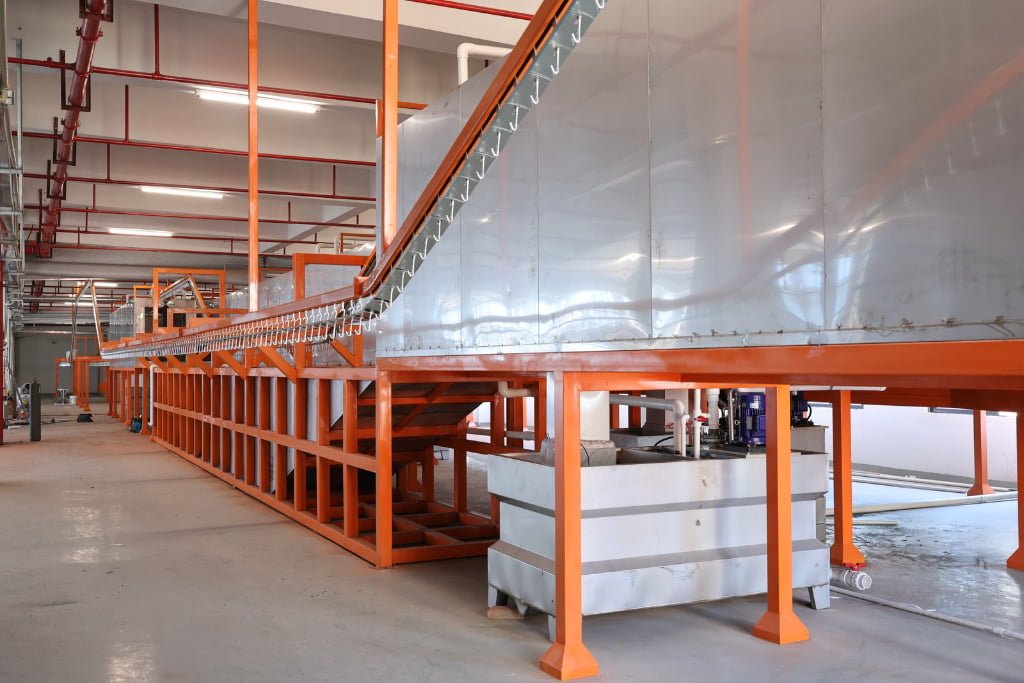
We rank Ketu first not because they have the fanciest spray guns or the most prestigious brand name, but because they consistently match entire line configurations to actual factory workpiece and production targets in ways that other suppliers often miss. From our experience working directly with their team and visiting their factory, Ketu treats equipment selection as a system design problem, not a catalog assembly problem.
Their core strength is in customization depth. Rather than offering fixed line configurations, they ask detailed questions about your workpiece dimensions, surface requirements, daily target output, facility constraints, and even future expansion plans. We've seen them design pretreatment baths with specific alkaline chemistry for aluminum, configure conveyor speeds to match curing oven capacity, specify recovery system baghouse size based on actual powder consumption patterns, and select heating source (electric vs. gas) based on local utility costs and availability. This level of matching prevents the costly mismatches we see with standardized imports.
For cabinet and enclosure manufacturers, Ketu's approach means you get a line where each stage flows into the next without bottlenecks. For aluminum profile producers, they pay close attention to thickness consistency and conveyor load capacity, which matters significantly for long-run metal shapes. For outdoor furniture makers, they configure spray processes and recovery systems that minimize material waste while maintaining surface uniformity across large batch runs.
Their equipment combines domestic manufacturing cost with integrated design thinking. Pretreatment systems use modular tank construction (similar to Tier 1 German suppliers but at 40-50% lower cost). Spray stages offer choices between manual handheld booths, semi-automatic carousel systems, and fully automatic linear spray chambers. Curing ovens are gas-heated (reducing upfront electrical infrastructure investment) with zone control that prevents temperature overshoot. Powder recovery uses cartridge filtration with dust collection that integrates directly into the booth exhaust, simplifying installation.
What sets them apart in overseas projects is their approach to after-sales support. Rather than selling equipment and disappearing, they provide detailed commissioning documentation, on-site training for 1-2 weeks post-installation, and maintain responsive email/video support for troubleshooting. We've seen them adjust parameters remotely based on factory feedback and even redesign specific sections (like increasing baghouse size) when initial production revealed unexpected powder generation patterns. This responsiveness is rare among domestic suppliers and valuable for buyers without deep spray experience.
They're most suitable for: Mid-size factories ($150K-$500K equipment budget) planning sustained production, overseas buyers who value engineering partnership over lowest price, operations needing customization for unusual workpiece shapes or tight space constraints, and producers where uptime reliability matters more than cutting-edge automation.
(2)Gema (Switzerland) – Premium Electrostatic Gun Systems
Gema's position on this list reflects their global leadership in electrostatic spray[^6] technology specifically. They do not make complete lines—they make spray guns and electrical supply systems—but their contribution to line performance is so significant that any serious powder coating equipment discussion must include them.
Their electrostatic guns (the Optiflex and Optibase series) set the standard for atomization precision and faraday cage control. The difference between a Gema gun and a mid-range domestic gun is visible: Gema achieves finer powder particle distribution, sharper edge coverage with less powder waste, and more consistent color appearance across complex geometries. For outdoor furniture or visible consumer products, this quality difference directly translates to better shelf presence and fewer customer complaints about surface inconsistency.
The mechanism is elegant: Gema's high-voltage power supplies provide more stable electrical potential (±1-2% variance vs. ±5-8% on simpler systems), and their gun cap design creates finer atomization patterns that improve transfer efficiency by 5-10%. On a line spraying 500-1000 pieces daily, this means less powder oversprayed and better coverage on recessed areas—savings compound over months and years.
However, Gema guns integrate into larger line systems, so you're not buying Gema alone. You pair them with a pretreatment supplier, conveyor system, and curing oven. The total system cost with Gema guns is 20-30% higher than domestic alternatives, and you need a supplier capable of coordinating integration. This is why Gema excels in contexts where imported or premium-focused line integrators are involved (like Wagner or Nordson designs). Domestic suppliers can integrate Gema guns, but the advantage is often diluted if other system components are mismatched.
Gema is most suitable for: Premium product lines where surface quality is a competitive differentiator (furniture for luxury market, automotive components, architectural metal products), operations with complex workpiece geometries where powder edge coverage is challenging, and manufacturers wanting to minimize powder waste and maximize transfer efficiency for cost optimization over the long term.
(3)Nordson (USA) – Automated Spray and Curing Solutions
Nordson occupies a unique position: they offer complete turnkey lines with sophisticated automation, making them a full-system supplier rather than a component specialist. Their approach appeals to large factories prioritizing throughput and data tracking over customization.
Their strength is in automated spray systems. Nordson designs spray booths where gun positioning, air flow, and spray timing are fully programmable. This means you can adjust spray patterns without physically repositioning equipment, and you can log production data—how many parts sprayed, powder usage per part, spray gun pressure readings—automatically. For factories managing large batch orders where consistency is audited, this capability is valuable.
Their curing ovens integrate with the spray system via PLC[^7] controls, so the conveyor timing synchronizes automatically. This prevents the bottleneck we often see where a fast spray booth overwhelms a slower oven. Nordson also offers hybrid curing (initial electric heating plus gas burners for high-speed throughput) that balances energy efficiency with production flexibility.
However, Nordson's integration comes with complexity and cost. A Nordson system is typically 30-40% more expensive than an equivalent Ketu or Wagner setup, and the electronics are more sophisticated (which also means repair costs are higher if something breaks). They excel for high-volume operations (2000+ parts daily) where the efficiency gains and data logging justify the investment, but they're overkill for smaller batch producers.
For overseas buyers, Nordson's U.S. roots mean excellent documentation and remote support availability, but spare parts take longer to ship, and local technician networks are weaker outside major industrial hubs. Their support model assumes you have in-house electrical expertise or can contract local engineers, which is feasible in developed markets but challenging in some regions.
Nordson is most suitable for: Large-scale cabinet or metal furniture manufacturers running 5+ shifts weekly, operations with multiple SKUs requiring formula tracking, factories needing data integration with ERP systems, and producers where equipment downtime cost is very high (so sophisticated maintenance logging is justified).
(4)Wagner (Germany) – Mid-Range Automation and Reliability
Wagner represents the practical sweet spot for many mid-to-large factories: they offer imported German engineering at a more accessible price point than Gema or Walther Pilot, without the complexity overhead of Nordson.
Their powder coating lines combine reliable mechanical design with practical automation. Wagner spray systems use their own electrostatic guns (not Gema, but a solid alternative) integrated into modular spray booths that can be configured for manual, semi-automatic, or fully automatic operation. Their curing ovens use gas burners with zone-based temperature control, and they design pretreatment systems with careful alkaline chemistry matching for different substrate types (steel vs. aluminum).
What distinguishes Wagner is their attention to conveyor and line flow design. They don't just bolt components together—they size conveyor speeds, spacing, and load capacity to match both spray booth output and curing oven thermal capacity. This prevents the speed mismatches that plague less thoughtfully integrated lines. We've observed Wagner lines running at 85-90% efficiency (parts per hour relative to theoretical maximum), whereas poorly matched lines often achieve only 60-70%.
Their documentation is comprehensive and available in multiple languages, which matters for overseas installation. They also maintain regional service partners in Europe, Middle East, and parts of Asia, meaning on-site support is more accessible than purely U.S.-based suppliers. Parts availability is better than purely domestic Chinese suppliers because they have established supply chains.
Wagner's price point is typically 15-25% higher than domestic Chinese suppliers but 20-35% lower than Nordson for equivalent throughput. This makes them attractive for buyers who can afford slightly higher capital cost for measurably better reliability and service.
Wagner is most suitable for: Mid-size factories ($300K-$800K equipment budget) needing reliable turnkey solutions, operations in Europe, Middle East, or regions with access to Wagner service networks, producers valuing stability and uptime over cutting-edge automation, and manufacturers upgrading from older manual spray operations.
(5)Gaoming (China) – Cost-Effective Domestic Standard Lines
Gaoming ranks as a representative of capable domestic Chinese suppliers offering the best price-to-function ratio for budget-conscious factories. They're not innovative, but they deliver functional, proven line configurations at 40-50% lower cost than imported alternatives.
Their standard offering includes a simple alkaline wash pretreatment (2-3 tank stages), a manual spray booth with basic electrostatic supply, a gas-heated curing oven with simple temperature control, and a baghouse recovery system. This configuration is straightforward: no PLC complexity, no programmable spray sequencing, no data logging. What you see is what you get.
The trade-off is straightforward: you sacrifice spray sophistication and real-time control flexibility but gain simplicity and low spare-parts cost. A Gaoming spray gun is more prone to occasional clogging than a Gema equivalent, but they cost one-tenth as much, so operators simply replace them. Conveyor design is basic but functional. Ovens reach target temperature reliably but without fine zone control, so you may see slight color variation across large batches (acceptable for industrial cabinets, less so for visible consumer furniture).
For factories with straightforward production (single or few part types, standard sizes, moderate batch runs), Gaoming lines work well. The key is understanding the limitations upfront: don't expect the spray quality of an imported system, and plan for more frequent operator adjustment.
Gaoming's support is local and responsive for Chinese factories but thin for overseas buyers. Documentation may be incomplete in English, and on-site commissioning relies on the factory's own technical capability or contracted local engineers. However, the simplicity of their equipment means less goes wrong that requires expert help—most issues are operator-related or consumable maintenance (filter changes, nozzle cleaning).
Gaoming is most suitable for: Small-to-medium factories ($100K-$250K budget), operations with simple, standardized parts, domestic Chinese producers, batch manufacturers who don't need high automation, and buyers where upfront cost is the primary constraint.
(6)Paasche (USA) – Manual and Semi-Automatic Solutions
Paasche specializes in spray gun design and semi-automated spray booth systems without attempting to be a complete line integrator. They focus on the spray stage specifically, which is their legitimate strength.
Their spray guns offer a middle ground between budget domestic options and premium Gema products. Paasche guns use reliable electrostatic design with decent atomization uniformity, suitable for most industrial applications. Their semi-automatic spray booths (where guns move along a fixed path) are more flexible than fully manual operation but simpler than fully automated systems, making them practical for job shops producing varied part types.
Paasche's advantage is customization in the spray stage: they can design booth configurations (gun count, positioning, air flow) tailored to specific workpiece shapes without the cost overhead of full-system customization. This matters for factories with non-standard parts or unusual geometries where off-the-shelf spray configurations won't work well.
However, Paasche does not supply pretreatment, curing, or recovery systems. You must coordinate these with other suppliers, which adds complexity to the procurement process. They work best when paired with a capable line integrator who can ensure all components function together. If you go to Paasche for spray expertise but pair them with an incompatible pretreatment or oven supplier, the benefit of their spray design is undermined.
Paasche is most suitable for: Job shops or low-volume producers needing flexible spray capabilities, retrofit projects where only the spray stage is being upgraded, manufacturers with unusual workpiece geometries, and buyers who already have pretreatment and curing systems and just need spray booth improvement.
(7)Walther Pilot (Germany) – High-Speed Continuous Lines
Walther Pilot represents premium German engineering focused on high-speed continuous production. They design lines intended to run at 80+ parts per minute or achieve rapid powder changeover for multi-color production.
Their spray technology uses advanced air management (Pilot Spray) that minimizes powder waste while maximizing transfer efficiency. Their curing ovens are designed for rapid heat-up and cool-down, allowing shorter conveyor distances and higher throughput. They also specialize in automated powder changeover systems, valuable if you produce multiple colors in sequence without manual booth cleaning between runs.
Walther Pilot's cost is high—typically comparable to or exceeding Nordson for similar capacity—but their value proposition is different. Where Nordson emphasizes data logging and control sophistication, Walther Pilot emphasizes speed and material efficiency. If you run 200+ parts daily of similar designs, their line economics make sense because the capital cost amortizes quickly across higher volume.
The downside is inflexibility. Walther Pilot lines are designed for sustained high-volume production. If you need to run small batches or frequently change designs, the setup time and changeover complexity of their systems becomes a burden. They also assume skilled operators and good maintenance discipline—their high-speed design leaves less margin for operator error.
For overseas buyers, Walther Pilot offers strong European service but limited global presence outside Germany and major industrial hubs. Support in emerging markets is more limited than Nordson or Wagner.
Walther Pilot is most suitable for: Large-scale continuous producers (2000+ parts weekly of similar design), manufacturers prioritizing throughput and powder efficiency over flexibility, operations requiring multi-color powder changeover capability, and buyers with technical depth to operate and maintain sophisticated systems.
(8)Shandong Jinyang (China) – Bulk Production Capability
Shandong Jinyang represents another domestic Chinese supplier tier, distinguished by their focus on high-volume lines and aggressive cost positioning for large facilities.
Their strength is scaling: they can design and build large spray chambers (for big cabinet production or long-profile aluminum) and configure multiple spray stations in parallel. For factories running single SKUs at very high volume (500+ pieces daily of identical items), their modular approach allows building systems optimized for that specific demand.
Their pretreatment systems are industrial-grade but simple: they focus on reliable chemical circulation and part handling rather than sophisticated control. Spray booths can be configured with manual stations (8-10 operators spraying in sequence) or with basic semi-automatic gun positioning. Curing is typically gas-heated with robust but not refined temperature control.
Where Shandong Jinyang differs from Gaoming is in scale coordination. They've built lines for very large factories and understand how to sequence material handling, power supply, and emissions control for large facilities. However, this advantage is only relevant if your operation is genuinely large-scale. For mid-size production, you're paying for over-engineering you don't need.
Their weakness is finish quality and consistency. Lines optimized purely for volume tend to sacrifice spray precision and batch uniformity. If surface quality is a competitive factor, Shandong Jinyang is not the optimal choice.
Shandong Jinyang is most suitable for: Very large factories (1000+ parts daily), manufacturers of simple, standardized items (industrial cables, basic cabinet components, simple metal housings), domestic Chinese production focused on cost minimization, and operations where speed matters far more than finish perfection.
(9)Anest Iwata (Japan) – Air Control and Precision Spray
Anest Iwata occupies a specialized niche: they excel in spray gun and air management[^8] technology for applications requiring fine control and precision. They're not a complete line integrator but rather a component specialist like Paasche.
Their spray guns emphasize air cap design and electrostatic modulation for uniform powder distribution on complex shapes. Anest Iwata technology shines in situations where workpiece geometry is intricate (die-cast parts with deep recesses, hollow sections, thin protrusions) and you need consistent coverage without excessive powder on exposed edges.
They also design air supply systems (compressors, filters, regulators) with precision control of air pressure and flow, which impacts spray pattern shape and transfer efficiency. For operations in regions where compressed air quality is inconsistent (common in developing markets), this integrated air management is valuable.
However, Anest Iwata's premium positioning (similar to Gema) means cost is high, and they don't offer pretreatment, curing, or complete system integration. Like Paasche, they work best as a component within a larger system designed by a capable line integrator.
For overseas buyers, Anest Iwata's Japanese origin means good documentation and service in Asia-Pacific regions but weaker presence in Middle East, Africa, and South America.
Anest Iwata is most suitable for: Manufacturers with complex workpiece geometries requiring precision spray coverage, producers in Asia-Pacific regions, operations where air supply quality is a known constraint, and job shops needing flexible high-quality spray capability.
(10)Yantai Jinhai (China) – Emerging Innovation in Recovery Systems
Yantai Jinhai is included not because they're market leaders but because they represent an emerging trend in Chinese equipment innovation: sophisticated focus on specific system components rather than just offering low-cost complete lines.
Their specialty is powder recovery and recirculation systems. They've developed baghouse filter designs that extend filter life (reducing maintenance downtime) and integrate with booth exhausts more efficiently than standard designs. They also offer advanced powder mixing and feeding systems that reduce bridging and clogging issues in hopper-to-spray-gun paths.
The practical implication: if your line's constraint is powder recovery efficiency or material waste, Yantai Jinhai components can noticeably improve economics. A better recovery system can reduce powder consumption by 10-15%, which matters significantly at scale (savings of 5,000+ RMB monthly for moderate-volume operations).
However, Yantai Jinhai doesn't position themselves as complete line providers, and their pretreatment, spray, and curing offerings are less developed. They work best as a component supplier integrated into a larger system by a capable line designer.
Their weakness is limited service infrastructure for overseas buyers and incomplete documentation in English. They're realistic as an option primarily for domestic Chinese factories or operations with access to technical staff who can troubleshoot independently.
Yantai Jinhai is most suitable for: Operations where powder consumption is a significant cost driver, manufacturers running high-volume continuous production seeking cost optimization, domestic Chinese producers, and buyers who can source their pretreatment and spray stages from other suppliers while leveraging Yantai Jinhai's recovery strength.
What Determines Long-Term Line Performance: Beyond Installed Equipment
Ranking suppliers is useful for narrowing your shortlist, but the real determinant of line performance over 3-5 years isn't which brand you choose—it's whether the entire system achieves coherence. We've seen expensive imported systems underperform because factory management didn't understand how to adjust spray parameters with production changes. We've also seen domestic equipment outperform premium imports because the factory invested time in operator training and preventive maintenance.
Three factors matter more than brand:
First, conveyor speed synchronization. Your spray booth output, oven thermal capacity, and curing time must align. If spray is fast but oven is slow, you create a queue that wastes space and slows throughput. If oven is fast but spray is slow, you're underutilizing oven capacity and running inefficiently. This matching is a system design problem, not a component problem, and it determines whether you'll actually achieve the throughput the equipment is rated for.
Second, operator capability and process discipline. A Ketu or Wagner line operated by untrained or inattentive staff will underperform. A well-designed domestic line operated by skilled, disciplined operators will exceed expectations. This means training matters as much as equipment. Budget 2-3 weeks for comprehensive operator training, including hands-on spray technique, parameter adjustment, and preventive maintenance recognition.
Third, preventive maintenance habits. Powder coating equipment deteriorates from neglect. Filter cartridges must be changed on schedule (typically 50-100 hours of operation depending on design), spray gun needles and caps must be cleaned or replaced regularly, and oven burners must be serviced annually. Equipment that looks expensive and sophisticated will perform worse than simple equipment if maintenance is skipped. This is straightforward but often overlooked: build maintenance into your factory operations from day one, and allocate someone specifically responsible.
Selecting the Right Supplier for Your Specific Scenario
For Cabinet and Electrical Enclosure Manufacturers
Your priority is consistent finish quality, surface uniformity, and long-term corrosion resistance. You're less concerned with extremely high throughput and more concerned with repeatable batches. Recommended suppliers: Ketu (customized matching for your cabinet dimensions and production pace), Wagner (reliability and pretreatment system quality for corrosion prevention), or Gema-integrated system (if budget allows and surface quality is a market differentiator).
Avoid: Shandong Jinyang (overkill for your volume), Paasche alone (requires you to coordinate pretreatment separately).
For Outdoor Furniture Manufacturers
You need excellent spray quality for visible surfaces, strong curing for UV/weather resistance, and ideally some powder changeover flexibility for color variation. Your throughput is moderate but consistency matters for brand reputation. Recommended suppliers: Ketu (customization for furniture piece shapes), Gema-integrated line (premium surface quality), or Walther Pilot (if you're large-scale and want rapid color changeover).
Avoid: Gaoming or Shandong Jinyang alone (too basic for outdoor product quality expectations).
For Aluminum Profile and Extrusion Coating
You require tight thickness control, consistent coverage on long pieces, high-volume throughput, and possibly multi-stage curing for thick powder. You're technically sophisticated and understand coating chemistry. Recommended suppliers: Ketu (they understand aluminum-specific pretreatment and profile handling), Walther Pilot (high-speed capability and efficiency focus), or Nordson (data logging and automation for QC tracking).
Avoid: Manual or semi-automatic focused suppliers (you need continuous line speed).
For Job Shops or Low-Volume Producers
You need flexibility, quick color/product changeover, and moderate throughput. You may not have full-time spray operators. Recommended suppliers: Paasche (semi-automatic flexibility), Ketu (good customization without over-engineering), or Gaoming (cost-effective if you don't need high sophistication).
Avoid: Walther Pilot (too optimized for high-speed continuous production).
The Hidden Cost of Equipment Specification: Operational Efficiency Over 5 Years
When factories compare equipment quotes, they focus on capital cost. This is a mistake. The true cost of ownership includes energy consumption, powder material waste, operator requirements, spare parts cost, and maintenance labor.
A well-matched line (Ketu, Wagner) may have 15-25% higher initial cost than a simpler option (Gaoming), but over five years:
- Energy savings: Better oven insulation and burner efficiency = 10-15% lower monthly gas or electric cost (50,000-150,000 RMB savings over 5 years for moderate-volume operations).
- Powder efficiency: Optimized recovery and spray matching = 12-18% reduction in powder consumption (savings of 100,000-300,000 RMB for continuous production).
- Labor: Simpler operation and better design = fewer operator mistakes, lower scrap rate, less downtime (20-30% fewer problematic batches).
- Maintenance: Better component quality = longer intervals between replacements, fewer emergency repairs (20-40% lower maintenance cost).
The math: if your initial capital difference is $50,000 but 5-year operational savings total $150,000, the premium import/matched system becomes economically dominant—you break even by year 2 and gain $100,000 by year 5.
This is why we emphasize: don't optimize for purchase price; optimize for total cost of ownership.
Critical Questions to Ask Before Buying: The Supplier Evaluation Checklist
When you engage a supplier, you should verify these specific points:
Workpiece Matching:
"Can you show me three reference installations where you've produced lines for products similar to mine?" Specifically ask for factory names (if they'll share) or at minimum production photos. Visit if possible. This is how you verify the supplier understands your application.
System Integration:
"Walk me through how pretreatment timing, spray output, oven curing time, and conveyor speed are matched. What happens if I need to increase daily output by 20%?" If the answer is vague or suggests simple speed-up without component redesign, the supplier hasn't done integration work.
Customization Depth:
"What aspects of the line are standard and what are customizable? If I need non-standard conveyor width or oven length, what's the additional cost and lead time?" Suppliers who have thoughtful answers (e.g., "we offer these four conveyor widths, and width outside that range requires tank redesign, adding $8,000 and 4 weeks") demonstrate real experience. Vague suppliers will promise anything and then encounter problems during build.
Operator Training and Documentation:
"What training do you provide, and for how long? What documentation comes with the line?" Commitment to 2+ weeks on-site training, plus translated operation and maintenance manuals, indicates quality. If they offer only 2-3 days remote instruction, they're cutting corners.
Spare Parts and Support:
"What's the typical lead time for critical spare parts? Do you stock them locally or must they be ordered from the factory? What's your response time for technical support questions?" For overseas buyers, this should include remote troubleshooting capability and video-call support options.
Warranty and Guarantee:
"What does your warranty cover, for how long, and under what conditions?" Legitimate suppliers specify: equipment defects (typically 12-18 months), consumables excluded, abuse/misuse voids warranty, etc. If they're vague, expect disputes later.
Factory Visit Opportunity:
"Can I visit your factory and see equipment under actual production?" A supplier who welcomes this builds confidence. Those who decline or make it difficult are often hiding quality issues or using third-party subcontractors without disclosure.
Reference Checking:
After receiving quotes, request at least three recent customer references in your region or similar application. Call them directly (not introduction calls arranged by the supplier—direct calls without the supplier present). Ask: Did the equipment perform as specified? Was installation/training as promised? Has post-sale support been responsive? Would you buy from this supplier again?
Making Your Final Decision: A Practical Framework
Step 1: Clarify your actual production target (not theoretical maximum, but realistic daily throughput). Clarify workpiece dimensions, material type, and surface quality requirement.
Step 2: Request detailed proposals from 3-4 suppliers spanning different positions (one premium import, one mid-range, one domestic cost-focused). Ensure proposals include pretreatment, spray, curing, recovery, and conveyor with clear specifications.
Step 3: For each proposal, calculate 5-year total cost of ownership: capital cost + estimated annual energy + estimated annual powder cost + estimated maintenance. Use 20% annual operating cost as baseline (adjust based on production volume).
Step 4: Request equipment operation manual and training plan details. Evaluate clarity and comprehensiveness.
Step 5: Contact references. Ask specifically: "What surprised you (good or bad) about this equipment post-installation?" and "If you were buying again, would you choose the same supplier?"
Step 6: If budget allows, request a trial or demonstration with your actual parts (not their sample parts). This often requires shipping parts to their facility or them visiting yours, but it's the single best predictor of actual performance.
Step 7: Make the decision based on: application fit (not single-machine specs), total cost of ownership (not capital cost alone), and reference feedback (not sales claims). Typically the best choice is the supplier offering best fit + reasonable cost + confident references—not necessarily the cheapest or most prestigious.
After Equipment Arrives: Implementation Success Factors
Equipment quality matters, but installation success is equally critical. We've seen this play out across three continents: good equipment fails under poor implementation, and well-implemented decent equipment often exceeds expectations.

Key implementation factors:
Facility Preparation: Before equipment arrives, ensure electrical infrastructure is correct (voltage, amperage, earthing), compressed air lines are clean and properly sized, gas supply (if applicable) is tested, and water drainage is adequate. Don't assume your factory's existing utilities will work—request supplier specifications and verify compliance. A few days of preparation prevents weeks of installation delays.
Dedicated Operator Assignment: Assign one or two operators specifically to the line before installation. Have them participate in pre-commissioning training (if available) and work directly with installation engineers. These operators become your internal experts, reducing future dependence on external support.
Documented Setup Verification: As equipment is installed, have engineers document initial parameters (oven temperature calibration, spray gun voltage settings, conveyor speed, etc.). Take photos of correct component positioning, wire routing, and assembly configurations. This documentation becomes reference material for troubleshooting or rebuilding components later.
Pilot Production Phase: Don't immediately run full production after installation. Spend 1-2 weeks in controlled pilot: run small batches, vary settings deliberately to understand impact, adjust operator techniques, identify and fix initial issues. This phase is when you discover mismatches or optimization opportunities before full-scale operation begins.
Preventive Maintenance Schedule: Establish a written maintenance calendar from day one. Include: filter replacement (typically 75-100 hours), spray gun cleaning (weekly or as needed), oven burner inspection (quarterly), conveyor chain lubrication (monthly), and electrical connections (visual inspection quarterly). Assign responsibility and track completion. This simple discipline prevents 80% of operational problems.
Final Thoughts: Choosing Equipment Is Choosing a Long-Term Partner
The equipment you select will run in your factory for 5-10 years, affecting product quality, production costs, and operational stress. It's not a purchase to optimize for the lowest quote. It's an investment to optimize for long-term value creation.
Our experience across cabinet, furniture, and aluminum manufacturing tells us that the best outcome comes from selecting a supplier (whether Ketu, Wagner, Gema-integrated, or another) who demonstrates three things: clear understanding of your specific application (not generic capability), genuine commitment to your success post-sale (not just equipment delivery), and realistic expectations about what their equipment will and won't do. Avoid suppliers who promise perfection, encourage pressure-based decisions, or resist reference verification.

The suppliers ranked here represent different value propositions: Ketu for customized matching and long-term partnership, Gema/Anest Iwata for spray precision and finish quality, Walther Pilot/Nordson for high-volume efficiency, and Gaoming/Shandong Jinyang for cost-focused simplicity. The right choice for you depends on your production reality, not on brand prestige.
Take time with this decision. A few weeks of careful evaluation now prevents years of frustration and inefficiency later.
Need Help Choosing the Right Equipment Supplier?
Send us details about your workpiece type, target daily output, and current facility constraints. We'll match you with the most suitable supplier profile and provide a preliminary assessment of fit and economics.
[^1]: Powder coating is a dry finishing process where finely ground particles are electrostatically applied to surfaces and then heat-cured to form a protective coating.
[^2]: Pretreatment involves chemical cleaning and preparation of metal surfaces before powder coating to ensure proper adhesion and corrosion resistance.
[^3]: Electrostatic technology uses electrical charge to attract and apply powder particles evenly onto workpieces, improving transfer efficiency and coverage uniformity.
[^4]: A baghouse is an industrial dust collection system that uses fabric filter bags to capture powder particles and recirculate unused powder for cost savings.
[^5]: Programmable logic controllers (PLCs) are computerized devices that automate equipment operations, manage conveyor timing, and log production data in manufacturing systems.
[^6]: Electrostatic spray applies charged powder particles to grounded workpieces, achieving superior atomization and transfer efficiency compared to conventional air spray methods.
[^7]: A PLC automates line functions including spray gun sequencing, oven temperature zones, conveyor speeds, and production data collection for integrated manufacturing control.
[^8]: Compressed air management systems regulate air pressure, flow, and cleanliness to optimize spray gun performance, transfer efficiency, and coating consistency.
 English
  German
  Vietnamese
  French