Conveyor System for Powder Coating Lines
I design powder coating conveyor systems as a process control tool, not just steel rails. From loading to curing and cooling, we engineer smooth transfer, safe load, stable spacing, and upgrade-ready layouts for manual, semi-automatic, and automatic lines.
Tip: If you already have a floor plan, send it. We can propose a conveyor route + key station positions.
Conveyor System Gallery
Add real photos to reduce duplicate content and improve buyer trust.
What is a powder coating conveyor system?
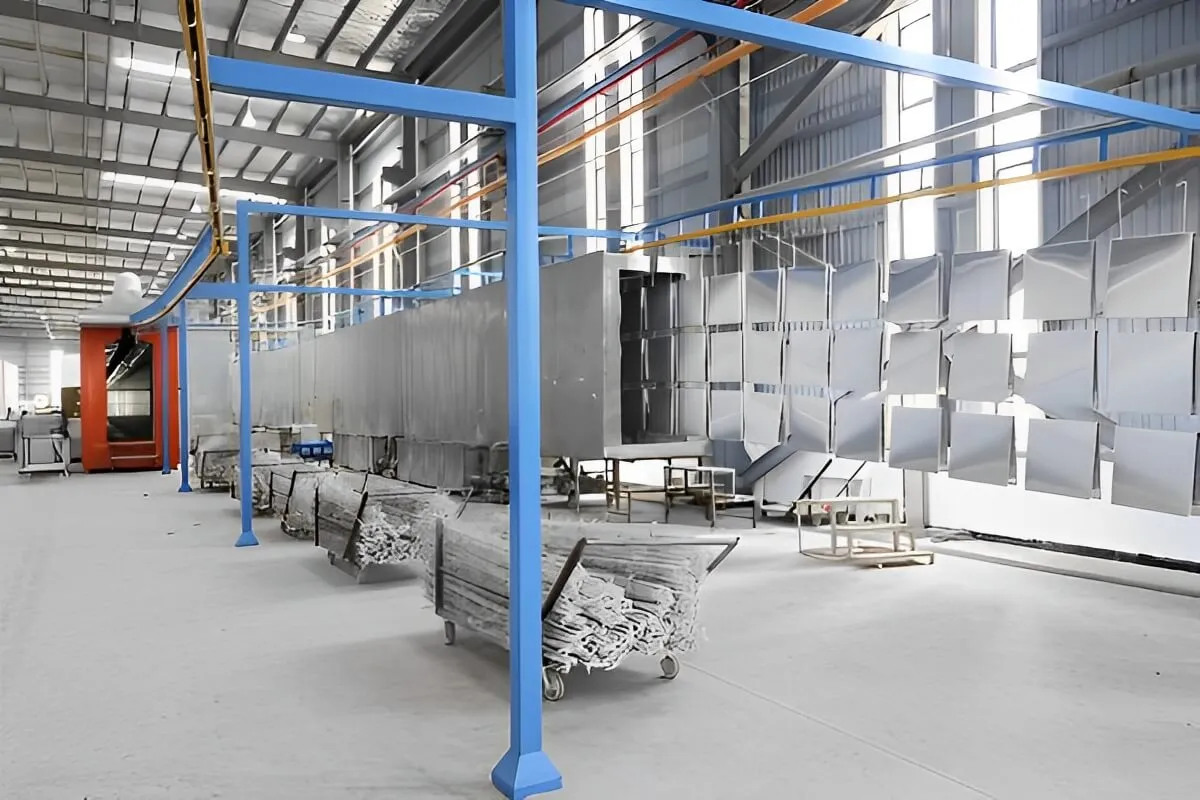
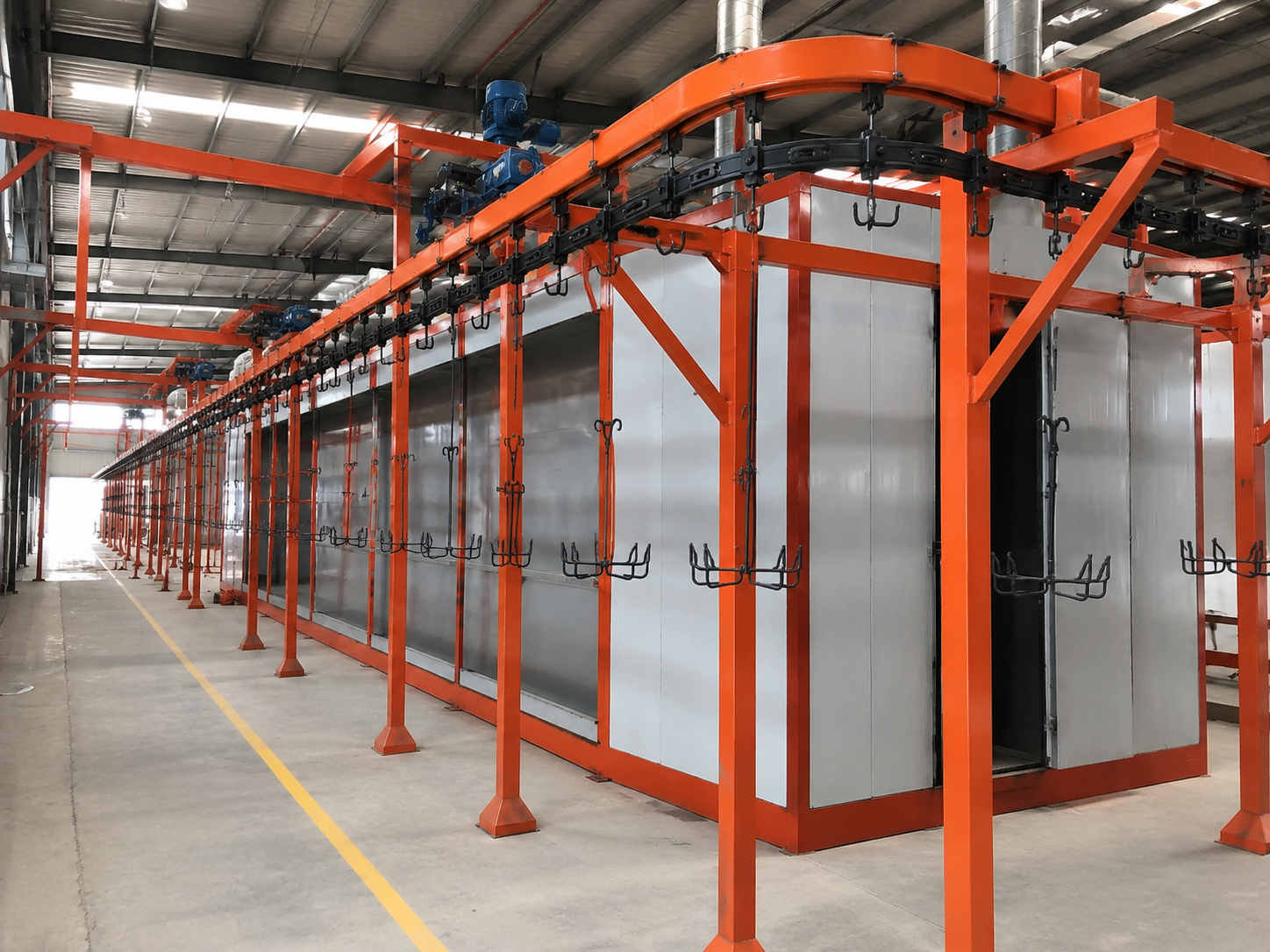
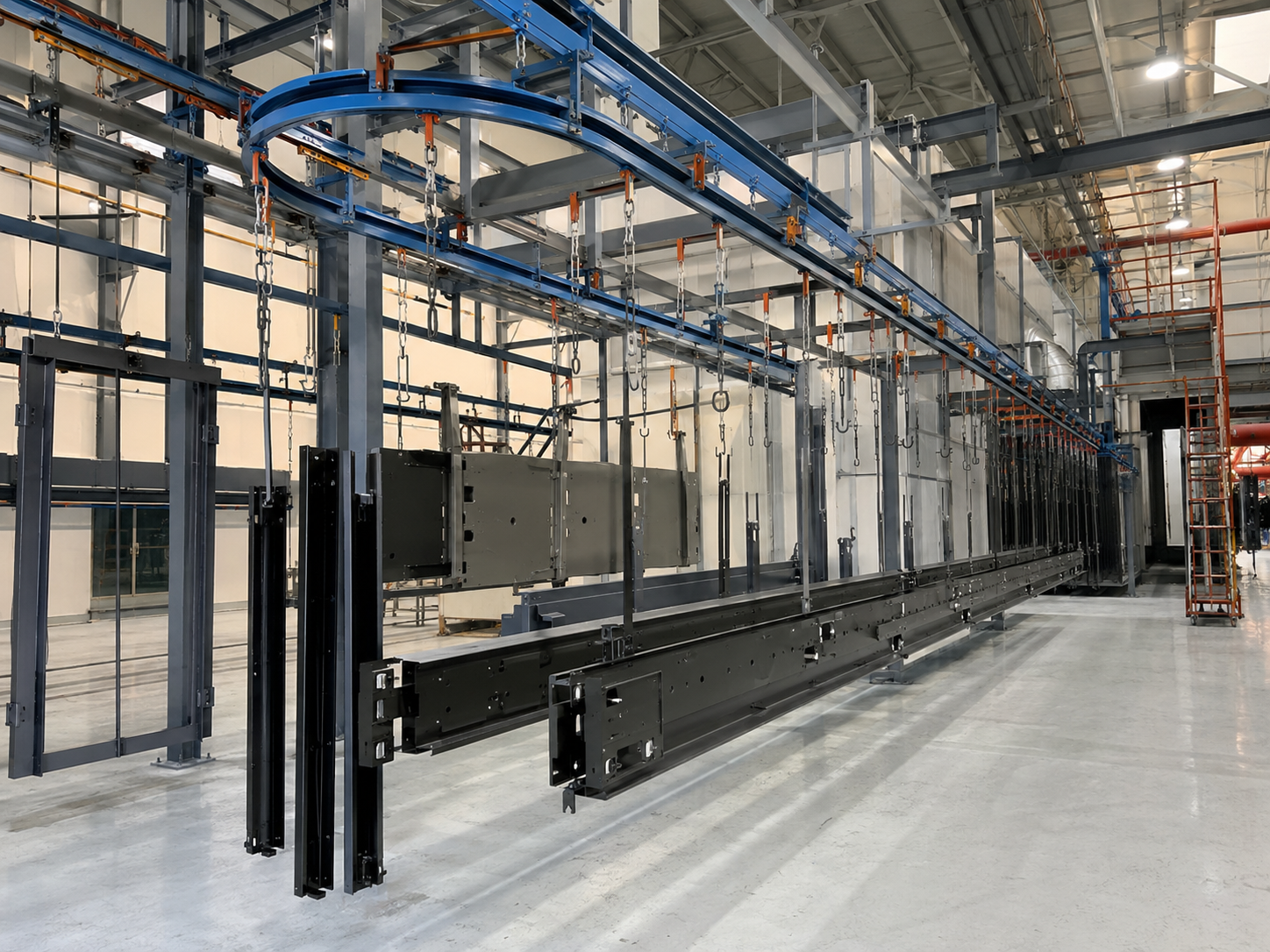
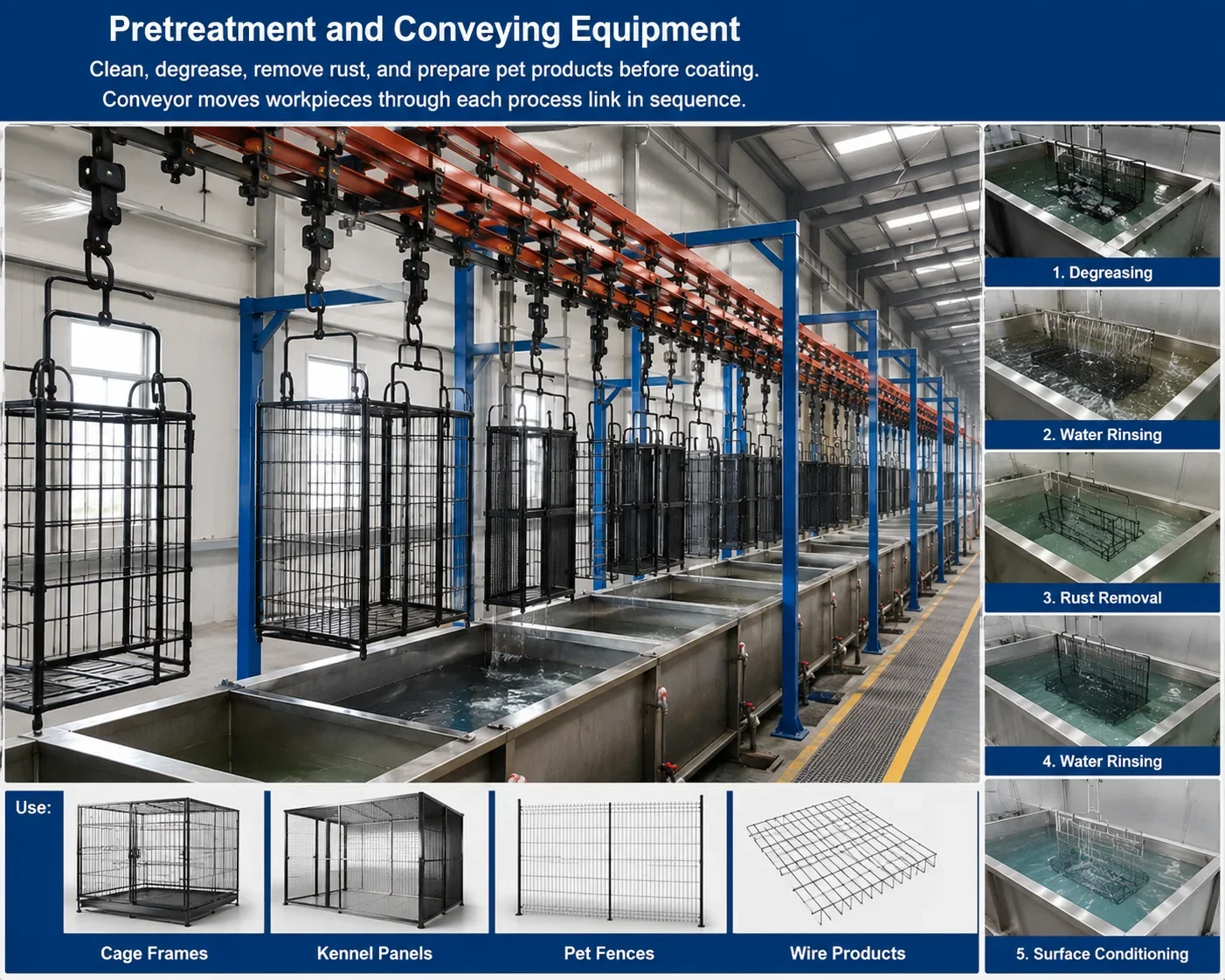
A powder coating conveyor system moves and positions workpieces through the coating process with controlled spacing and stable speed. In a typical line, it links loading, pretreatment, spray booth, curing oven, cooling, and unloading — so quality and throughput depend on conveyor design.
Process stations we match with conveyors
We engineer conveyors as part of the whole coating process. The route, turning radius, height, and spacing must match your stations to avoid bottlenecks or temperature drift.
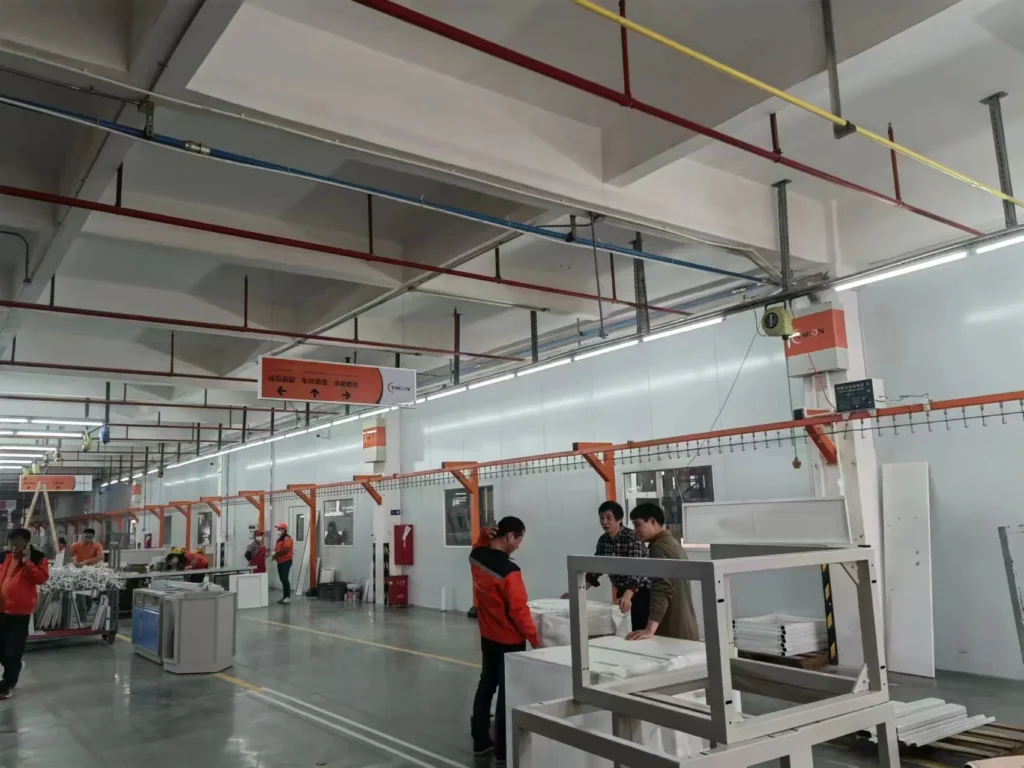
Ergonomic height, stable hangers, safer operation.
Spacing & drip time control to reduce defects.
Coverage-friendly spacing; reduce overspray waste.
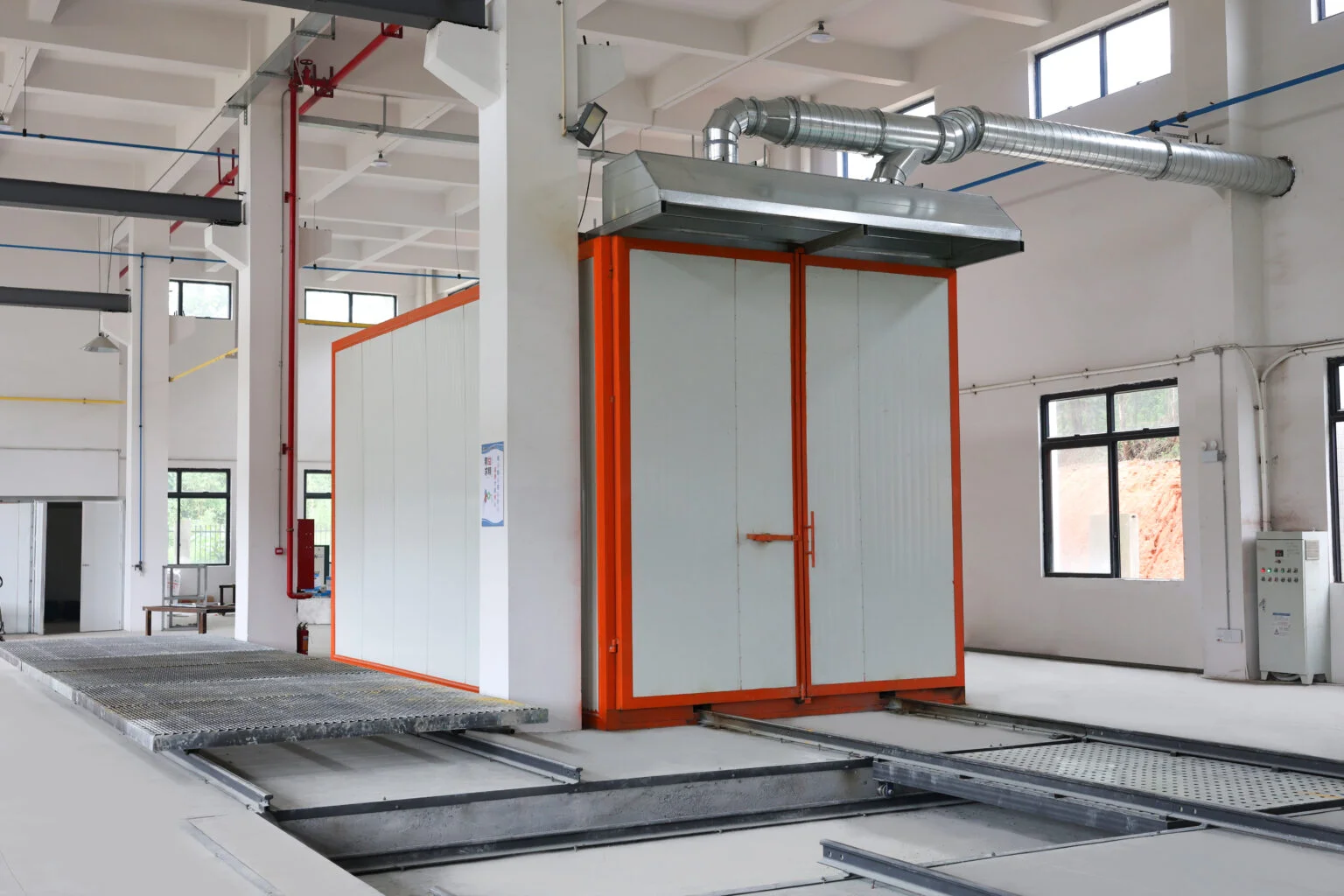
Match speed with curing time; smooth transfer to cooling.
Types of conveyor systems for powder coating
Choose based on workpiece weight, takt time, and upgrade plan.
- • Small batches / many SKUs
- • Budget-friendly start
- • Easy maintenance
- • Stable takt, fewer operators
- • Better spacing control
- • Suitable for scaling
- • High output lines
- • Zone control & buffering
- • Precise routing
- • Extra-heavy workpieces
- • Stability priority
- • Specific assembly needs
Key design parameters
These inputs determine conveyor type, rail size, support density, route, and whether you should design for an upgrade.
Max L×W×H and orientation on hanger.
Load per hanger + safety factor.
pcs/hour or pcs/shift defines takt time.
Booth coverage & oven curing time alignment.
Ceiling height, columns, entrances, crane path.
Manual vs auto; electric/gas oven integration.
Capacity & hanger spacing
Quick method: capacity from takt time, and how many parts can stay on the route from pitch.
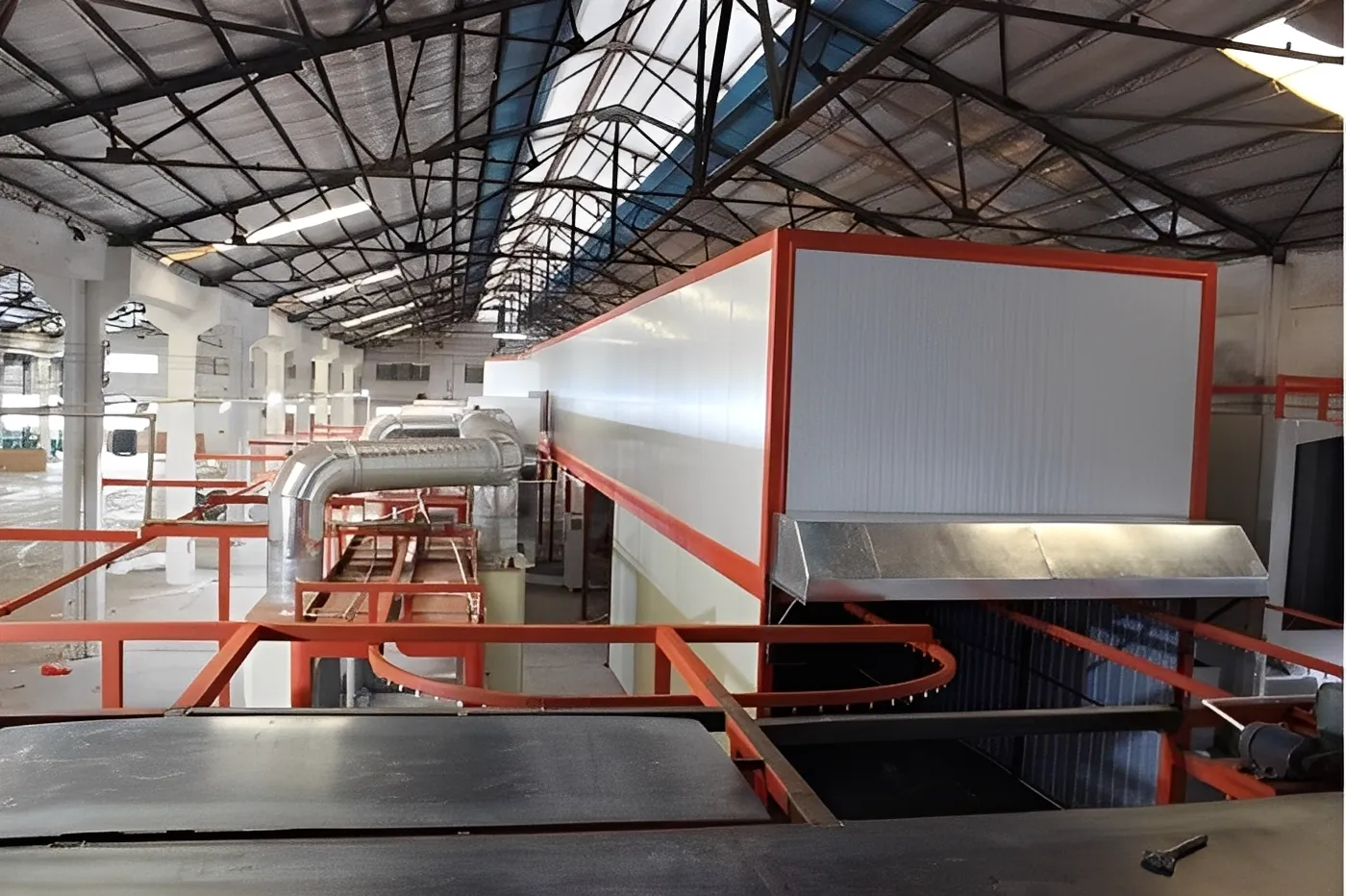
Integration with booth, recovery & oven
A conveyor that looks strong can still cause defects if it doesn’t match spray coverage, transfer points, and oven curing time. We design the conveyor as part of the process.
Pitch and speed must fit gun overlap and part geometry.
Stable movement reduces overspray turbulence and waste.
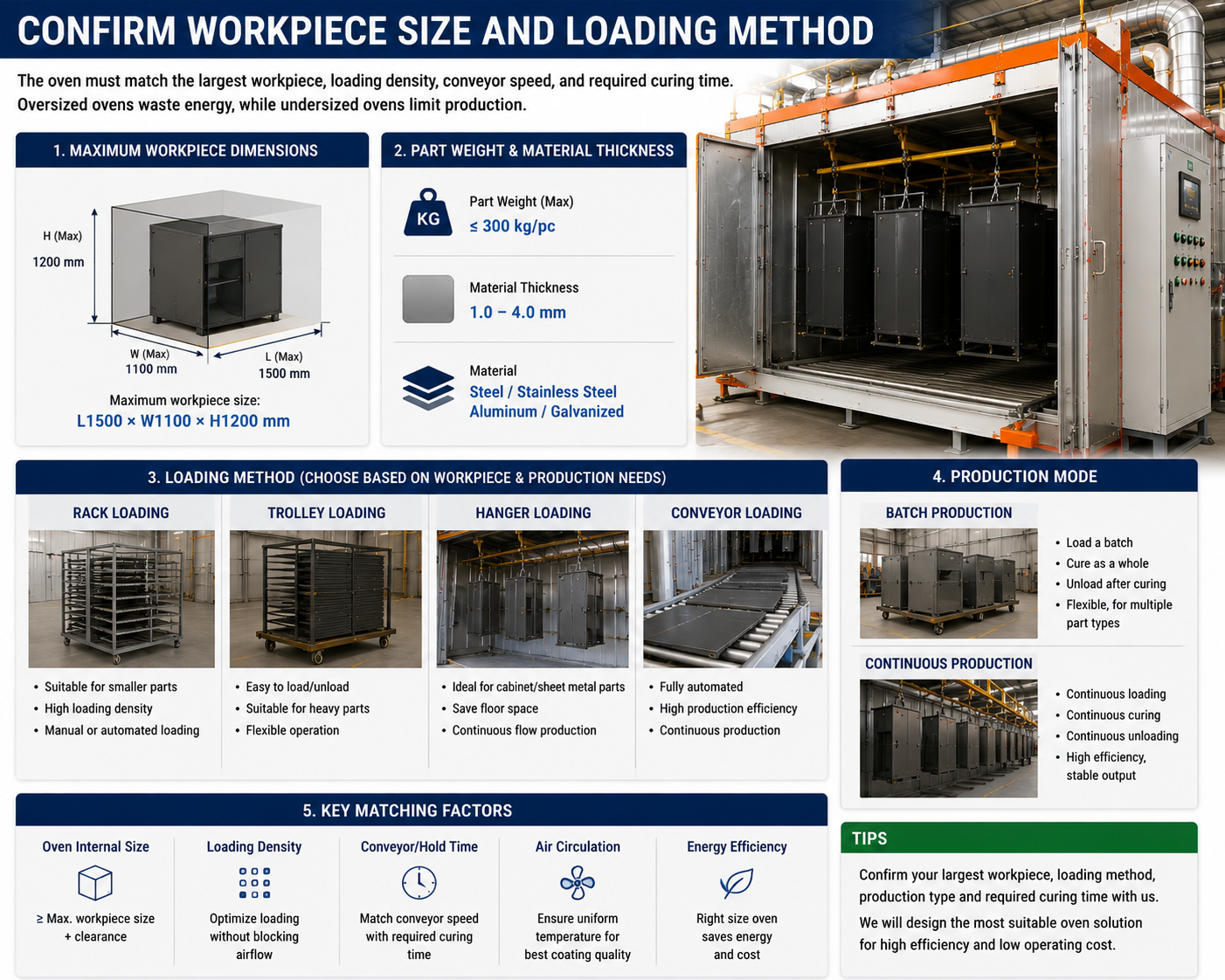
Speed × oven length must meet curing minutes at set temperature.
Buffer after oven reduces handling defects and operator heat exposure.
Conveyor + oven matching (visual)
If your coating requires 10–20 minutes in the oven, the conveyor must keep each part inside the heated zone long enough. We design oven length and conveyor speed together.
One matched proposal: conveyor route + station positions + integration notes. This is why the line runs stable, not only “looks complete”.
Project cases
Replace placeholders with real visit photos + 3 concrete numbers.
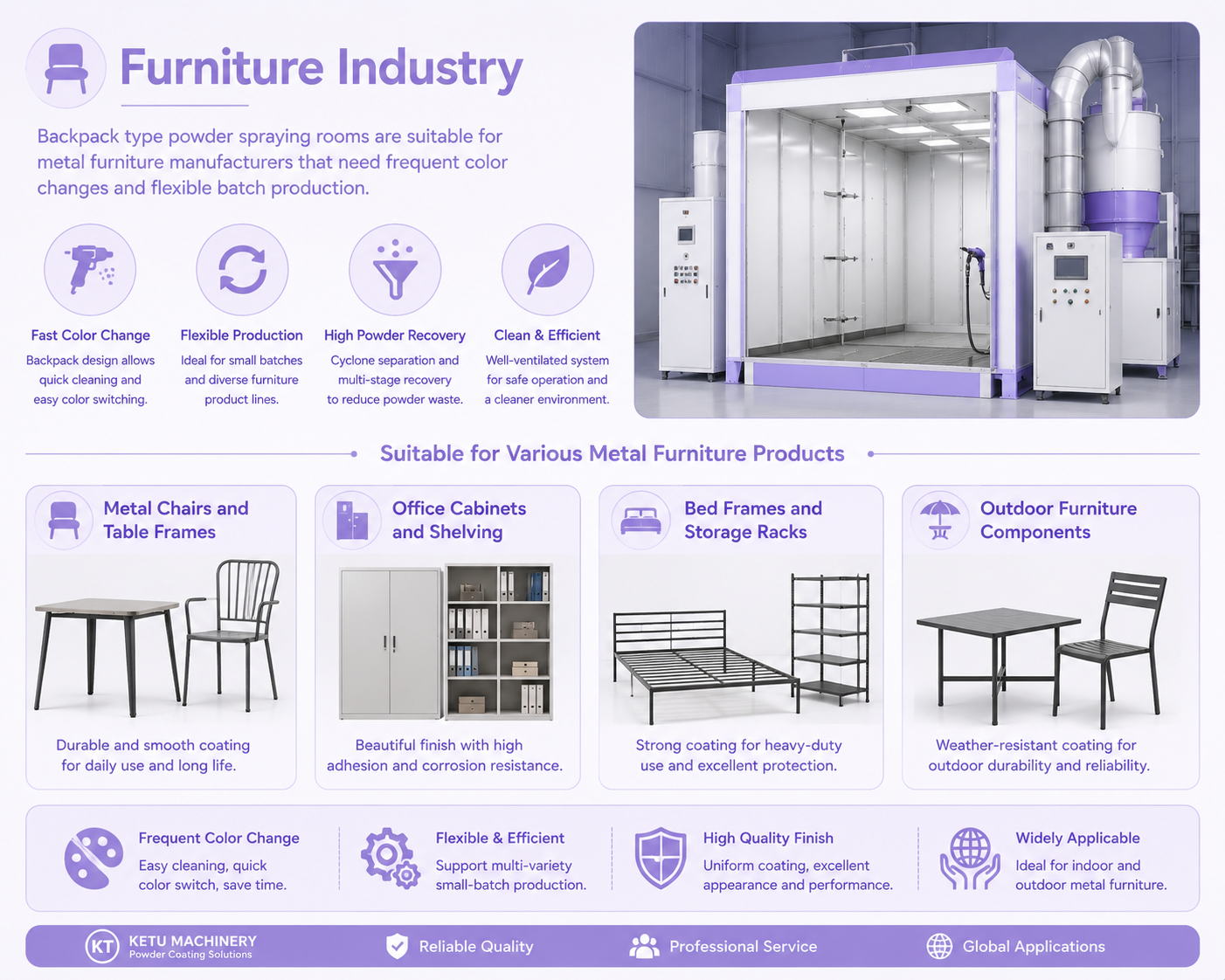
Furniture Industry Evaluation
Buyers focused on conveyor stability across booth and oven, and how we plan layout + training.
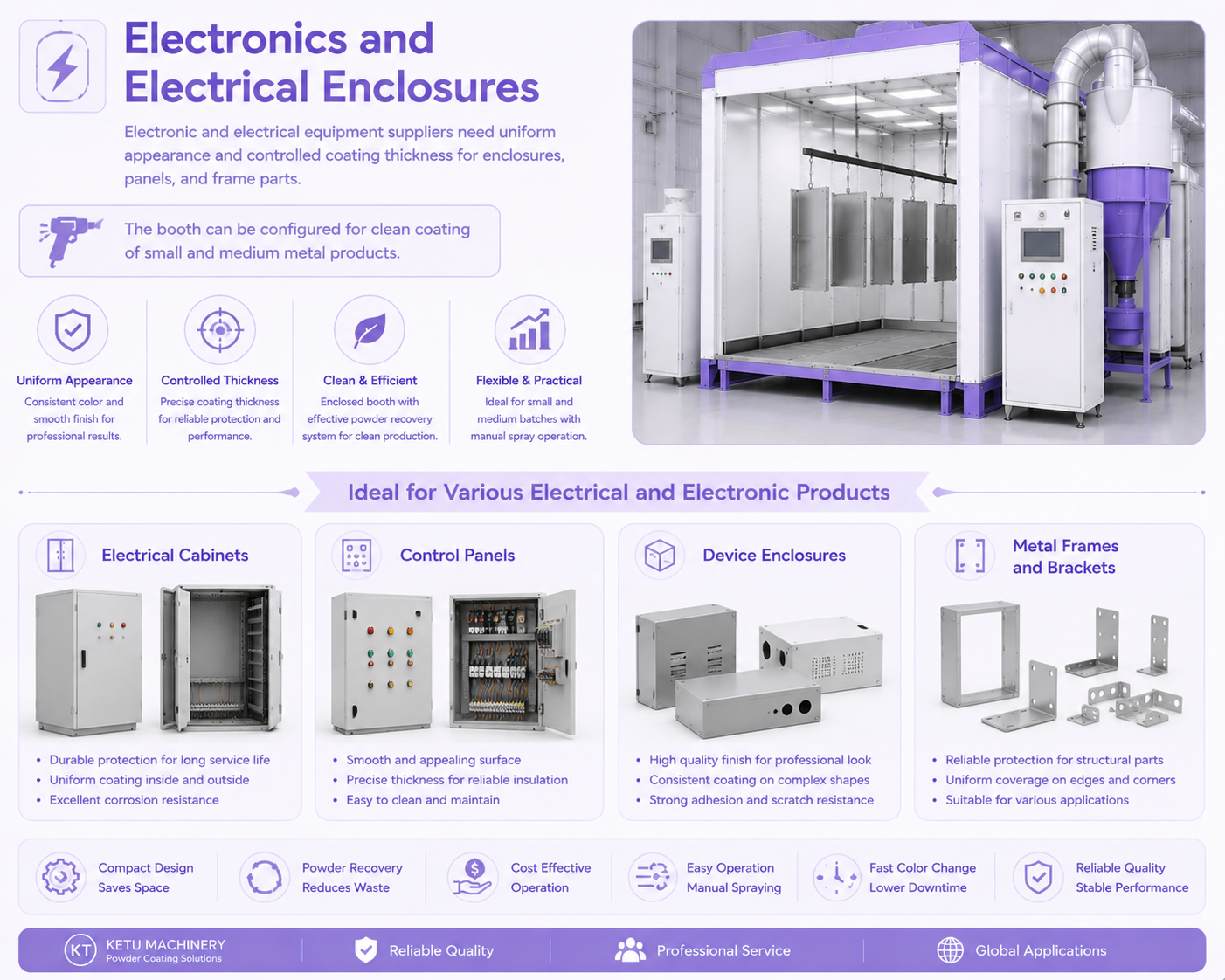
Enclosures & Cabinets Line
Clients checked capacity, energy, and conveyor matching with booth recovery & curing time.
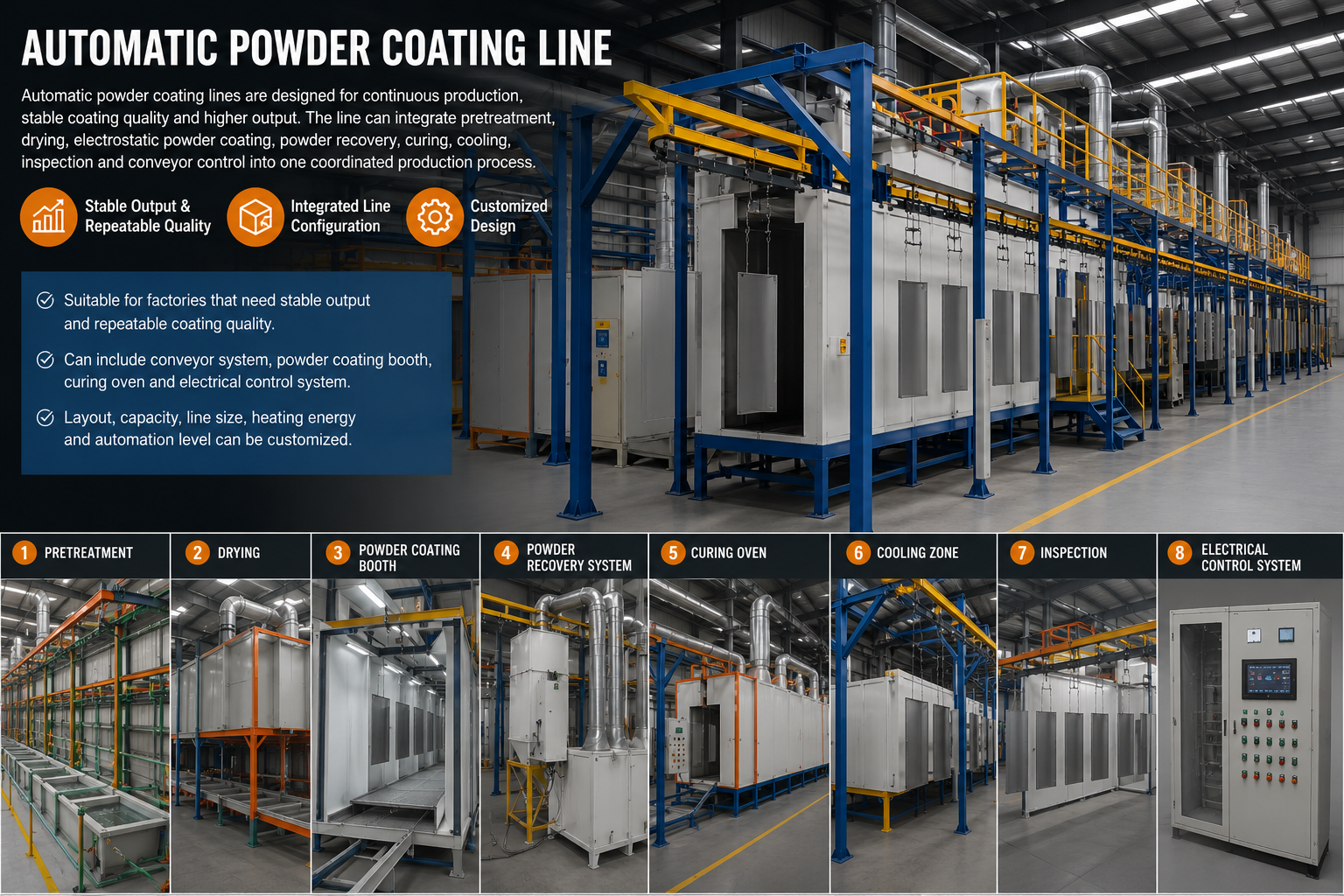
Aluminum Profile Production
Emphasis on swing control, smooth turns, and stable takt for longer workpieces.
FAQ
Questions we hear most often from coating line buyers.
What conveyor type is best for powder coating? +
It depends on your workpiece weight, output target, and upgrade plan. Manual hanging suits mixed batches. Semi-auto improves takt stability. Power & free is for high output with buffering. Floor conveyors fit extra-heavy parts.
How do you calculate conveyor capacity? +
Capacity (pcs/h) ≈ 3600 ÷ takt(s). Then confirm pieces-on-line from route length ÷ pitch, and verify bottleneck station time (often oven dwell time).
Can a manual conveyor be upgraded later? +
Yes — if the original route, turning points, and station buffers are planned with future automation in mind.
How do you match conveyor speed with curing oven? +
We match required curing minutes to effective oven length and set conveyor speed so each workpiece stays in the heated zone long enough. Buffer zones avoid pile-ups.
Get a conveyor layout proposal for your powder coating line
Send your product size, weight, and workshop layout. We will propose the conveyor route, key stations (booth, oven, buffers), and an upgrade-ready plan if needed.
- • Product size (L×W×H)
- • Weight per piece
- • Target output
- • Workshop layout / photos
If you already have an existing line, send the current route and station list — we can propose an upgrade concept.
 English
  German
  Vietnamese
  French