
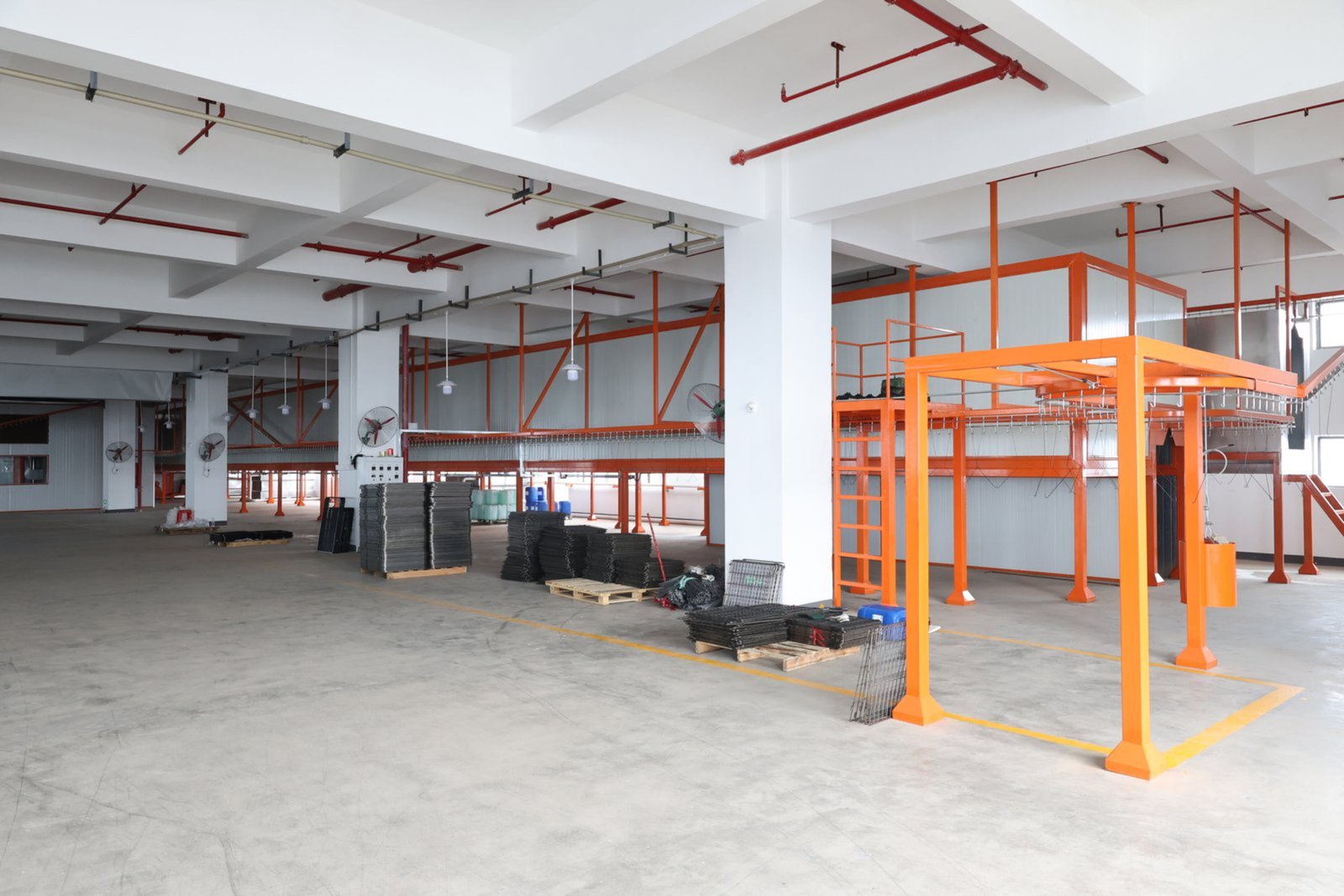
Pet Industry Powder Coating Line
KETU Pet Industry Powder Coating Line is designed for the surface treatment of metal pet products such as pet cages, pet toys, kennel panels, folding cages, fence panels, wire products, and pet display racks. The system improves coating appearance, corrosion resistance, production efficiency, and product safety for mid-to-high-end pet product manufacturers.Core system advantages:
- Electrostatic powder coating forms a uniform, solid, and durable coating after baking and curing.
- Spray pretreatment cleans cage frames and wire structures while improving coating adhesion.
- Single-color bottom exhaust automatic spray room plus backpack manual spray room supports stable cage production.
- Natural gas curing, high-power circulation fan, variable temperature, and PLC touch-screen control support efficient operation.
- Suitable for large-scale pet cage production, with reference output up to 150,000 pieces per month.
Specialized Coating Solutions for Metal Pet Products
Pet products require safe coating, uniform surface quality, corrosion resistance, and smooth edges that can withstand daily use, cleaning, humidity, and pet contact. Click each application to see the suitable coating focus.
Pet Cages and Folding Cages
Pet cages are the main application in this industry. Cage products need uniform coating on wire grids, welded corners, cage doors, trays, locks, and frame edges. Good coating helps improve appearance, corrosion resistance, and daily cleaning durability.- Uniform powder coverage on wire mesh, corners, and cage doors.
- Stable safety coating for products that directly contact pets.
- Automatic spraying plus manual touch-up for complex cage structures.
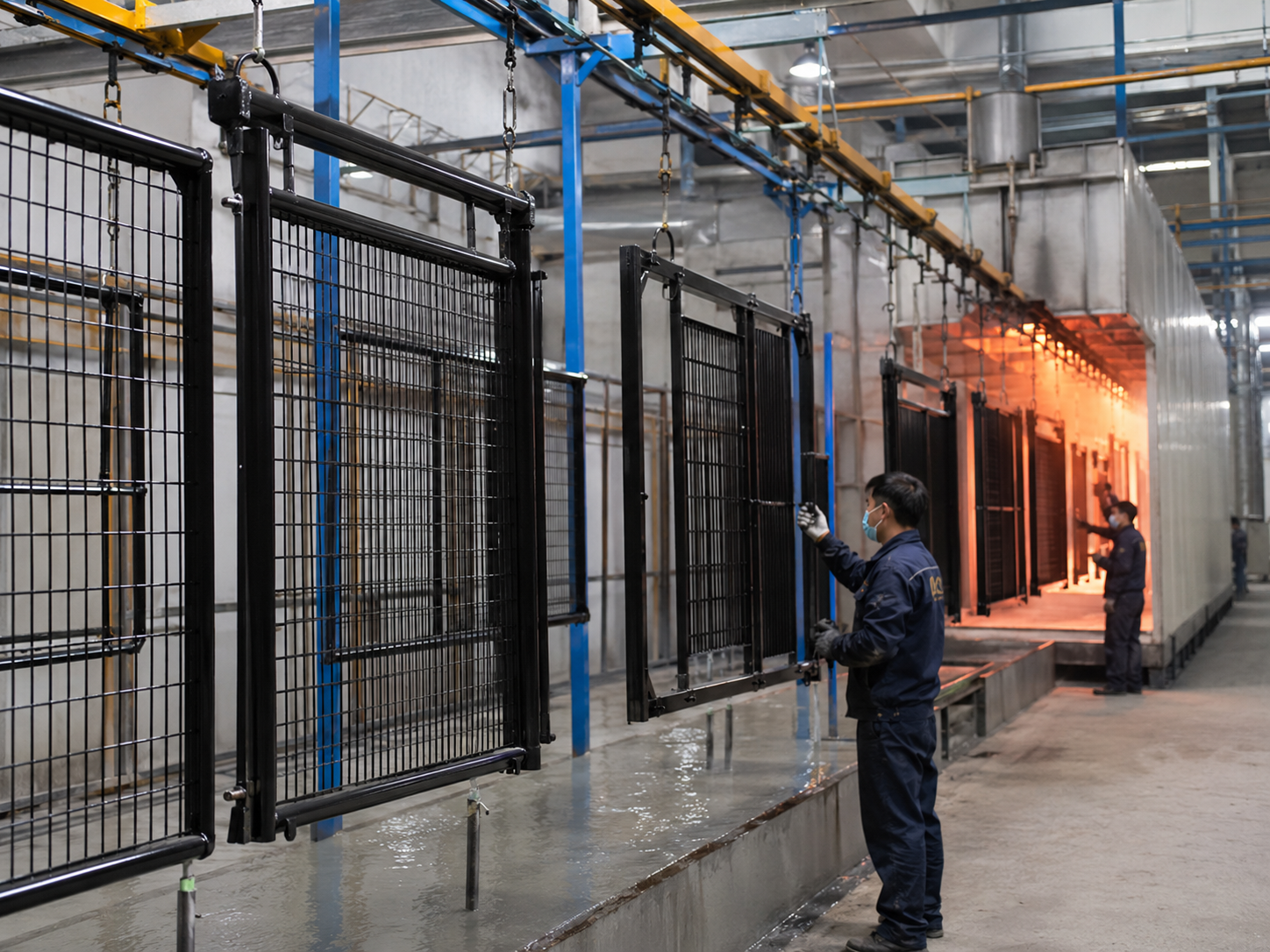
Kennel Panels and Pet Fences
Large kennel panels, wire fences, modular pet gates, and outdoor pet enclosures need stronger corrosion resistance and thicker protective coating, especially for humid or semi-outdoor use.- Stronger pretreatment for outdoor or humid-use products.
- Optimized hanging method for long fence panels and frames.
- Durable curing profile for better adhesion and corrosion resistance.

Pet Toys and Metal Accessories
Metal accessories, bowls, small brackets, pet ladders, pet exercise wheels, and small toy parts require clean surface appearance, flexible color options, and stable coating thickness on small or irregular shapes.- Suitable for small parts, custom colors, and short-batch production.
- Manual plus automatic spraying layout for mixed product sizes.
- Careful powder selection for safe pet-contact applications.
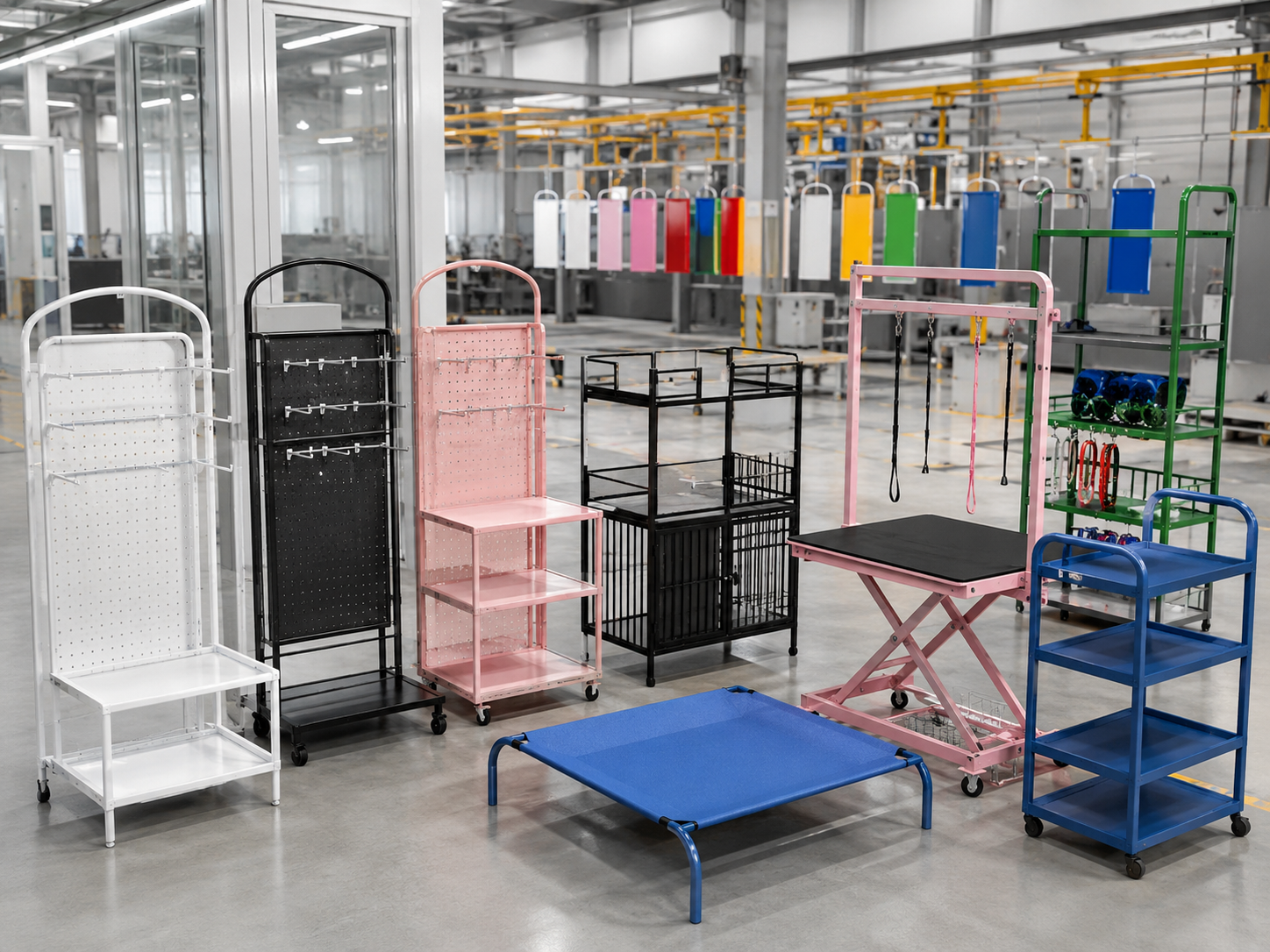
Pet Product Display and Retail Racks
Pet retail stands, display racks, grooming equipment frames, and storage racks need consistent color, clean visible surfaces, and reliable coating quality for retail environments.- Gloss, color, and texture options for brand display needs.
- Good coating appearance on visible surfaces and welded joints.
- Flexible color-change plan for seasonal retail products.
Pet Product Coating Challenges Solved by KETU Technology
Pet products face special requirements because the coating must be attractive, durable, corrosion resistant, and safe for products that may come into direct contact with pets.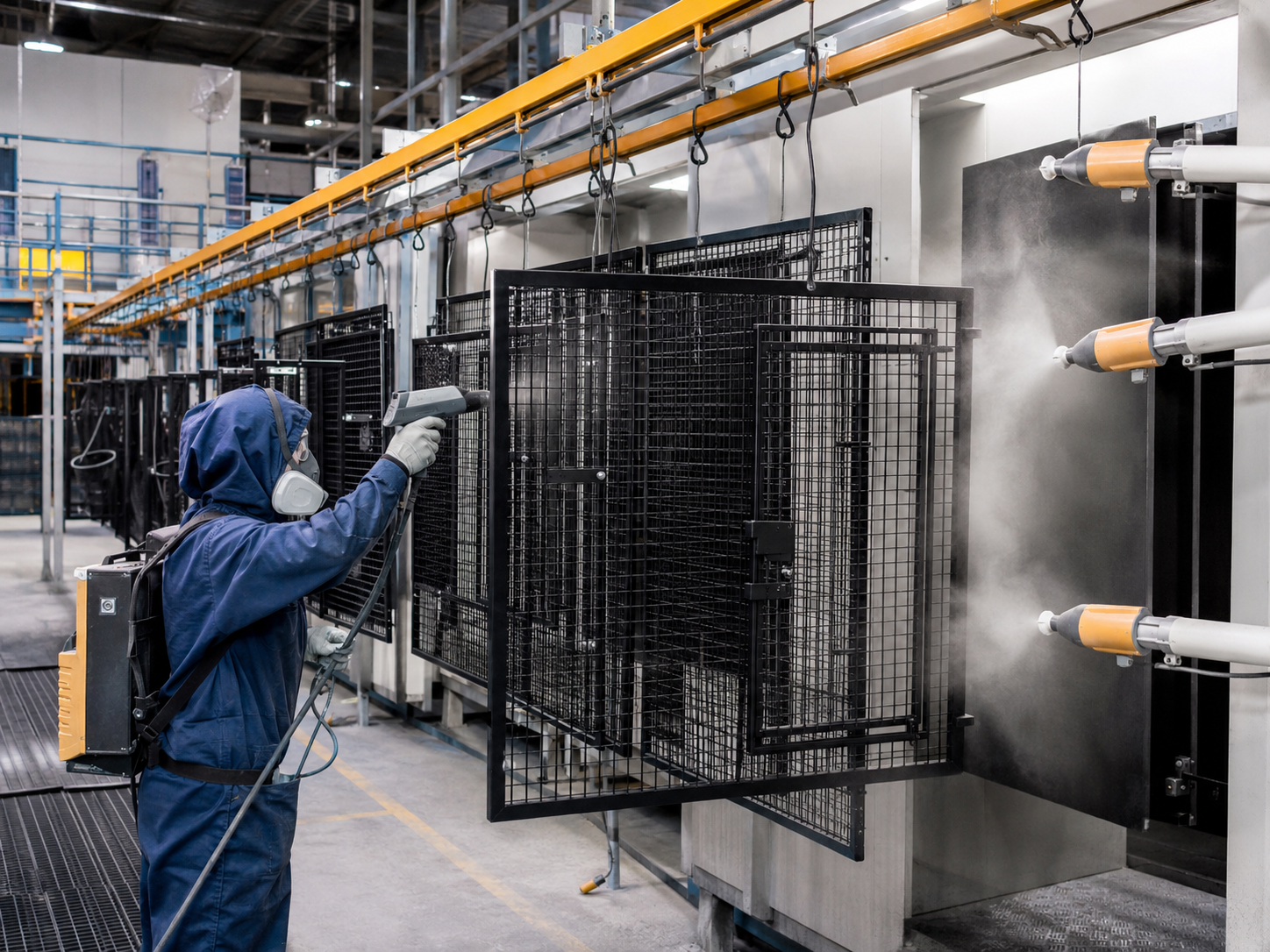
Uneven Coverage on Wire Mesh and Complex Cage Frames
Challenge: Pet cages have dense wire mesh, welded corners, hinges, doors, locks, and narrow shadow areas. Poor gun placement can cause thin coating, overspray waste, and rework. KETU Solution: Automatic spray guns, correct hanging orientation, stable grounding, and backpack manual spray room support improve coating coverage on cage frames and difficult corners.- Better coating on wire mesh and welded joints.
- Manual touch-up for lock areas, door corners, and shadow zones.
- Stable coating appearance across repeated cage batches.
Pet Safety and Coating Quality Requirements
Challenge: Pet cages and toys may contact pets directly. Buyers need coating that is safe, smooth, durable, and not easy to peel during use or cleaning. KETU Solution: Proper pretreatment, powder selection, controlled film thickness, and complete curing help improve adhesion, hardness, corrosion resistance, and coating stability.- Powder material selection based on pet product safety requirements.
- Strong pretreatment to reduce peeling and corrosion risk.
- Controlled curing curve for solid and stable coating film.
High-Volume Pet Cage Production Requires Stable Line Rhythm
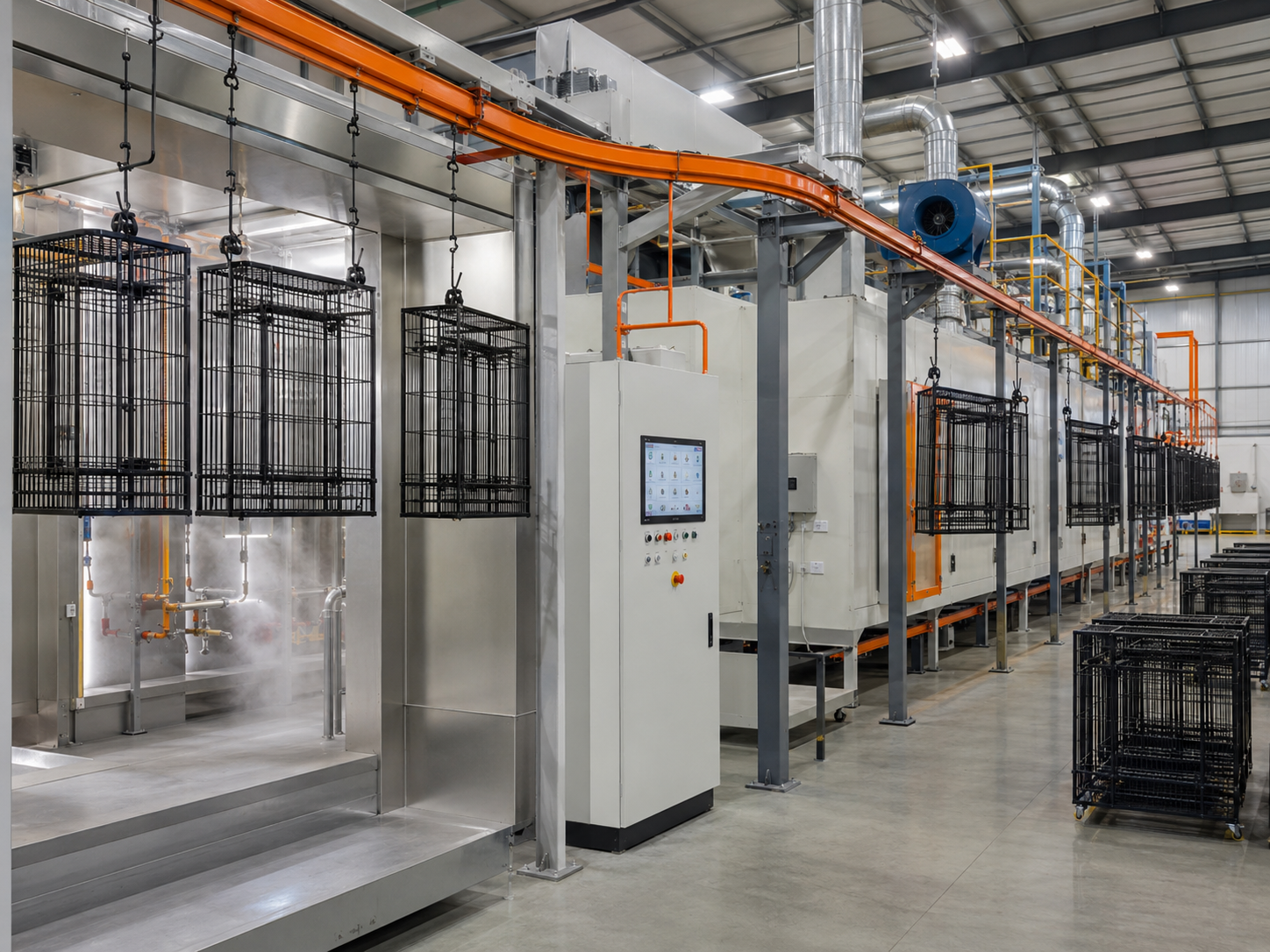
Challenge: Pet cage factories may need tens of thousands of products per month. Low automation, unstable conveyor rhythm, or slow curing can reduce output. KETU Solution: Automatic conveying, spray pretreatment, automatic powder room, natural gas curing furnace, cooling, and PLC touch-screen control create a continuous line for high-volume production.- Reference line supports up to 150,000 pet cages per month.
- High-power circulation fan helps maintain curing oven stability.
- PLC control improves line consistency and daily operation management.
Need for Environmental and Market-Competitive Production
Challenge: Pet product manufacturers must improve product appearance and market competitiveness while reducing pollution and waste. KETU Solution: Electrostatic powder coating does not rely on solvent-based liquid paint during application. Powder recovery reduces material waste, and powder color, texture, and gloss can be adjusted for different pet product lines.- Powder coating has no solvent VOC emissions during application.
- Color, texture, and gloss can be customized for pet products.
- Powder recovery helps reduce waste and operating cost.
Pet Industry Powder Coating Line Equipment Modules
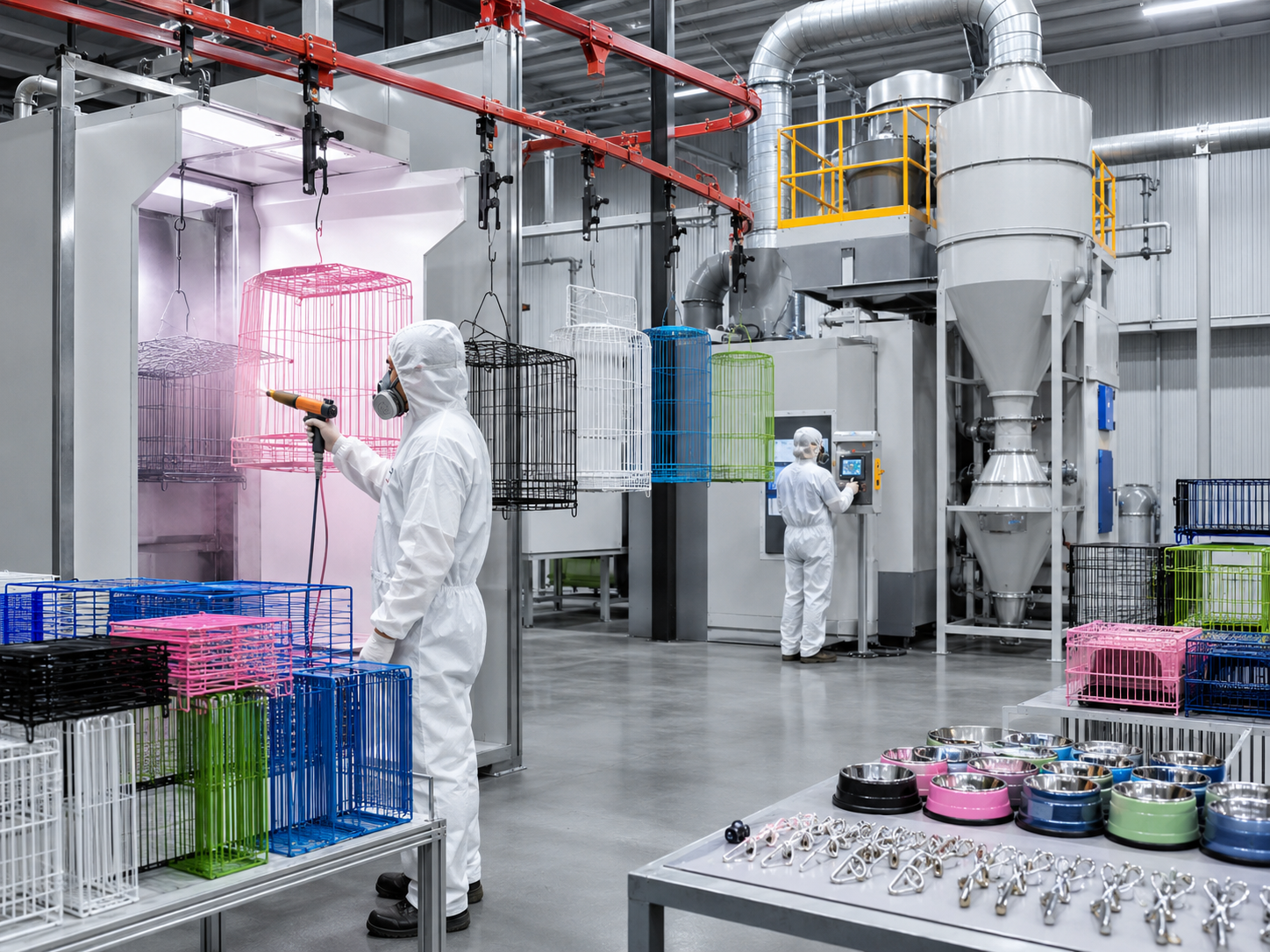
The complete line combines pretreatment, conveying, electrostatic spraying, powder supply, powder recovery, curing, cooling, inspection, and centralized control.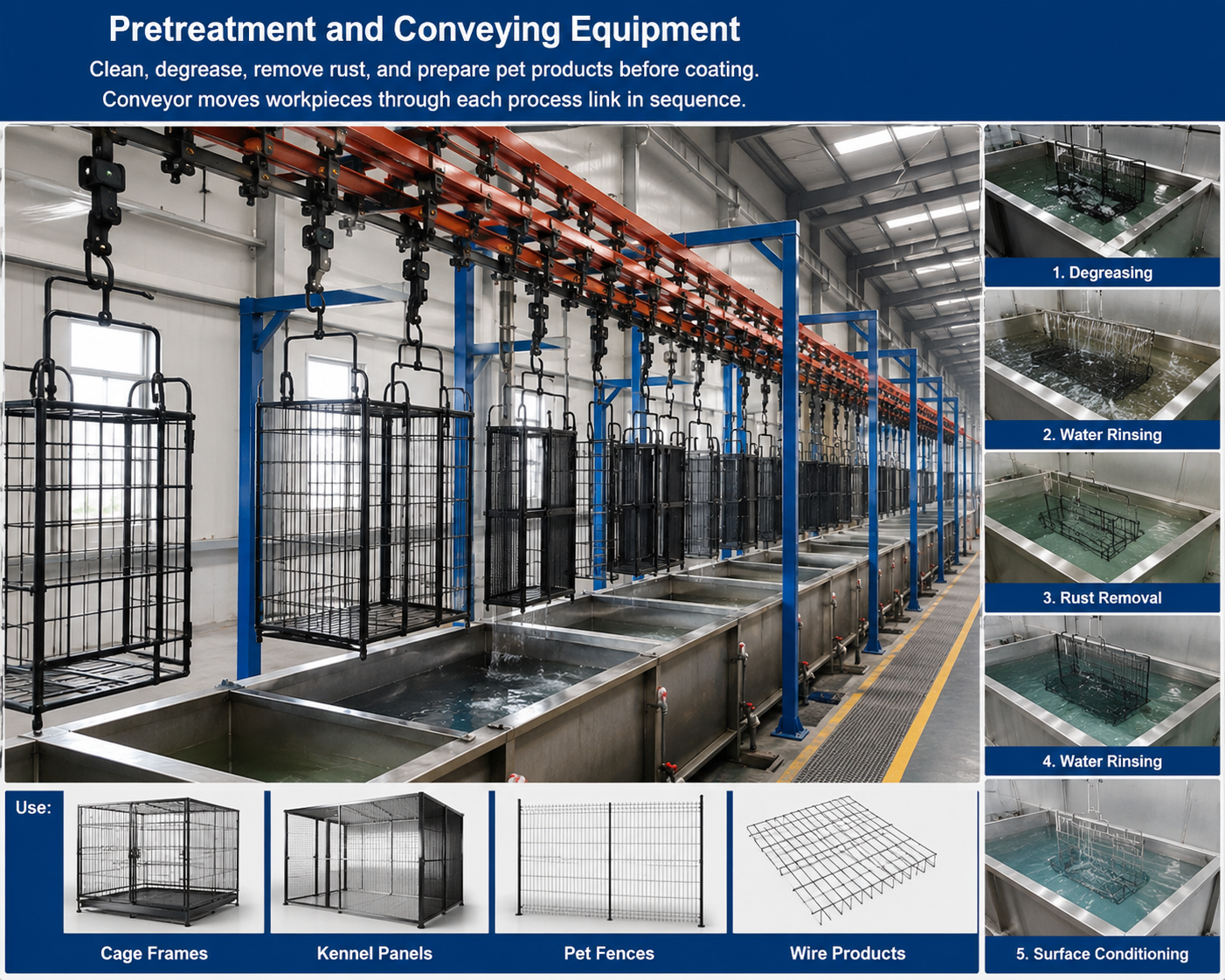
Pretreatment and Conveying Equipment
Clean, degrease, remove rust, and prepare pet products before coating. Conveyor moves workpieces through each process link in sequence. Use: cage frames, kennel panels, pet fences, wire products.
Electrostatic Spraying Equipment
Includes spray guns, electrostatic generators, powder supply systems, and control components for even powder application. Use: uniform coating on cage mesh, doors, frames, and accessories.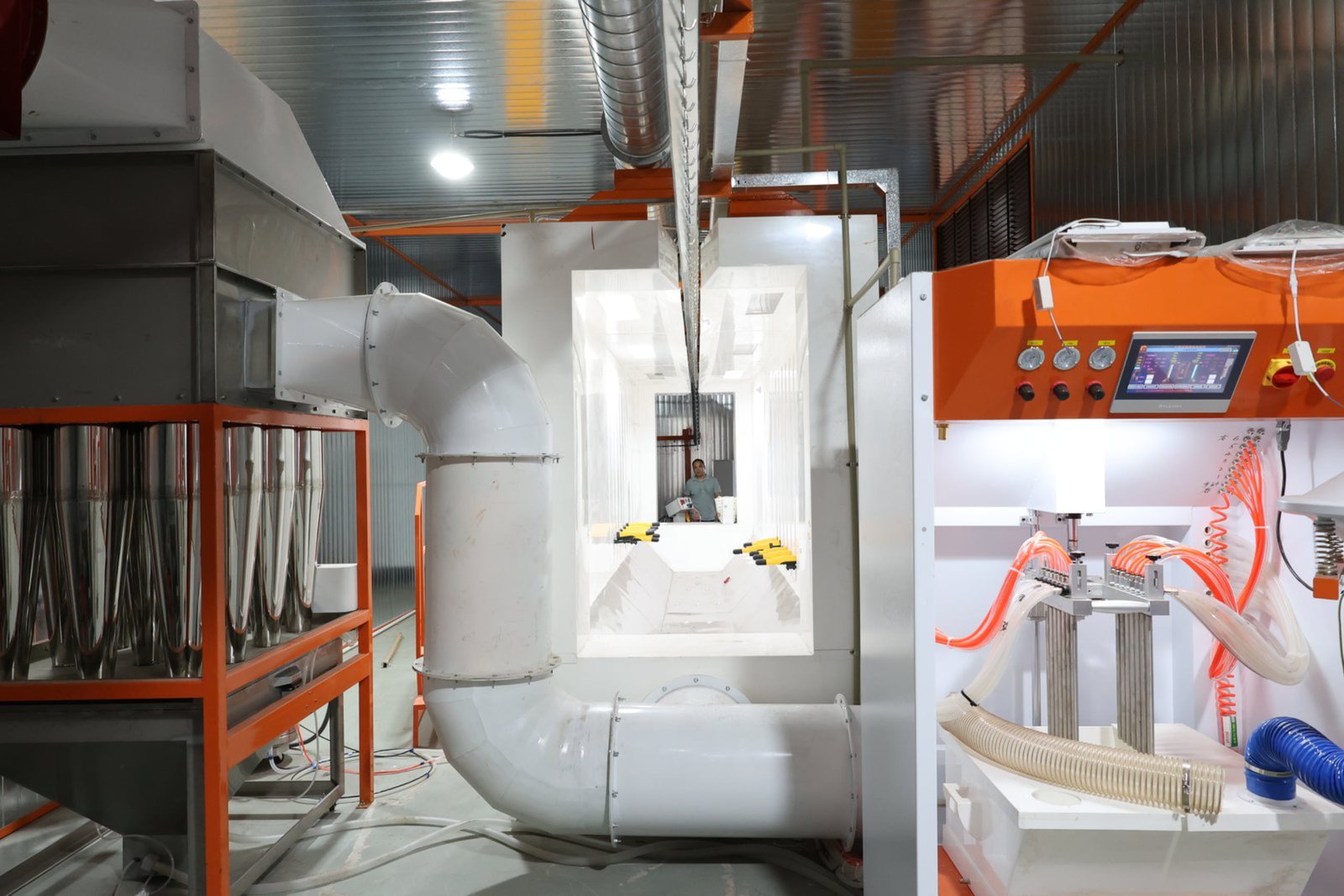
Automatic Spray Powder Room
Single-color bottom exhaust automatic spray powder room supports efficient cage coating and controlled booth airflow. Use: repeated pet cage colors and high-volume batches.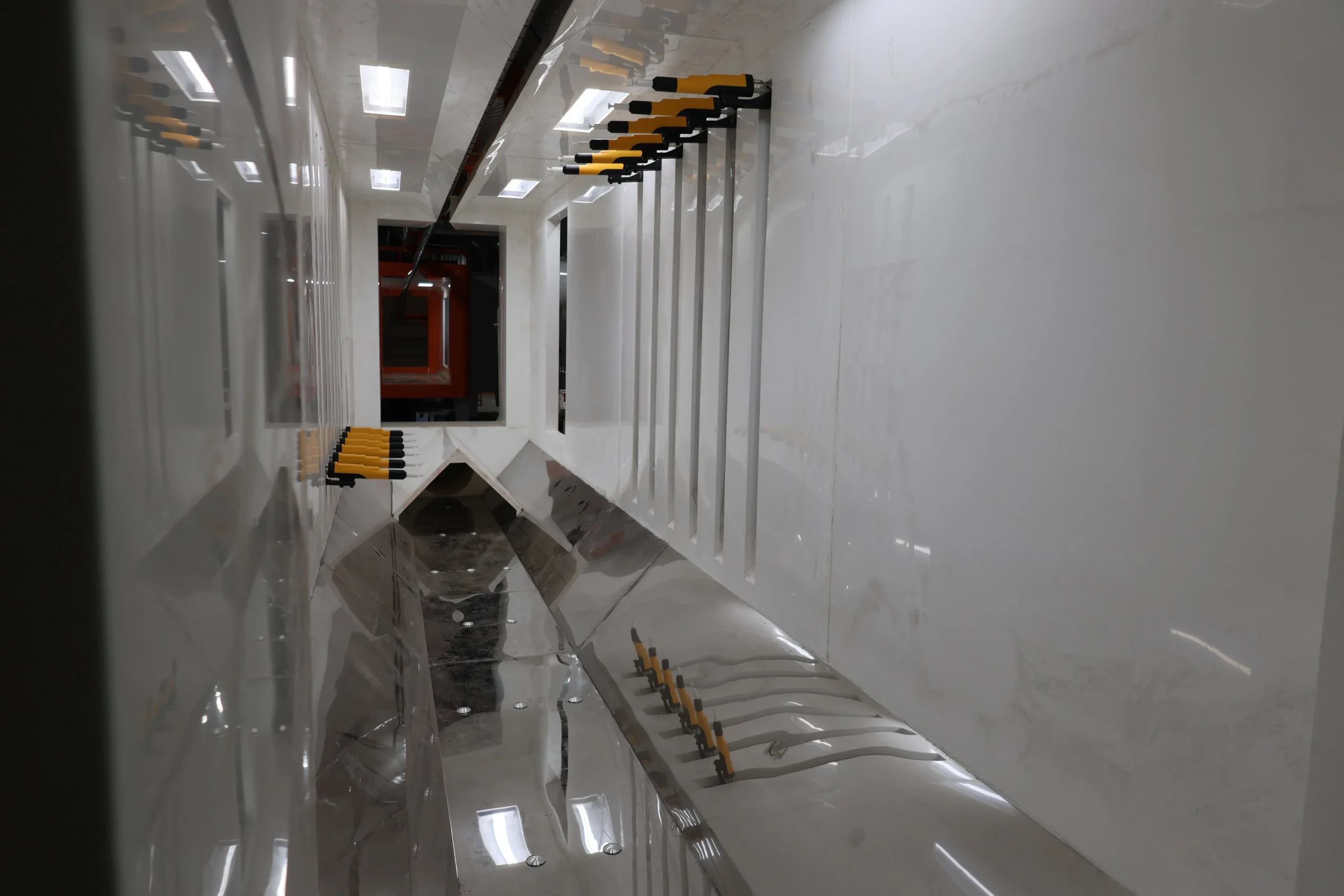
Backpack Manual Spray Room
Manual spray room provides touch-up flexibility for complex cage corners, door locks, welded joints, and special product structures. Use: mixed products, rework control, and shadow-area coating.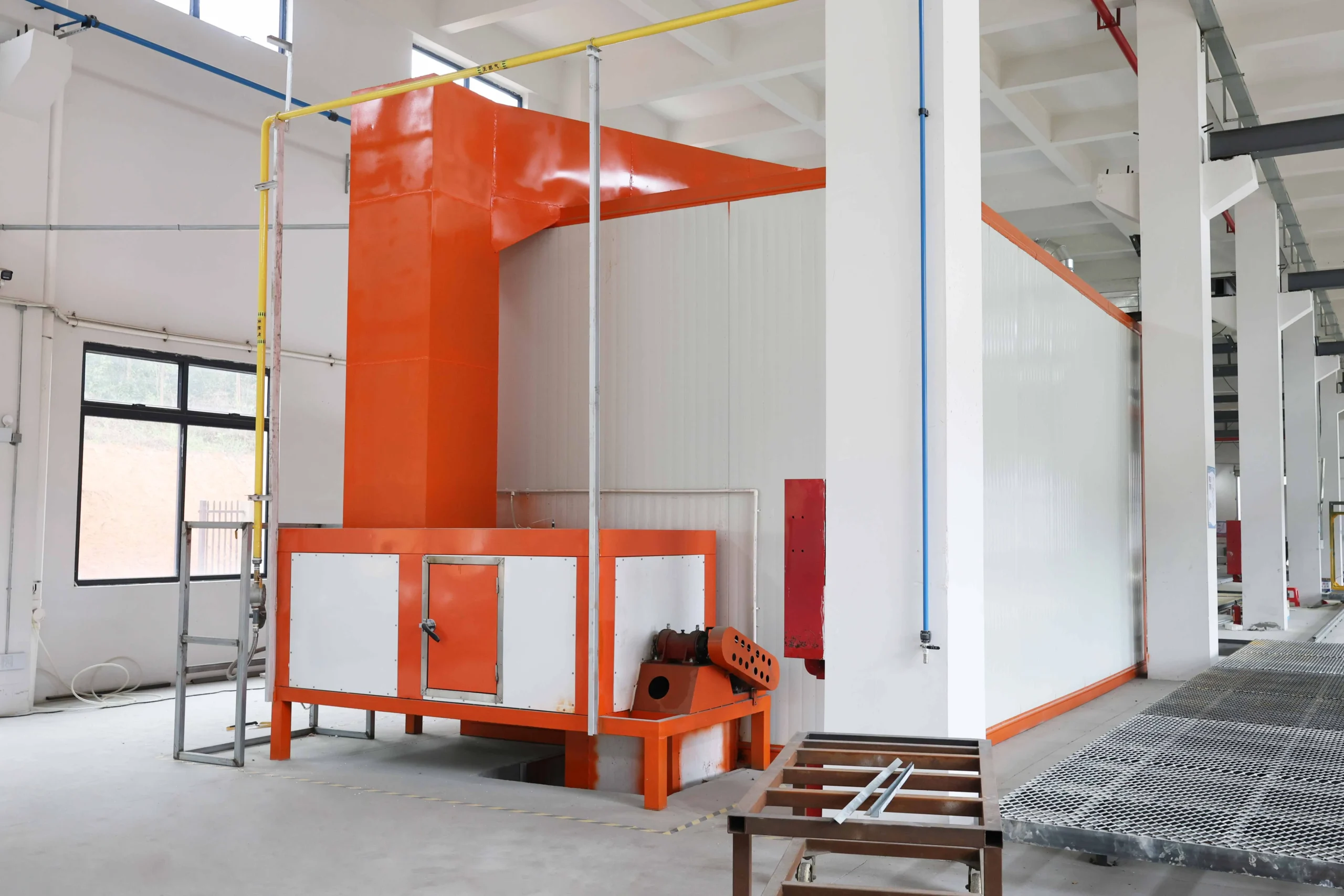
Baking and Curing Equipment
After spraying, workpieces enter the curing chamber. Powder coating melts and solidifies at high temperature to form final coating. Use: adhesion, hardness, corrosion resistance, and coating durability.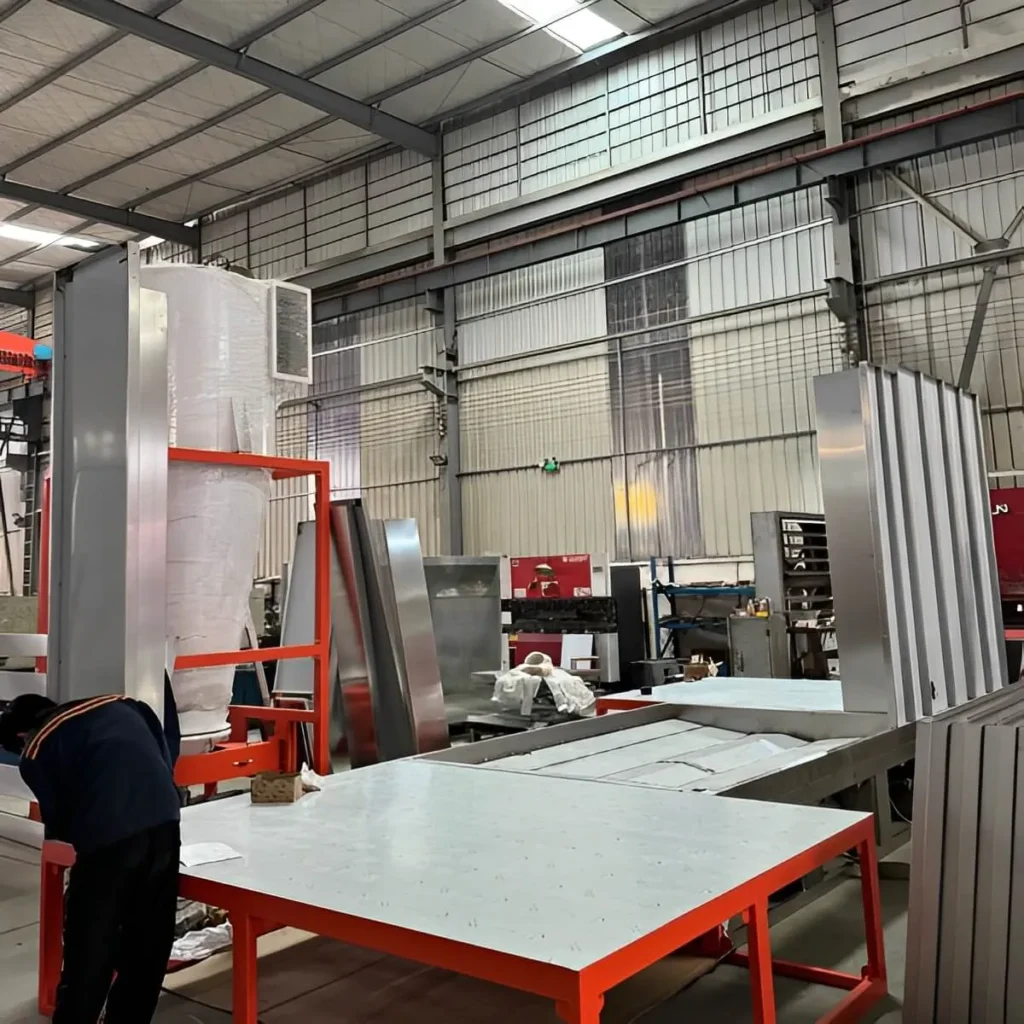
Post-Processing Equipment
Cooling, inspection, packaging, and quality checking ensure that final pet products meet appearance and performance standards. Use: finished cage quality control and shipment preparation.Pet Cage Electrostatic Coating Production Line Reference
This reference line was designed for a pet cage company positioned in the middle and high-end market. The coating products are mainly pet cages, with reference monthly spraying volume up to 150,000 pieces.Pet Cage Coating Production Line
The line uses spray pretreatment, automatic powder spraying, backpack manual spraying, natural gas heating, high-power circulation fan, variable temperature control, and PLC touch-screen pipeline control. The process improves production efficiency, coating quality, and pet product market competitiveness.
Four Main Systems in Pet Industry Coating Production
The pet industry coating line uses a practical modular structure to process metal pet products from surface preparation to final cooling and inspection.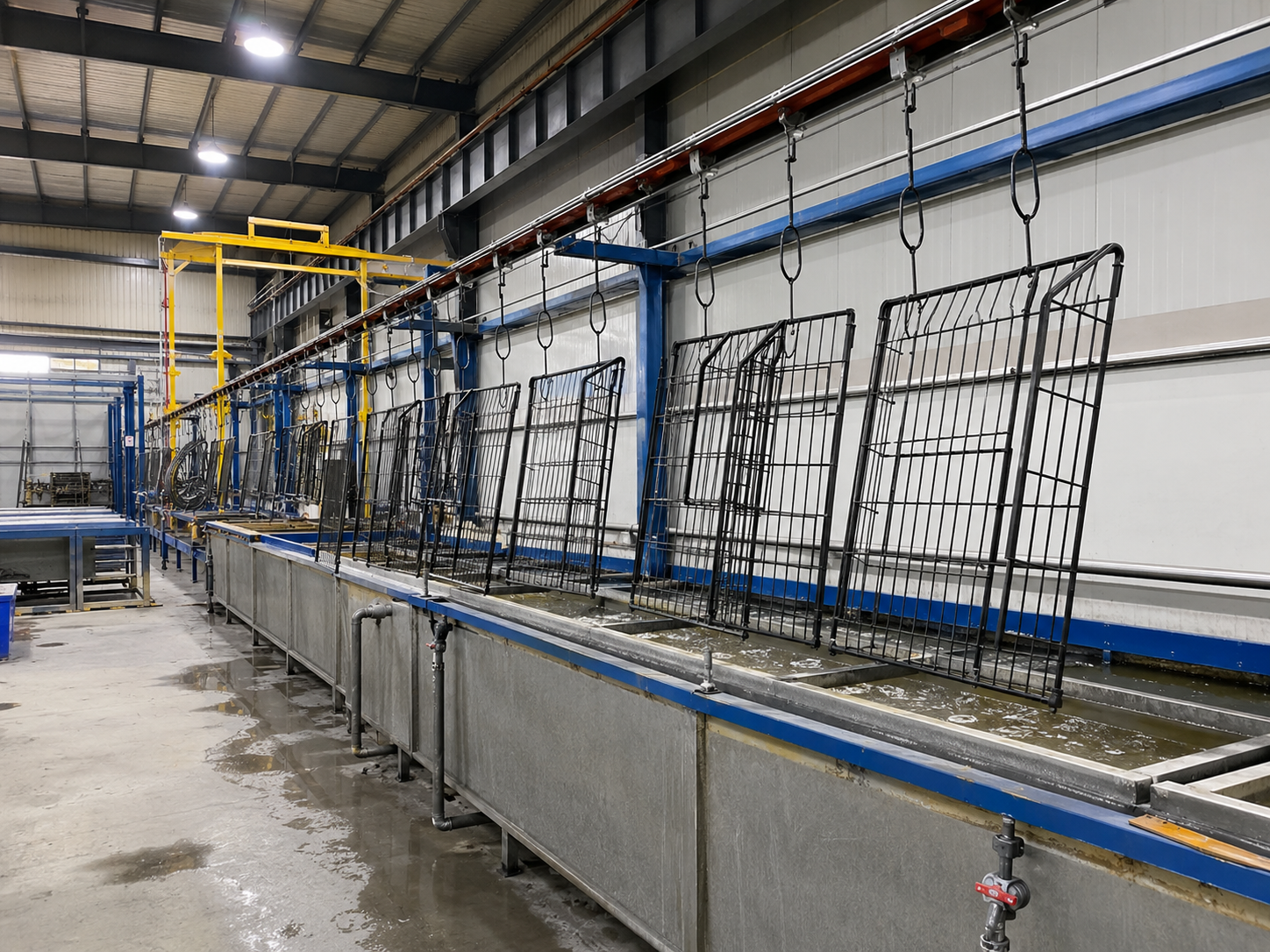
01 Pretreatment and Conveying
Clean, degrease, and remove rust from pet products to ensure the surface is clean and improve coating adhesion. Conveying equipment moves workpieces to each processing link in sequence.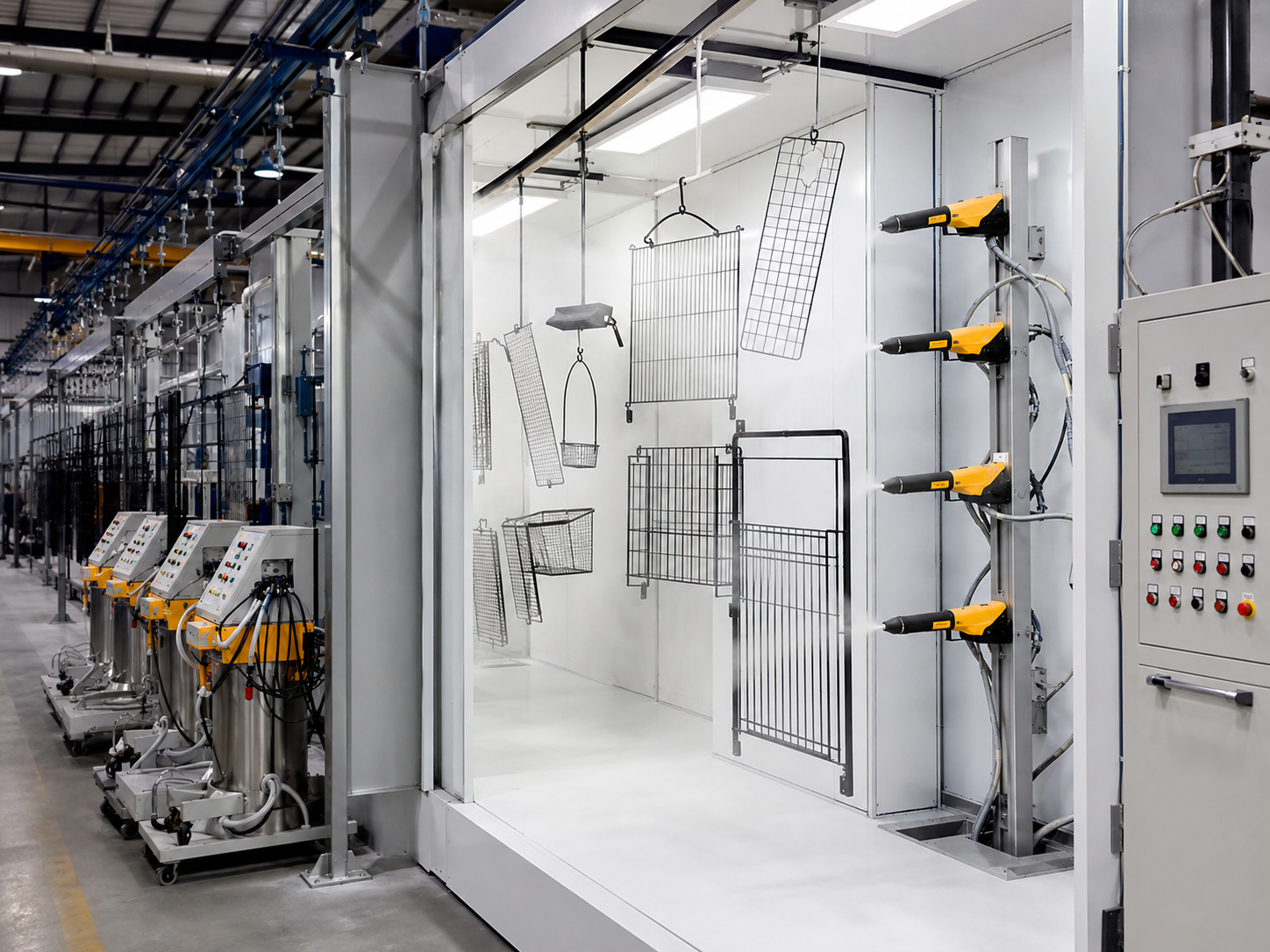
02 Electrostatic Spraying
Spray guns, electrostatic generators, and powder supply systems evenly spray powder coating on the surface of grounded pet product workpieces.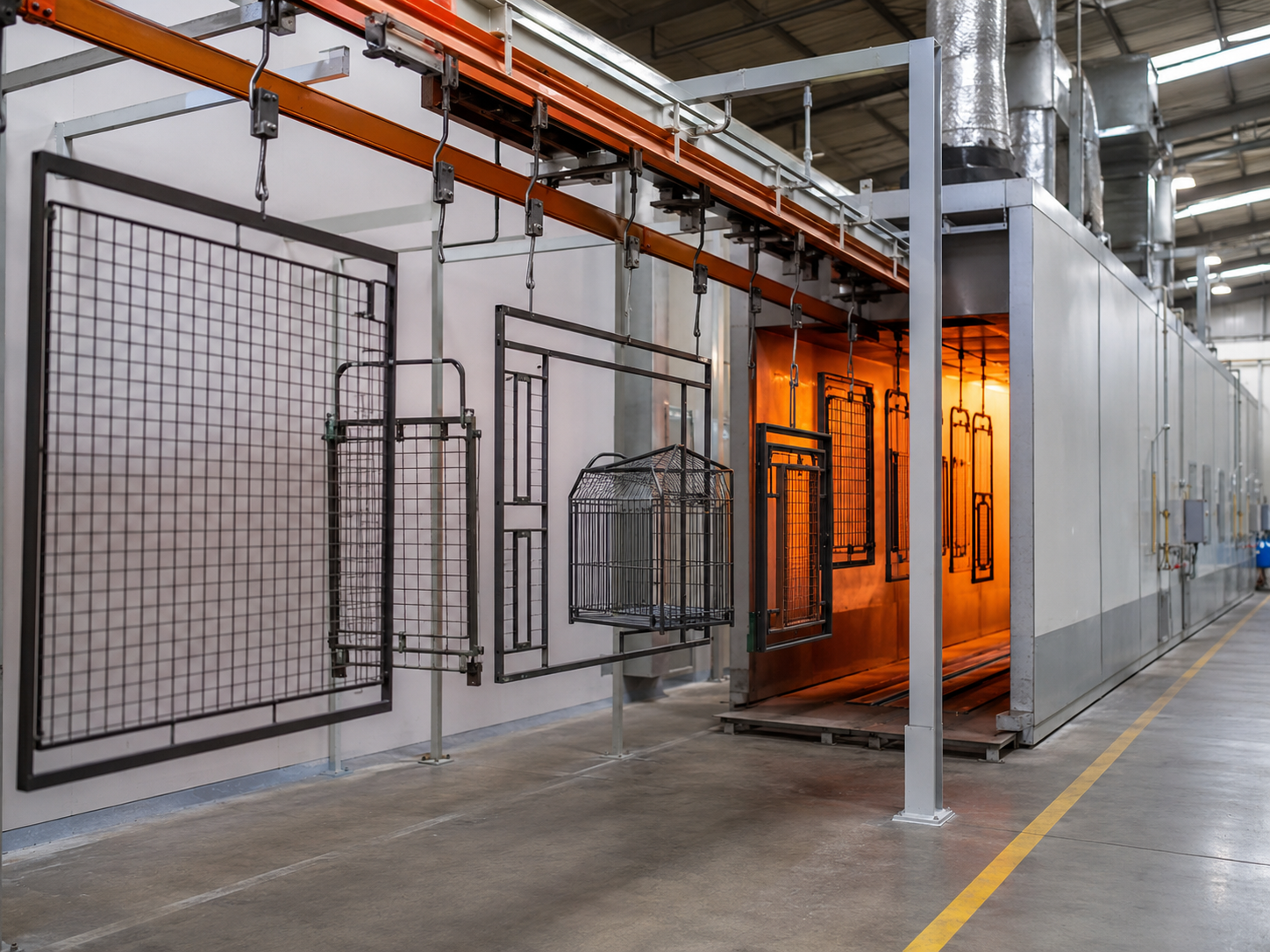
03 Baking and Curing
After spraying, workpieces enter the baking chamber. Powder coating melts and solidifies under high temperature to form the final coating.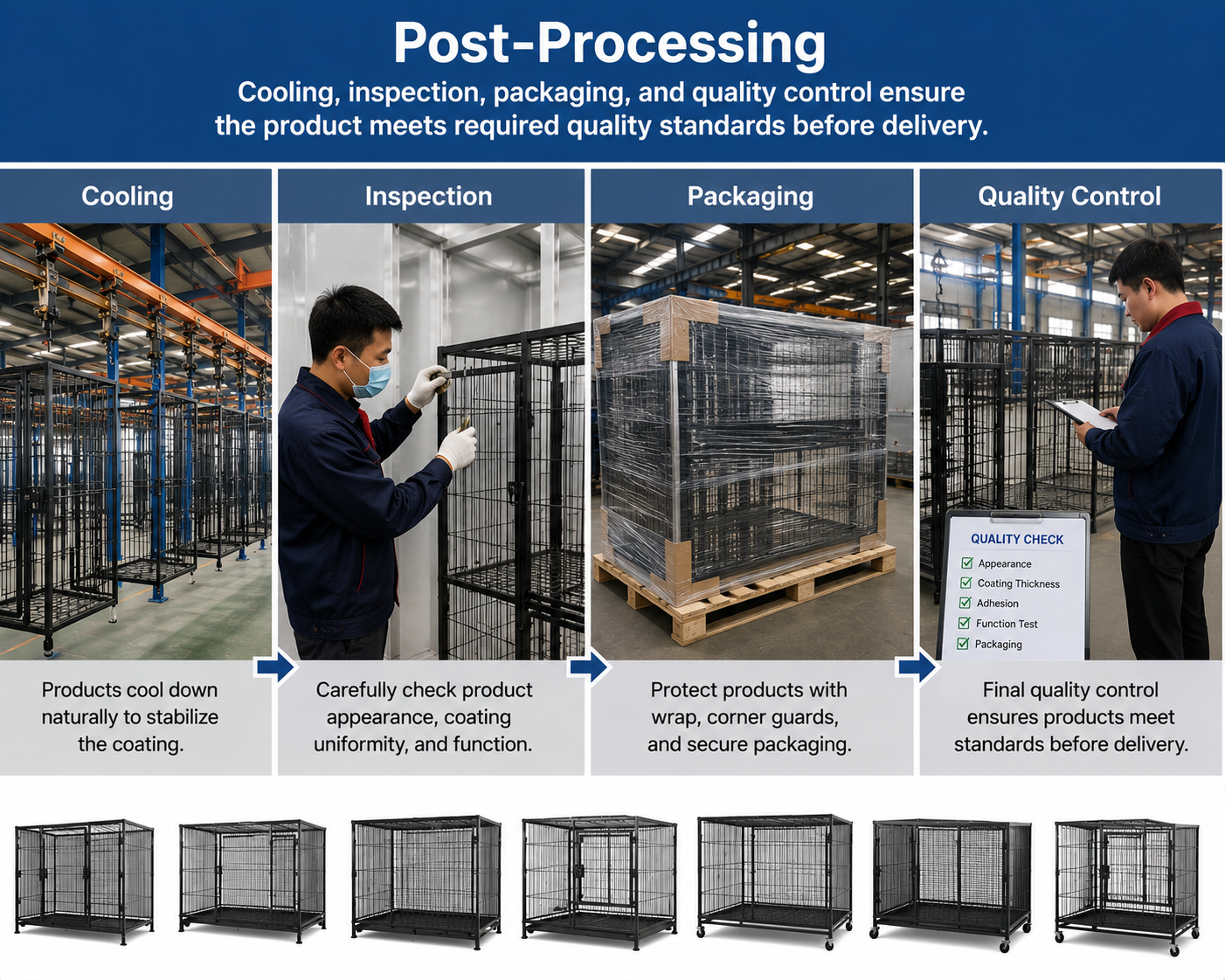
04 Post-Processing
Cooling, inspection, packaging, and quality control ensure the product meets required quality standards before delivery.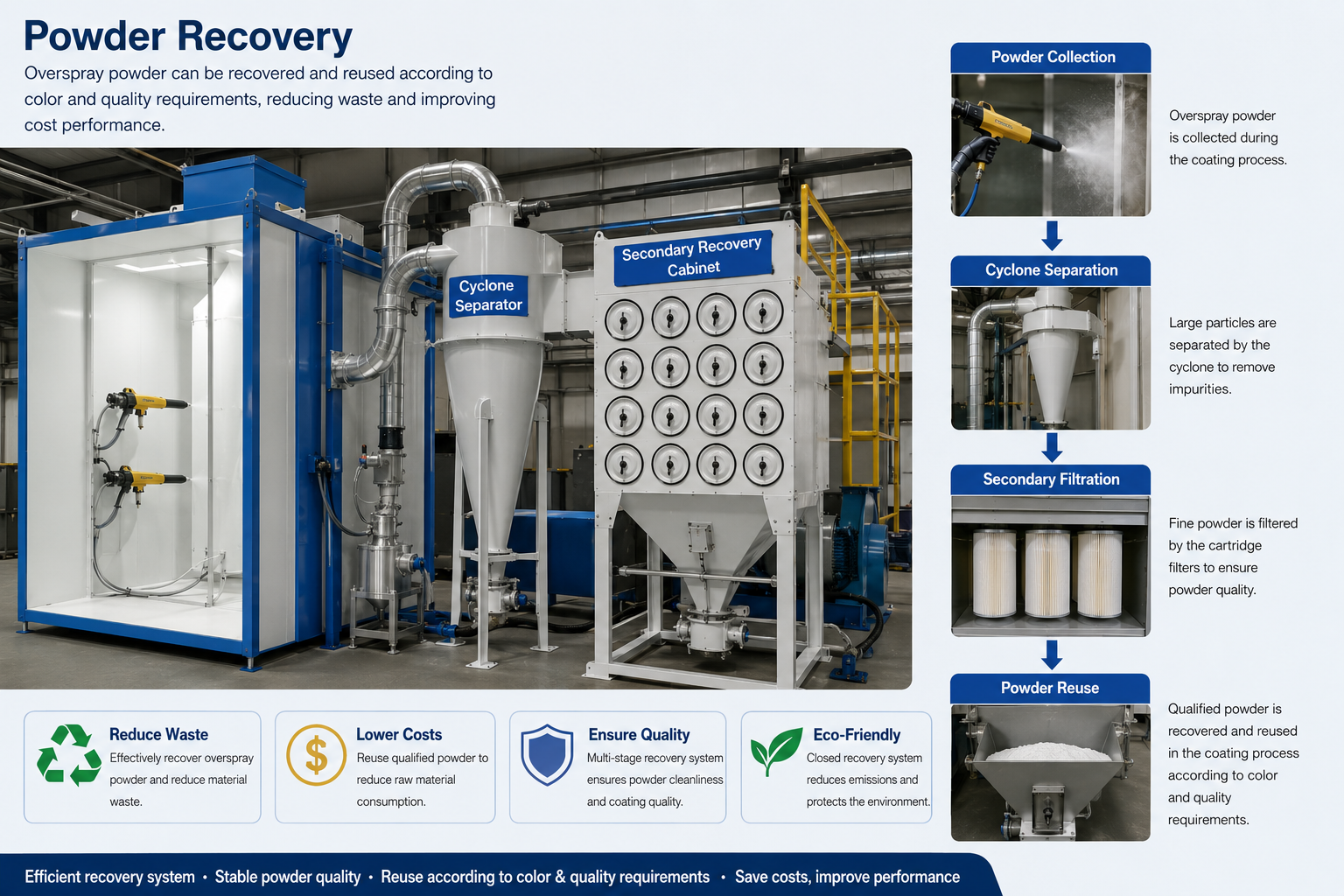
Powder Recovery
Overspray powder can be recovered and reused according to color and quality requirements, reducing waste and improving cost performance.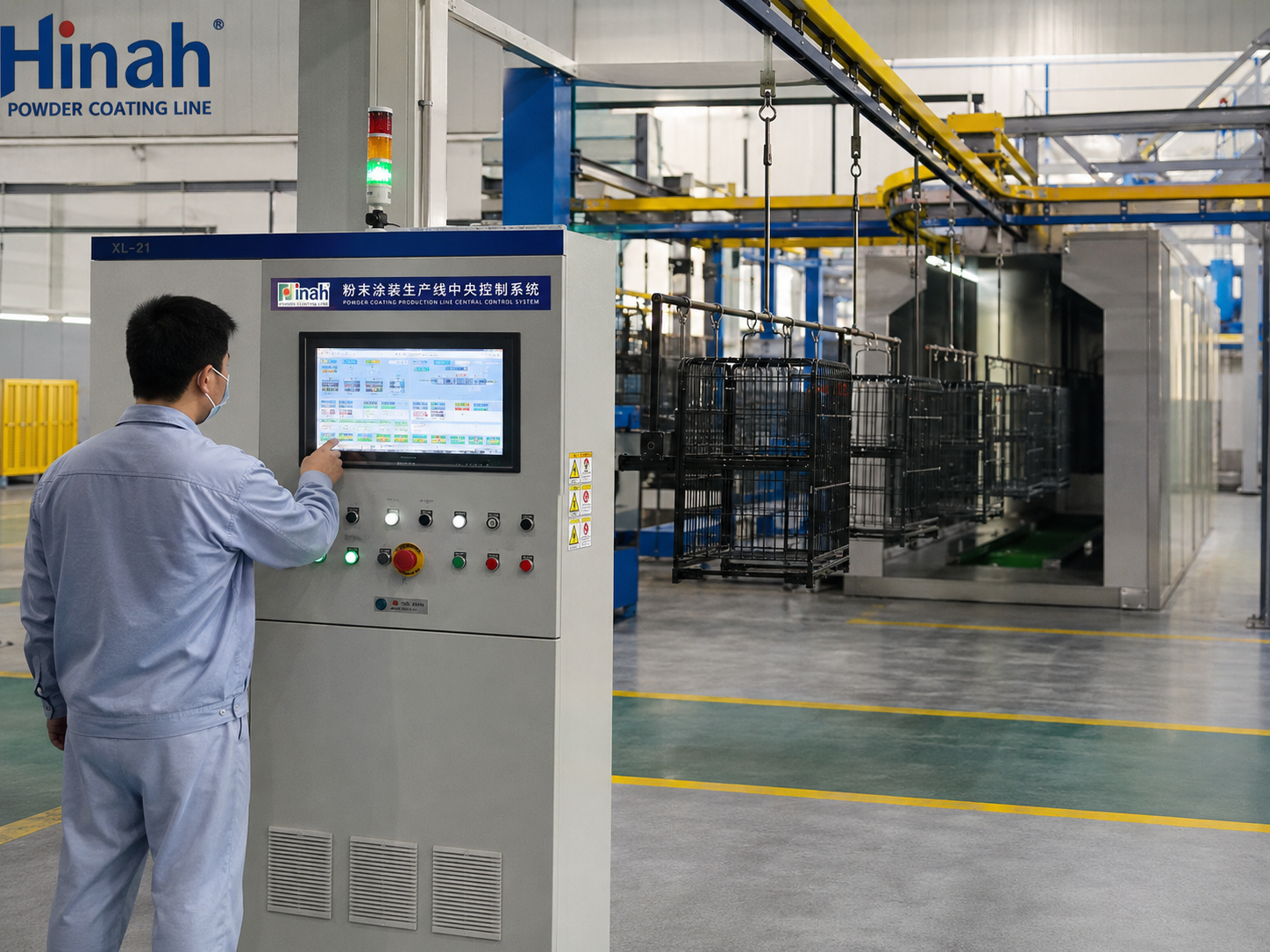
Centralized PLC Control
PLC touch-screen control improves production stability, line monitoring, and operator convenience for continuous cage production.Complete Pet Cage Powder Coating Process
The process follows the reference route: hanging, pretreatment, drying, powder coating, curing, cooling, and removing workpieces.Stage 1: Hanging Workpiece
Pet cages or cage components are hung on fixtures. Correct hanging reduces collision, improves grounding, and supports better coating coverage on wire structures.Stage 2: Spray Pretreatment
Spray pretreatment uses a high-pressure water pump to form treatment liquid into mist and spray it evenly onto the workpiece surface. This cleans the workpiece, improves processing speed, and can help save energy.Stage 3: Drying Furnace
After pretreatment, the workpiece enters the drying furnace. Surface moisture is removed before powder coating to reduce bubbles, pinholes, and poor adhesion.Stage 4: Powder Coating Room
Powder is charged by a high-voltage electrostatic generator. Under the electrostatic field, the powder adheres to the grounded workpiece surface.Stage 5: Curing Furnace
The coated workpiece enters the curing furnace. Powder melts and cures to form a uniform, solid, and durable coating film.Stage 6: Cooling and Removing Workpiece
After curing is completed, the workpiece is cooled, removed from the line, inspected, and prepared for packaging or final assembly.Why Electrostatic Powder Coating Fits the Pet Industry
Through electrostatic powder coating, pet industry products can obtain good appearance, protective performance, market competitiveness, and consumer satisfaction.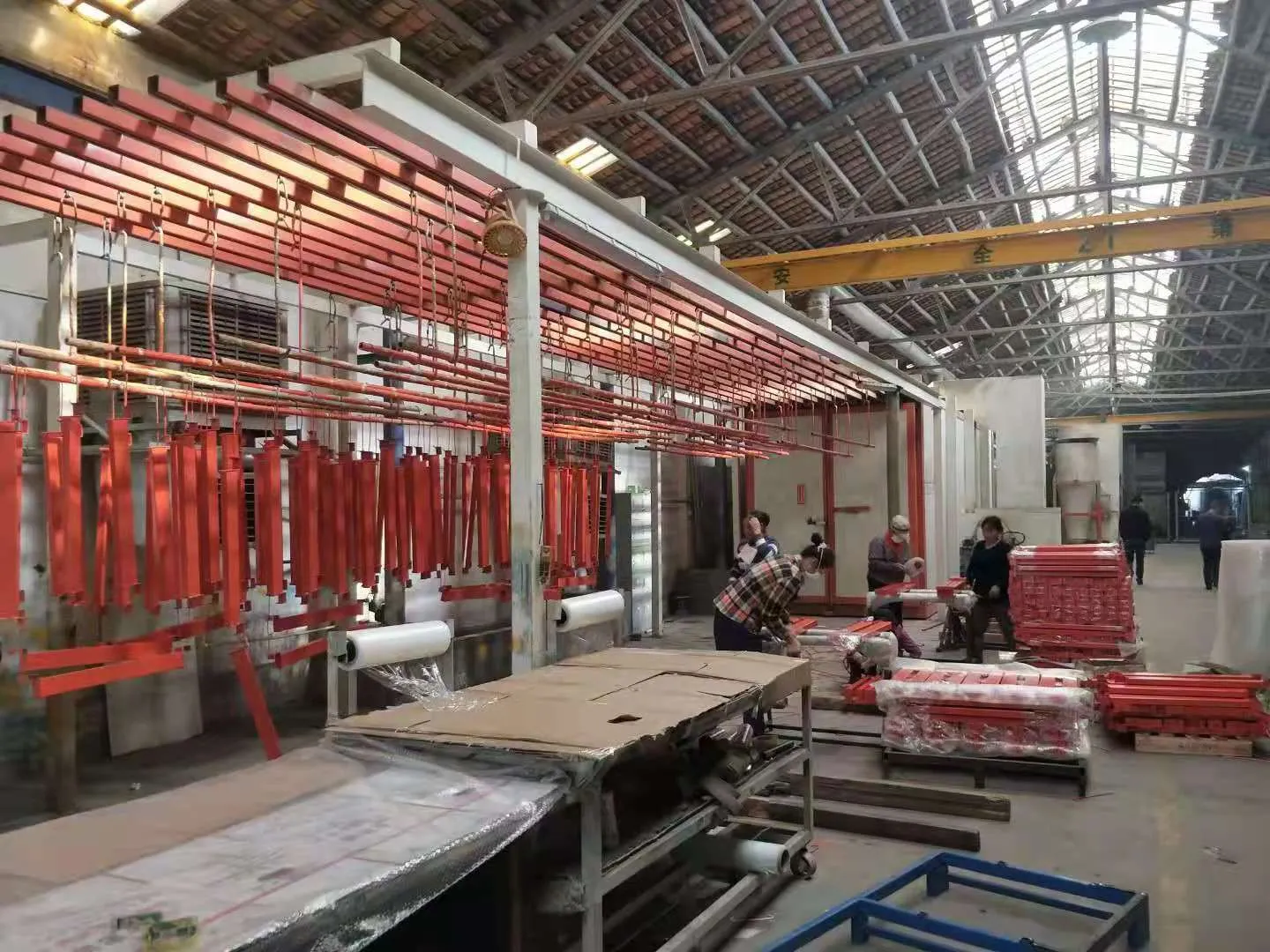
Efficient Production
Automated assembly line operation improves production efficiency and is suitable for large-scale pet cage production.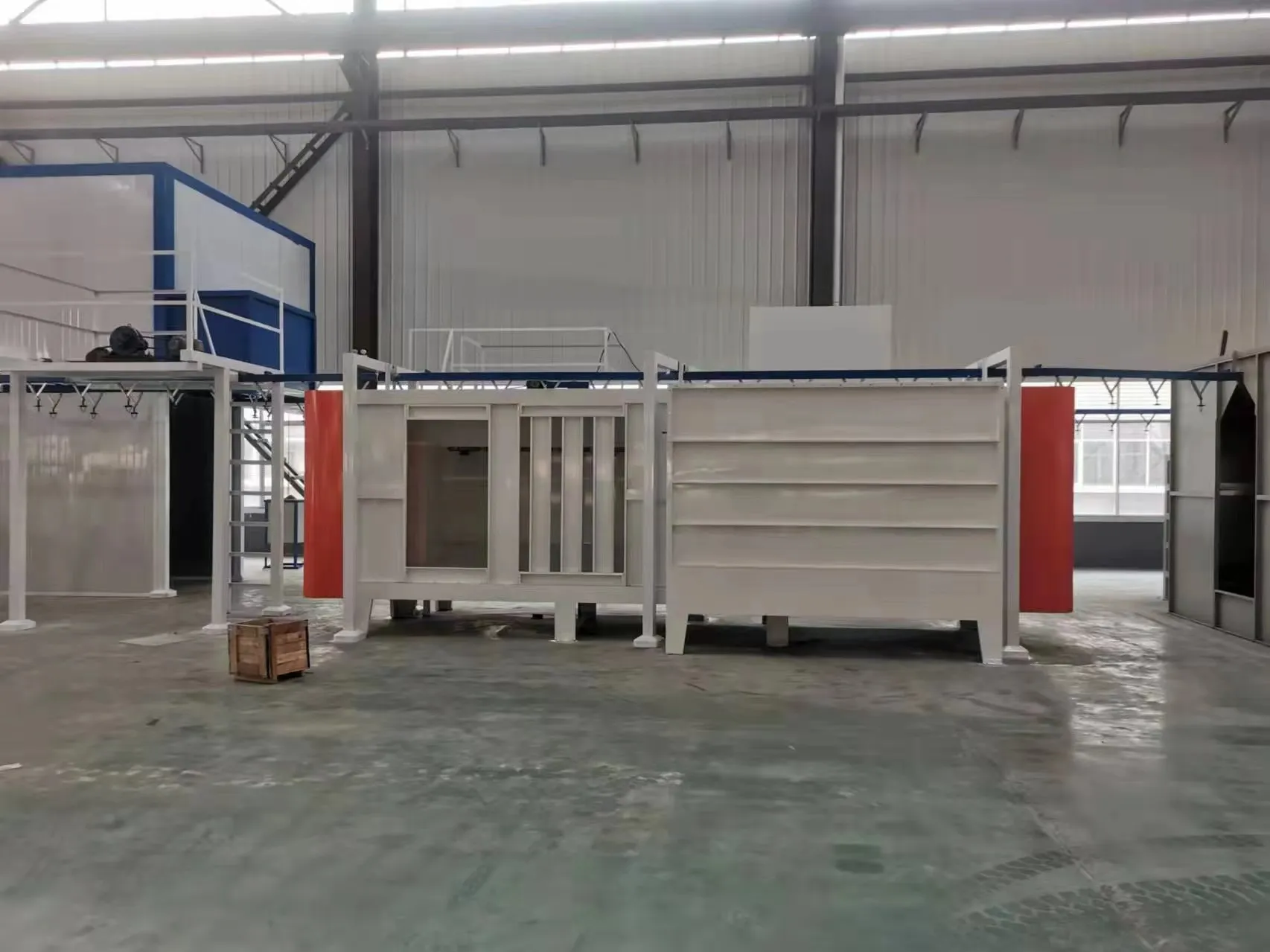
Coating Quality
Electrostatic powder coating can obtain a uniform and beautiful coating with good adhesion and corrosion resistance.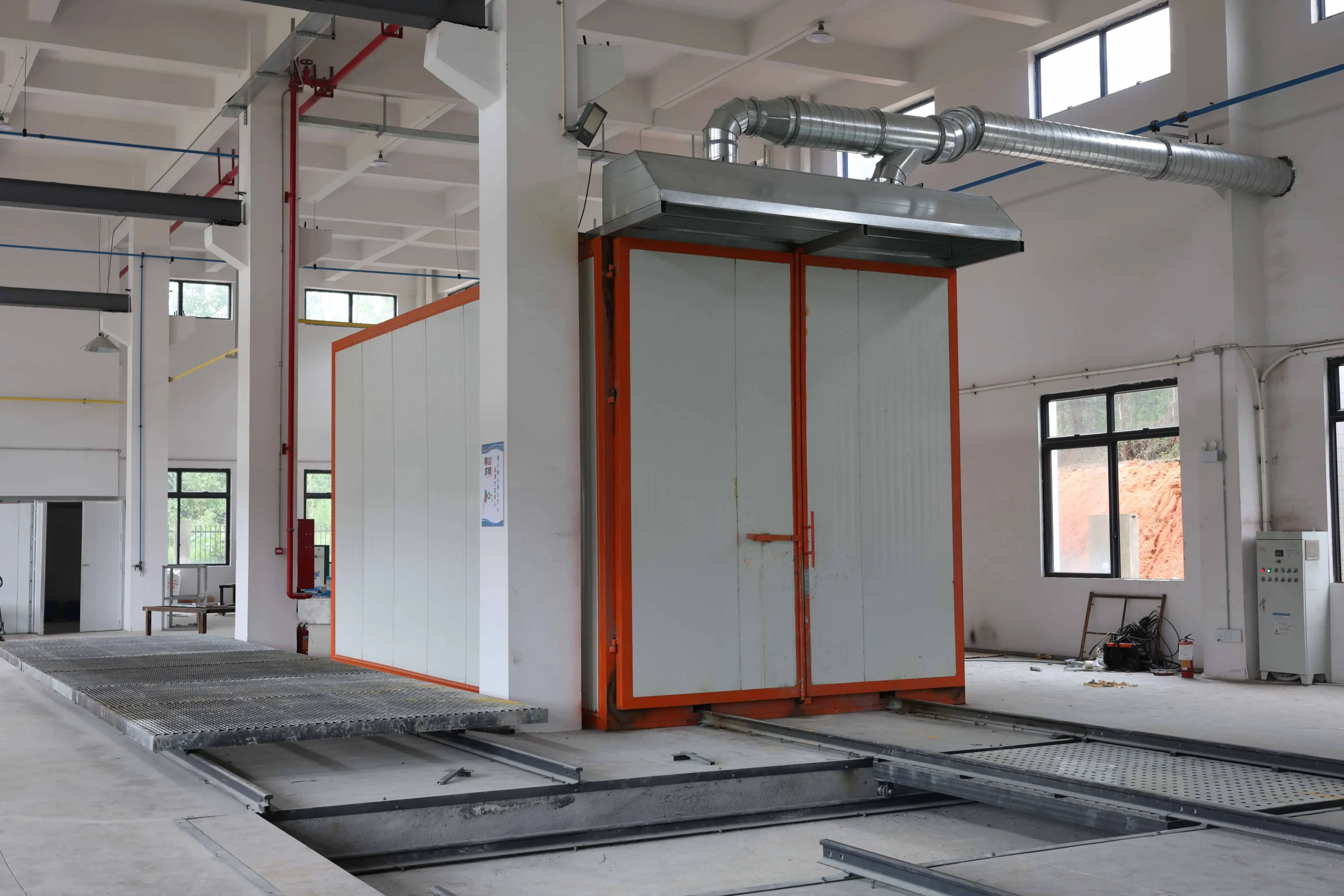
Environmental Performance
Powder coating does not contain volatile organic compounds during application and is more environmentally friendly than solvent-based liquid painting.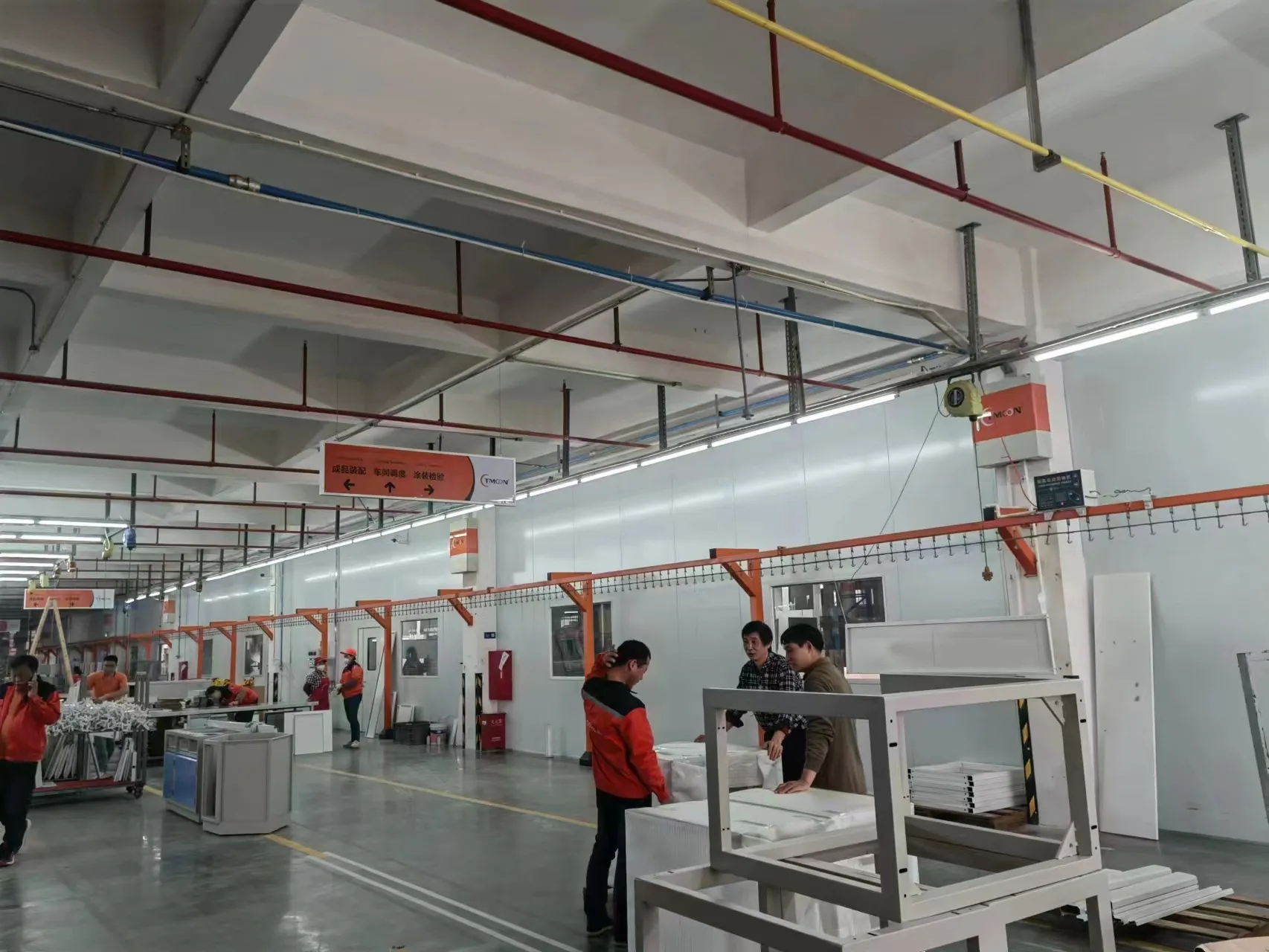
Diversity
The color, texture, and gloss of powder coating can be adjusted according to different pet product needs.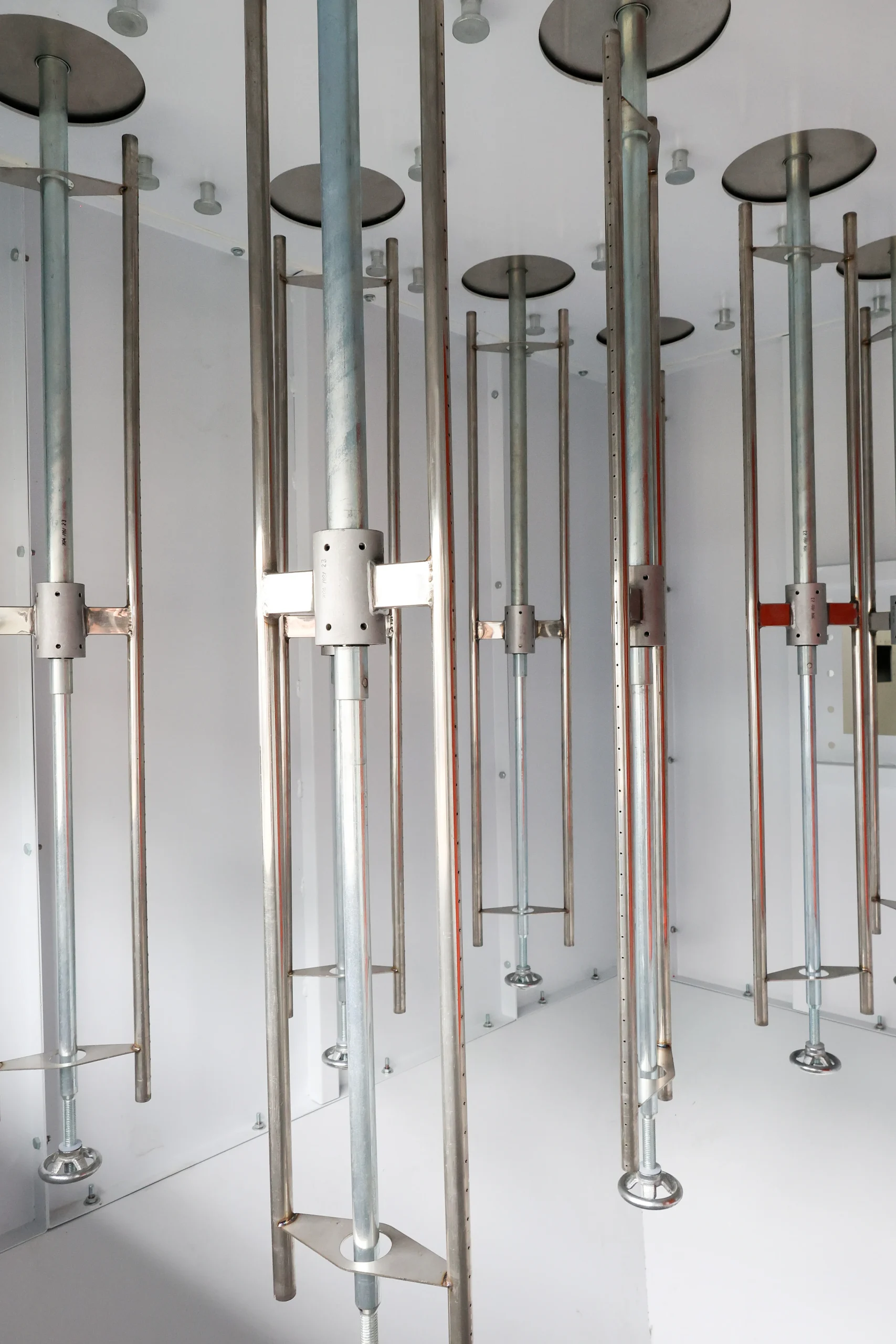
Scope of Application
Suitable for coating various metal pet products, such as pet cages, pet toys, pet fences, kennel panels, and other pet hardware.
Market Competitiveness
Better appearance and protective performance help improve product competitiveness and consumer satisfaction in the pet product market.How to Choose a Powder Coating Line for the Pet Industry
When choosing a pet industry powder coating line, evaluate product safety, coating uniformity, equipment applicability, powder material, environmental standards, maintenance, production efficiency, scalability, and total cost-effectiveness.Product Quality and Safety
Pet products may directly contact animals, so the coating must meet strict safety requirements. Choose a line and powder material that help produce non-toxic, harmless, stable coatings suitable for pet products.Coating Uniformity
Pet cages have mesh, corners, hinges, locks, and frame joints. The line must provide uniform coating to improve appearance, durability, and corrosion protection.
Equipment Applicability
Select equipment based on the size and shape of pet products. Small or complex items may need manual touch-up, while high-volume cage frames need automatic spraying and stable conveying.
Powder Material Selection
Different powder materials suit different products. Epoxy, polyester, and hybrid powders have different performance characteristics for appearance, corrosion resistance, and use environment.
Environmental Standards
The line should meet environmental requirements. Powder coating reduces VOC-related issues during application and supports sustainable production with proper recovery and exhaust design.
Maintenance and After-Sales Service
Consider maintenance cost, spare parts, supplier support, and training. Good after-sales service helps solve equipment problems quickly and reduce downtime.
Production Efficiency
Evaluate whether the line can meet production needs, including pieces per hour, coating speed, curing oven capacity, loading method, and cooling rhythm.
Scalability
If your production may increase later, choose a line that can be upgraded with more spray guns, longer oven, better recovery, or higher automation level.
Cost-Effectiveness
Evaluate purchase cost, operation cost, maintenance cost, powder recovery value, energy cost, labor reduction, coating quality, and long-term benefits together.
Factory Layout Planning
Check conveyor direction, loading and unloading space, pretreatment water treatment, oven exhaust, powder room access, and maintenance aisle before confirming the final layout.
From Requirements to Delivery
KETU provides consultation, layout design, technical confirmation, manufacturing, delivery, installation guidance, and after-sales support.
Step 1: Send Requirements
Leave your contact information and project needs. Our technicians will communicate with you to understand product type, output, factory layout, and coating requirements.Step 2: Design Plan
The design team checks your requirements, provides improvement suggestions, designs the equipment plan, and prepares a quotation.Step 3: Confirmation
After the plan and quotation are confirmed, detailed drawings are prepared and checked with you to finalize the implementation plan.Step 4: Cooperation and Delivery
After signing the contract, production is arranged. Customized equipment is packed into containers to ensure safe and timely delivery.Pet Industry Powder Coating Line FAQ
These questions cover pet cage coating quality, powder supply, curing, defects, production efficiency, and line selection.What pet products can this powder coating line handle?
Why is powder coating suitable for pet cages?
How do you ensure coating safety for pet-contact products?
Why is the coating not shiny enough?
Why does the coating change color?
Why is the coating surface orange peel?
Why do concave holes or pinholes appear in the coating?
Why do bubbles appear in the coating?
Why is the coating uneven on cage mesh and corners?
Why are impact strength and adhesion poor?
Why does powder supply become uneven?
Why is powder flying and adsorption poor?
Why is the powder spraying amount small?
What information should I send for a custom pet coating line quote?
Need a Pet Industry Powder Coating Line Layout?
Send your pet cage drawings, monthly output target, powder material requirement, color list, factory layout, energy source, and automation plan. KETU can prepare a suitable coating line configuration for your pet product production.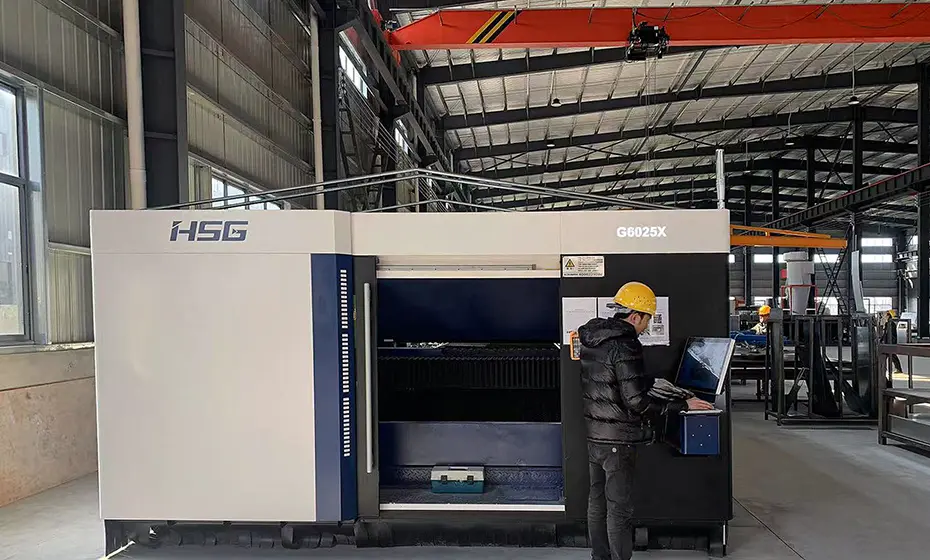
 English
  German
  Vietnamese
  French