Foundation of Quality Powder Coating
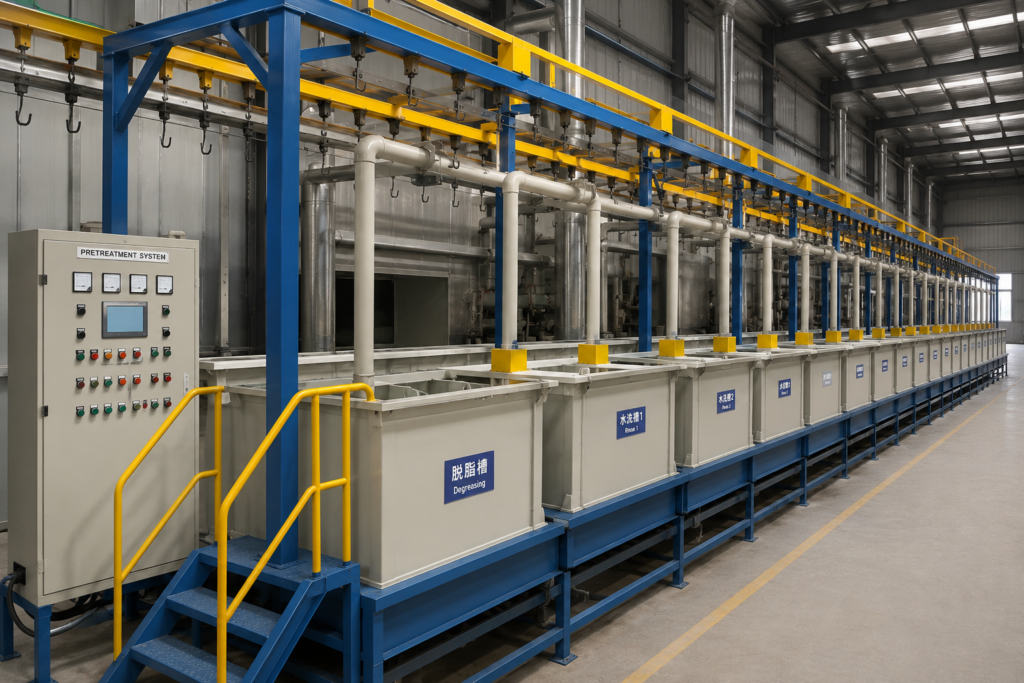
Pretreatment Systems
That Determine 80% of Your Coating Quality
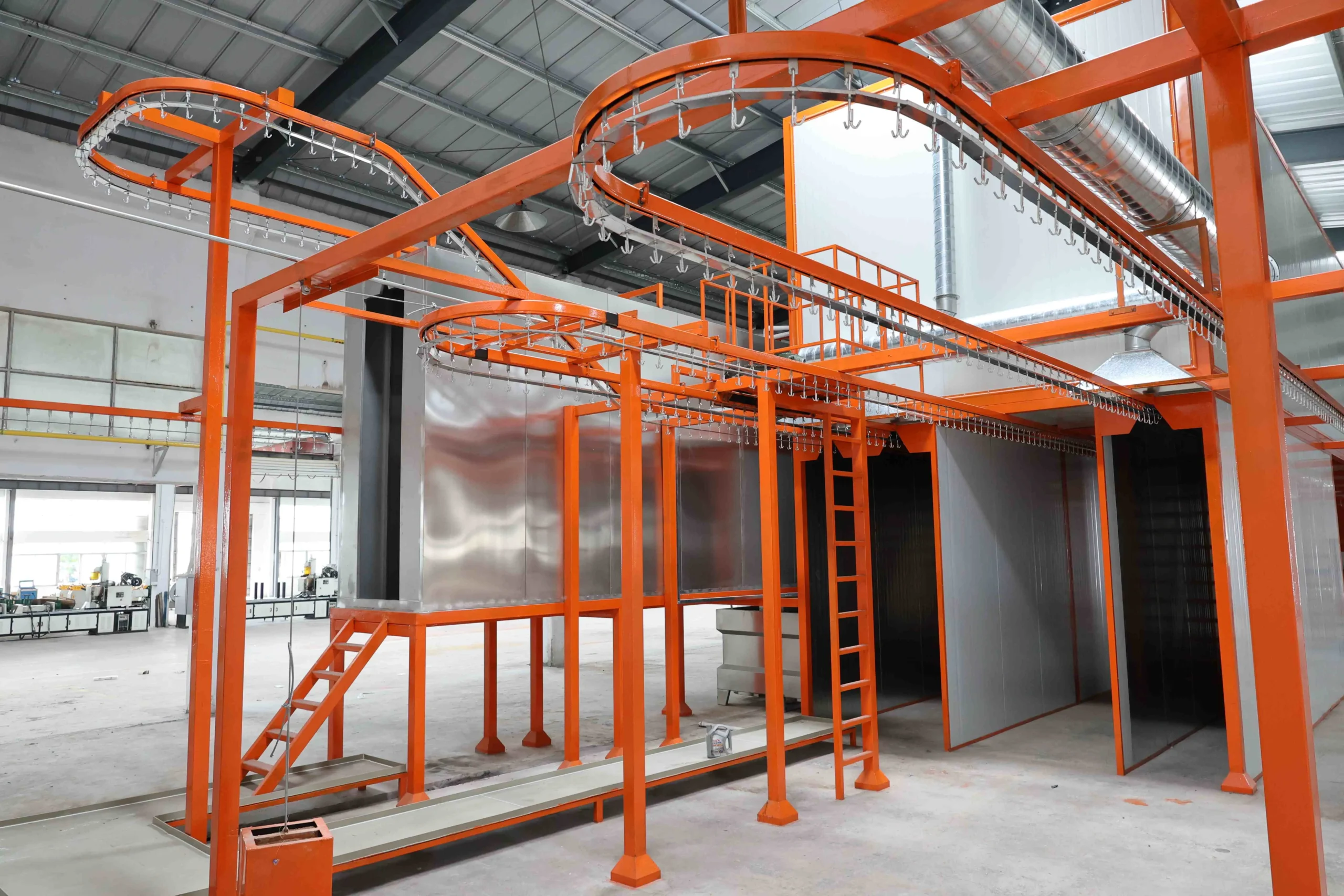
Before powder touches your parts, pretreatment creates the foundation for adhesion, corrosion resistance and long-term durability.
KETU designs spray tunnel and immersion pretreatment systems with iron or zinc phosphate conversion coating
to meet C3, C4 or C5 corrosion resistance standards.
-
3-11 stage configuration options -
Spray or immersion type -
Automated chemical dosing & monitoring -
C3-C5 corrosion resistance capability
Quality Foundation
80% of coating quality
Corrosion Resistance
C3-C5
Why Pretreatment Determines 80% of Your Coating Quality
Many factories focus on powder guns, ovens and booths, but ignore the foundation: pretreatment.
Without proper surface preparation and conversion coating, even the best powder and application technique
will result in poor adhesion, early corrosion failure and customer complaints.
What pretreatment does:
-
Removes contaminants: Oil, grease, rust, mill scale, welding residue and handling dirt that prevent powder adhesion -
Creates conversion coating: Iron or zinc phosphate micro-crystal layer that bonds chemically to metal and powder -
Provides corrosion resistance: The phosphate layer protects metal from oxidation and moisture penetration -
Improves adhesion: Micro-rough surface increases mechanical interlocking between metal and powder film
⚠️ Without Proper Pretreatment:
- • Powder peels off within months or even weeks
- • Corrosion starts under the coating (blistering, rusting)
- • Salt spray test fails in <100 hours (even with thick powder film)
- • Customer returns and warranty claims increase dramatically
Industry rule of thumb: Pretreatment quality determines 80% of final coating performance.
Gun technique, powder quality and curing account for only 20%.
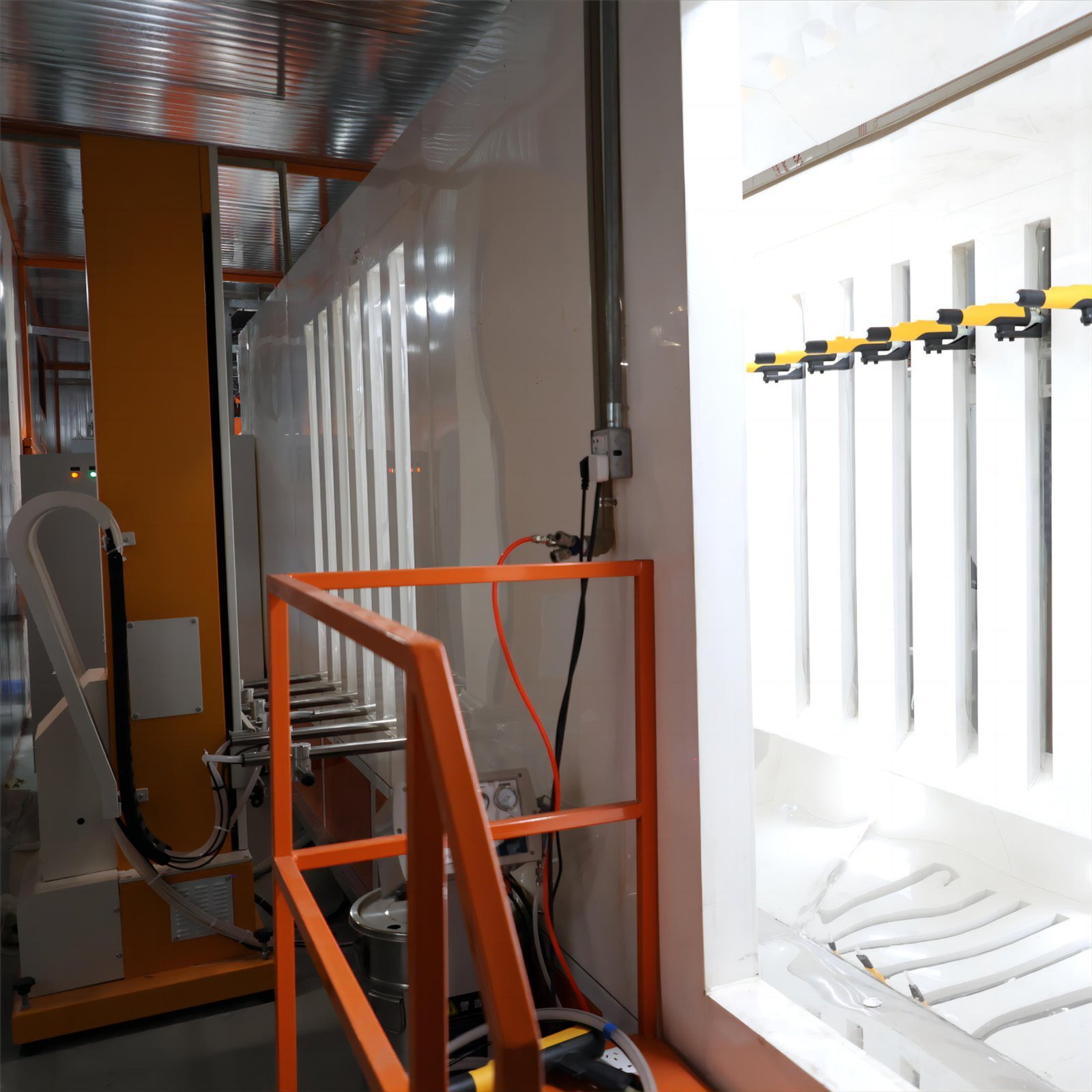
Visual comparison: Parts coated without pretreatment (left) show peeling and rust after 3-6 months.
Parts with proper phosphate pretreatment (right) maintain adhesion and pass 720-hour salt spray test (C4 standard).
Spray Tunnel vs Immersion Tank: Which Pretreatment Type for Your Factory?
The two main pretreatment system types have different advantages, costs and suitable applications.
Spray Tunnel Pretreatment
More Common
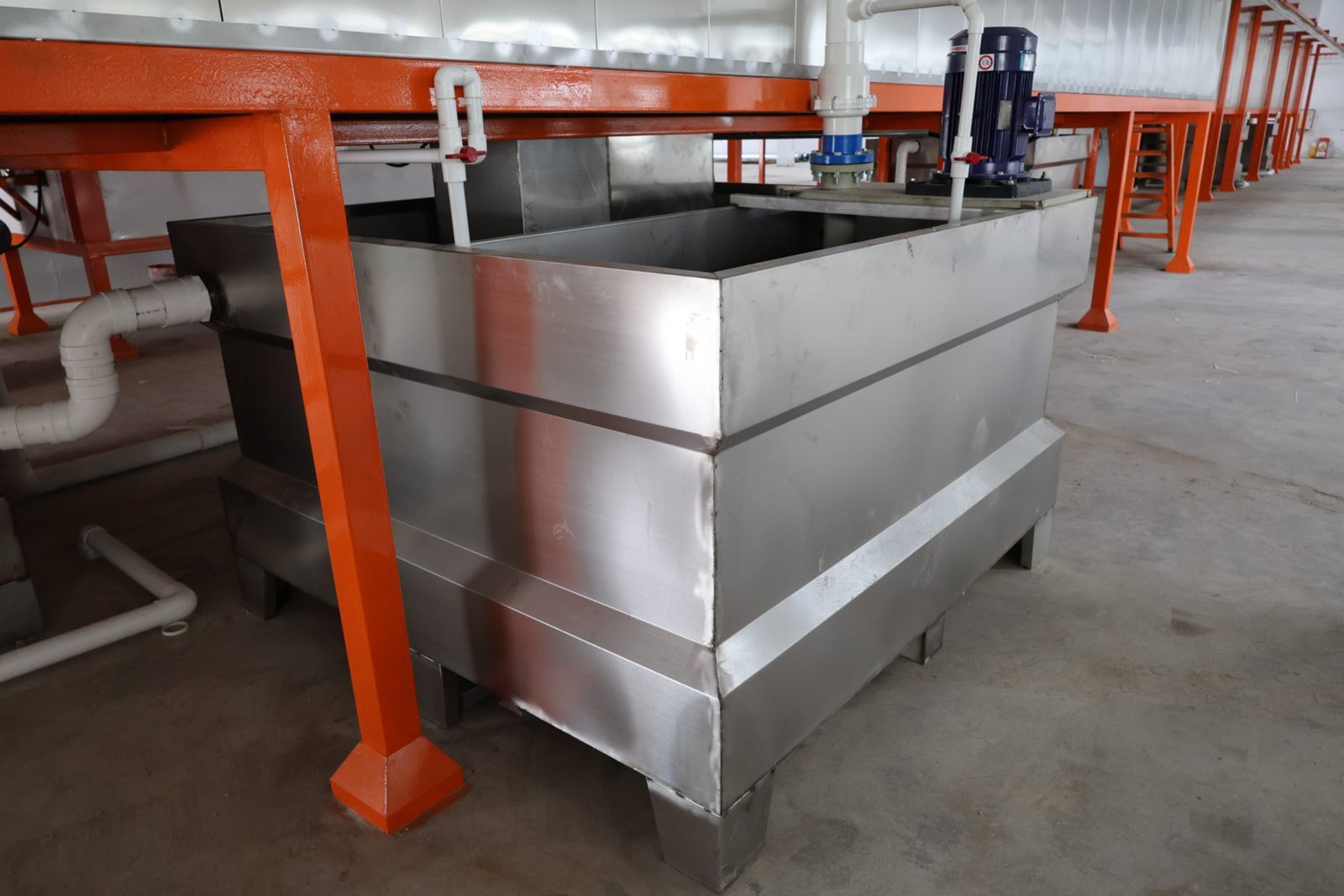
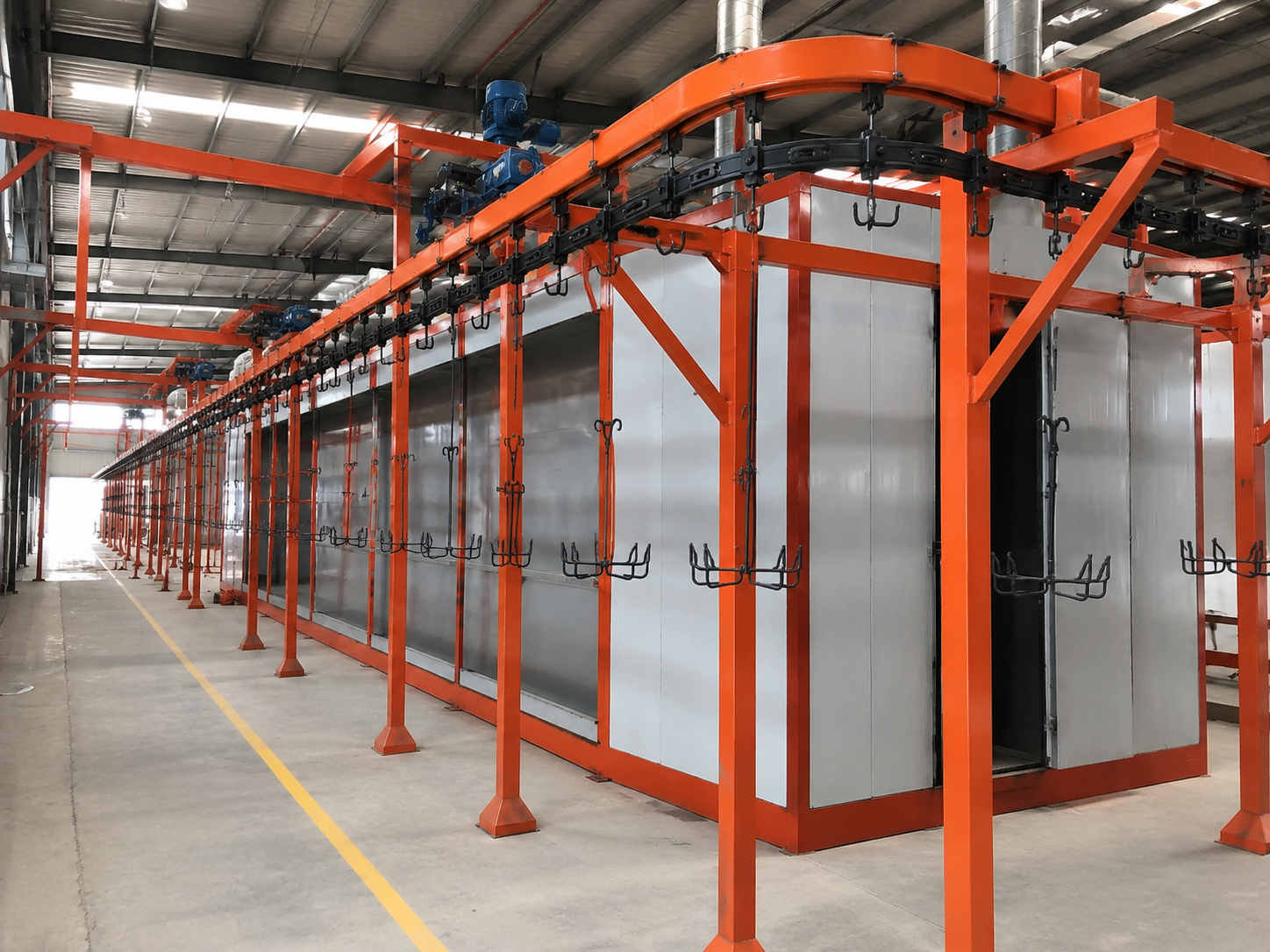
Parts hang on overhead conveyor and pass through multiple spray zones. Each zone sprays chemicals or rinse water from nozzles.
✅ Advantages:
- • Continuous flow operation → high productivity
- • Lower chemical consumption (spray uses less liquid than immersion)
- • Easier to integrate into automatic coating line
- • Faster processing time (3-8 minutes typical)
- • Good for large parts and complex geometries
- • Lower water and energy consumption
❌ Disadvantages:
- • Higher initial investment than immersion tanks
- • Requires more floor space (tunnel length 6-20 meters)
- • Spray nozzles need regular cleaning and maintenance
- • May miss deep recesses or complex internal surfaces
💡 Best For:
Medium to high volume production, automatic coating lines, large parts (furniture, cabinets, aluminum profiles, machinery),
factories with stable daily output.
Immersion Tank Pretreatment
Lower Cost
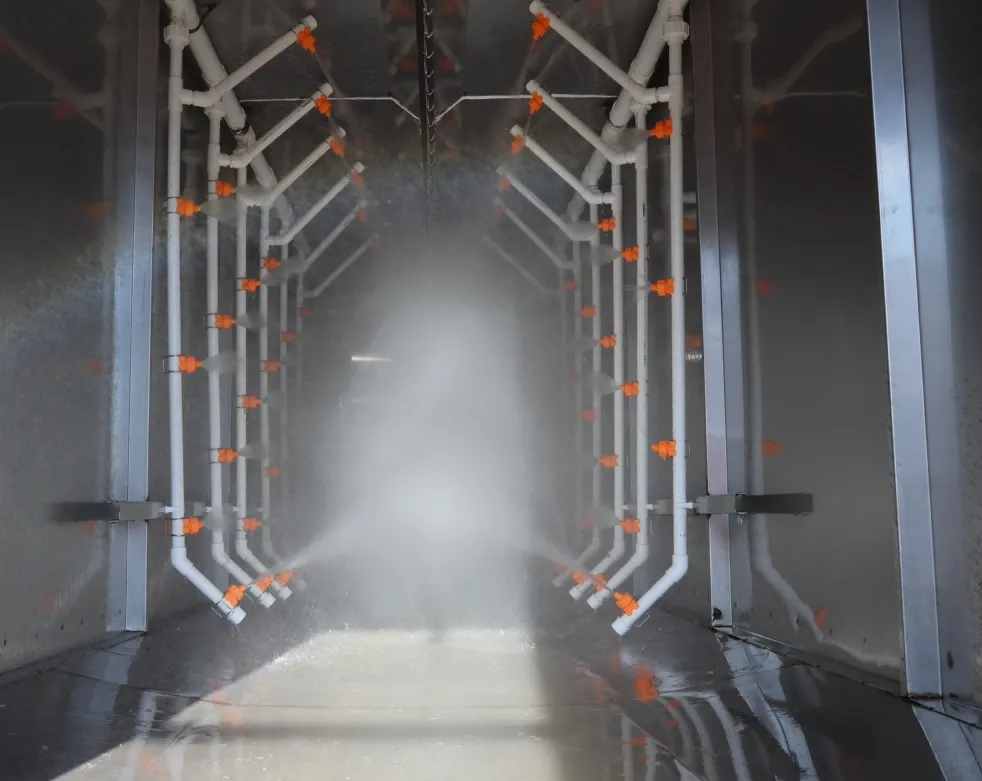
Parts are dipped into a series of tanks (degreasing, rinsing, phosphating, final rinse). Conveyor or crane moves parts between tanks.
✅ Advantages:
- • Lower initial investment (simpler equipment)
- • Complete coverage of complex parts and internal surfaces
- • Better for small parts with deep recesses or cavities
- • Easier to control chemical concentration (static tanks)
- • More flexible batch sizes (can process 1 part or 100)
- • Simpler maintenance (no spray nozzles to clean)
❌ Disadvantages:
- • Higher chemical consumption (tanks must stay full)
- • Longer processing time (10-20 minutes typical)
- • Batch operation → lower throughput than spray tunnel
- • Higher water and energy consumption for heating tanks
- • Chemical dragout waste between tanks
💡 Best For:
Low to medium volume production, small parts with complex geometry (fasteners, brackets, small hardware),
factories with variable batch sizes, job shops with many different parts.
Quick Comparison Table
| Factor | Spray Tunnel | Immersion Tank |
|---|---|---|
| Initial investment | Higher | Lower |
| Processing time | 3-8 min | 10-20 min |
| Productivity | High (continuous) | Medium (batch) |
| Chemical consumption | Lower | Higher |
| Complex parts coverage | Good | Excellent |
| Floor space required | 6-20 m length | Compact |
| Best for part size | Large parts | Small-medium parts |
| Typical volume | Medium-high | Low-medium |
Iron Phosphate vs Zinc Phosphate: Choose the Right Conversion Coating
The conversion coating stage creates a micro-crystal phosphate layer that bonds to metal and powder.
Two main types are used in powder coating pretreatment.
🔷 Iron Phosphate
Most Common
Thin, amorphous phosphate coating (50-200 mg/m²) formed by chemical reaction between acidic phosphate solution and metal surface.
Best For:
- • Indoor applications (C2-C3 corrosion resistance)
- • General metal fabrication and furniture
- • Factories prioritizing lower operating cost
✅ Advantages:
- • Lower chemical cost vs zinc phosphate
- • Simpler process control (fewer bath parameters)
- • Works well with spray tunnel systems
- • Adequate for most indoor coating requirements
- • No heavy metals (easier waste treatment)
Typical Performance:
- • Salt spray resistance: 240-480 hours (C2-C3)
- • Coating weight: 50-200 mg/m²
- • Process time: 1-2 minutes in spray tunnel
🔶 Zinc Phosphate
High Performance
Thick, crystalline phosphate coating (1000-3000 mg/m²) with superior corrosion resistance and mechanical adhesion.
Best For:
- • Outdoor applications (C4-C5 corrosion resistance)
- • Export products with strict quality requirements
- • Automotive, electrical cabinets, outdoor equipment
✅ Advantages:
- • Superior corrosion resistance (720-1000+ hour salt spray)
- • Thicker coating with better barrier protection
- • Excellent adhesion and paint compatibility
- • Industry standard for outdoor and demanding applications
- • Proven long-term field performance
Typical Performance:
- • Salt spray resistance: 720-1000+ hours (C4-C5)
- • Coating weight: 1000-3000 mg/m²
- • Process time: 2-3 minutes in spray or immersion
💡 How to Choose?
Choose Iron Phosphate if:
- ✓ Your parts will be used indoors only
- ✓ Customer requires C2 or C3 corrosion resistance
- ✓ You want to minimize chemical operating cost
- ✓ Salt spray requirement is ≤480 hours
Choose Zinc Phosphate if:
- ✓ Your parts will be used outdoors or in harsh environments
- ✓ Customer requires C4 or C5 corrosion resistance
- ✓ You export to European or North American markets
- ✓ Salt spray requirement is ≥720 hours
Pretreatment Stage Configuration: From 3-Stage Basic to 11-Stage High-Performance
More stages = better cleaning, rinsing and corrosion resistance. We design the configuration based on your quality requirements and budget.
3-Stage
Basic
- 1. Degrease
- 2. Rinse
- 3. Phosphate
Use for: Indoor parts, low corrosion risk, tight budget
Performance: C2 (≤240h salt spray)
5-Stage
Standard
- 1. Degrease
- 2. Rinse
- 3. Phosphate
- 4. Rinse
- 5. DI rinse
Use for: General metal parts, standard quality
Performance: C3 (≤480h salt spray)
7-Stage
Recommended
- 1. Pre-degrease
- 2. Degrease
- 3. Rinse
- 4. Phosphate
- 5. Rinse
- 6. DI rinse
- 7. Passivation
Use for: Export products, outdoor use, OEM quality
Performance: C4 (≤720h salt spray)
9-11 Stage
Premium
- 1. Pre-degrease
- 2. Degrease
- 3. Rinse (×2-3)
- 4. Activation (optional)
- 5. Phosphate
- 6. Rinse (×2-3)
- 7. DI rinse
- 8. Passivation
Use for: Automotive, heavy machinery, extreme outdoor
Performance: C5 (≥1000h salt spray)
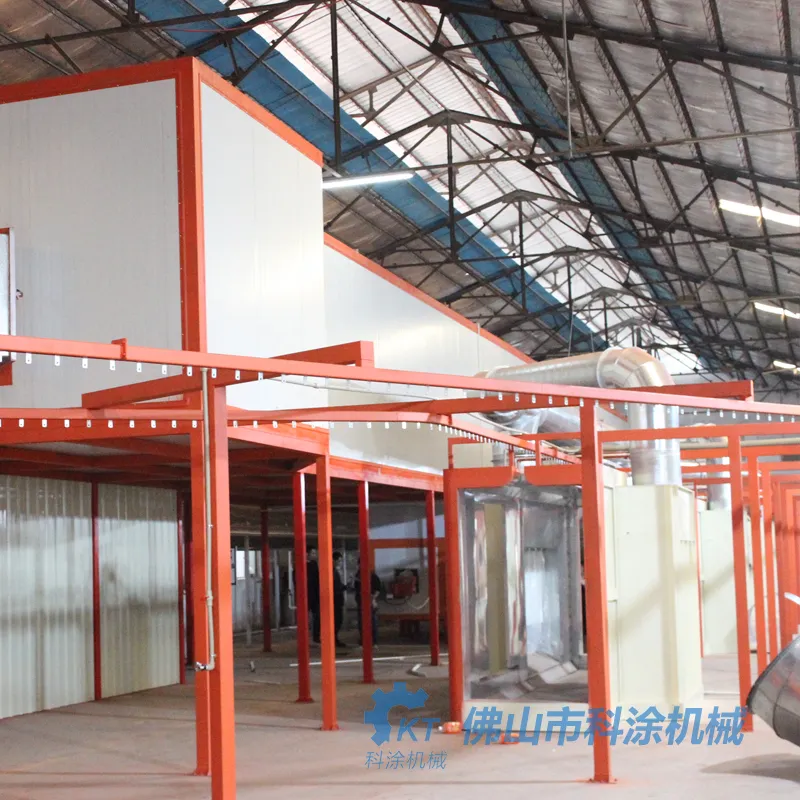
Typical 7-Stage Spray Tunnel Layout
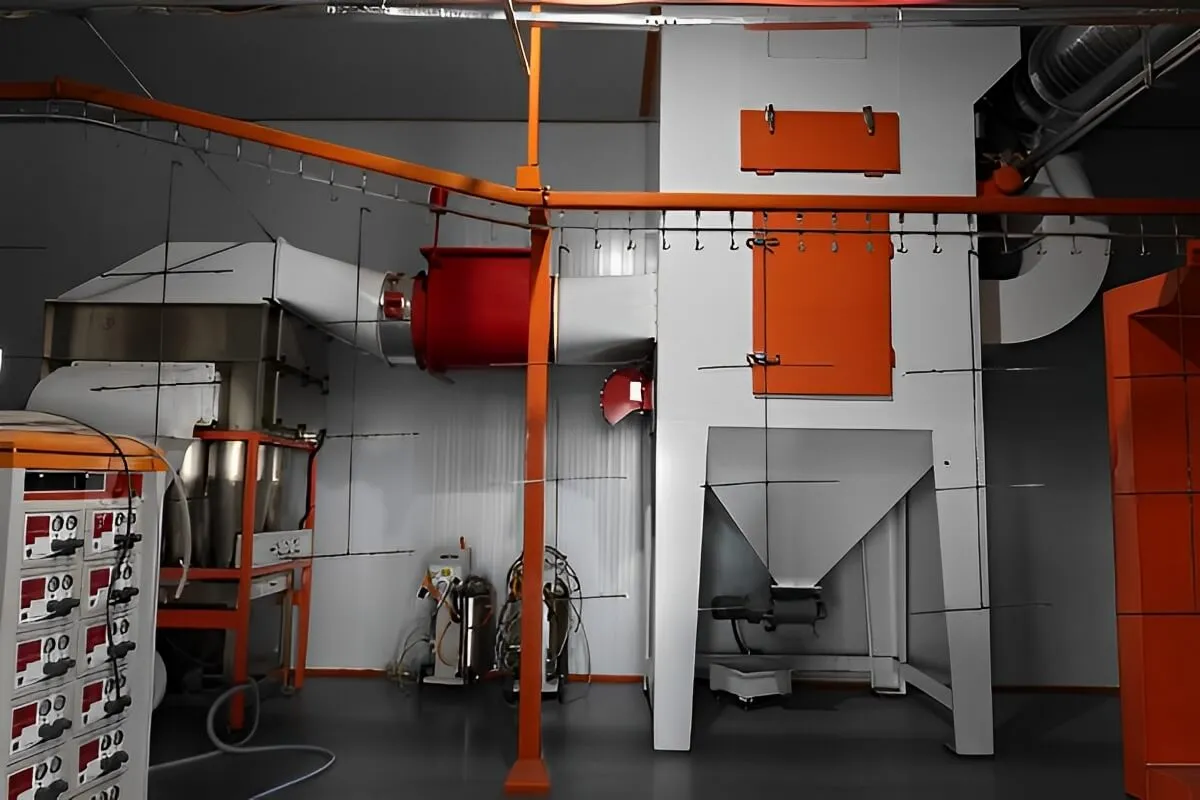
Example layout of a 7-stage spray tunnel with pre-degrease, degrease, rinse, phosphate, rinse, DI rinse and passivation zones.
Total tunnel length typically 12-16 meters for 3-5 minutes processing time.
Real Case: European Export Factory Upgrades Pretreatment
How upgrading from 3-stage to 7-stage pretreatment helped a metal fabricator meet European export standards.
Metal Fabrication Company
Exports industrial enclosures to Europe
The Challenge
This factory produced metal enclosures for industrial equipment and exported to European distributors.
Their European buyers required C4 corrosion resistance standard (720-hour salt spray test).
Problem: The factory used a simple 3-stage pretreatment (degrease → rinse → iron phosphate).
Salt spray tests consistently failed at 200-300 hours, causing customer rejections and warranty claims.
KETU's Analysis
After reviewing their process, we identified the root causes:
- • Insufficient cleaning (single degrease stage couldn't remove all oil and rust)
- • No DI rinse → water spots left mineral deposits under powder film
- • Iron phosphate coating too thin for outdoor C4 requirement
- • No passivation stage → phosphate layer oxidized before powder coating
The Solution
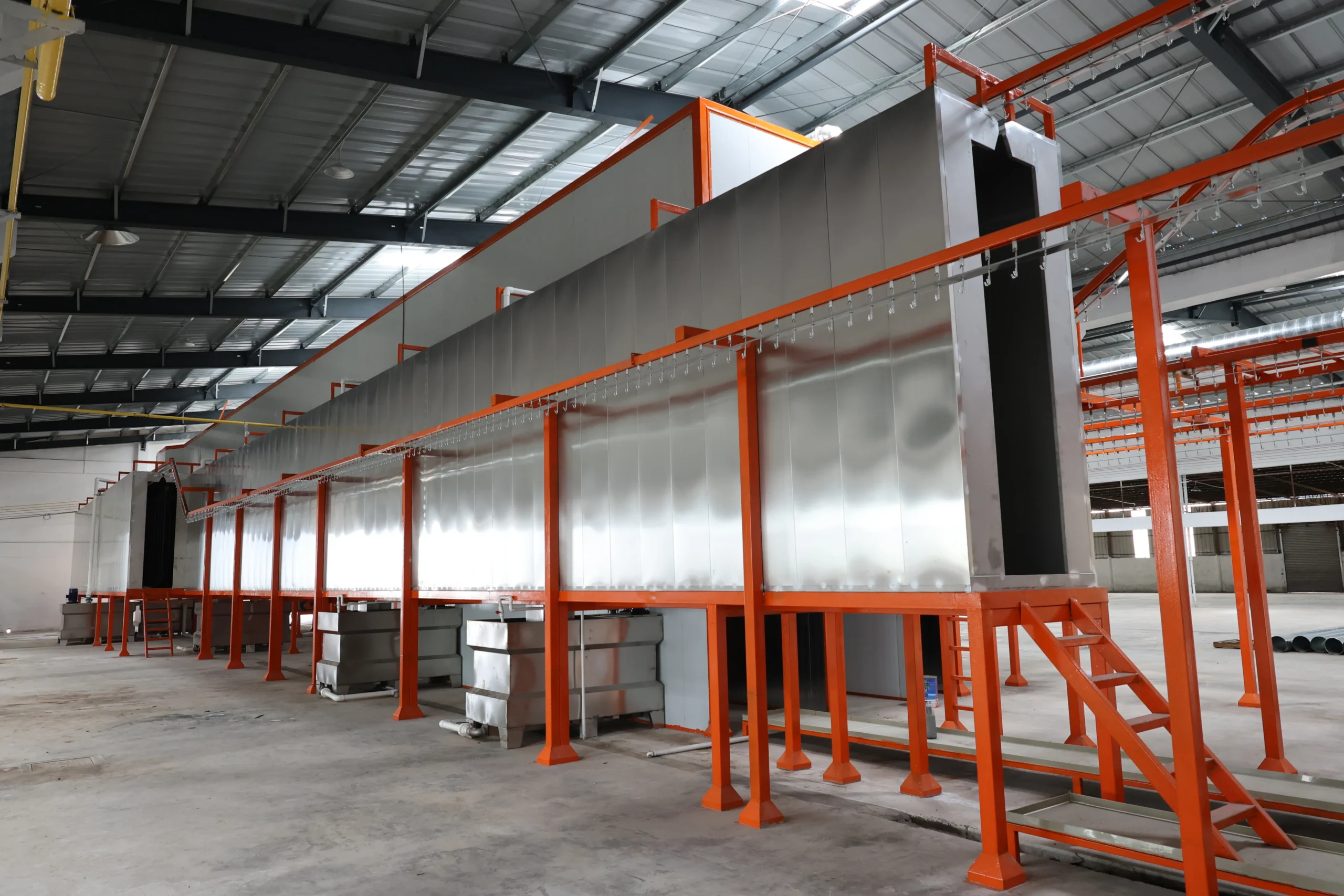
KETU designed a 7-stage zinc phosphate spray tunnel to replace the old system:
- Pre-degrease (warm alkaline spray, 55-60°C)
- Main degrease (stronger alkaline, 60-65°C)
- Rinse (tap water)
- Zinc phosphate conversion coating
- Rinse (tap water)
- DI rinse (deionized water, <10 µS/cm)
- Chromium-free passivation
We also added automated chemical dosing, temperature control and conductivity monitoring to ensure stable process.
The Results
240h → 720h+
Salt spray resistance
0%
Rejection rate after upgrade
+25%
New export orders
Customer Quote
"We tried fixing the problem by increasing powder film thickness and changing curing temperature, but nothing worked.
KETU showed us that pretreatment was the real issue. After upgrading to 7-stage zinc phosphate,
our salt spray results improved from 240 hours to over 800 hours. European customers are now very satisfied."
— Quality Manager

Key Features of KETU Pretreatment Systems
Designed for stable chemical performance, easy maintenance and long-term reliability.
Flexible Configuration
Choose from 3, 5, 7, 9 or 11-stage layouts based on your quality requirements and budget.
- ✓ Spray tunnel or immersion tank options
- ✓ Iron or zinc phosphate chemistry
- ✓ Modular design for future upgrades
Automated Chemical Control
Automatic dosing and monitoring systems maintain stable chemical concentration and pH.
- ✓ Conductivity and pH sensors
- ✓ Automatic chemical feed pumps
- ✓ Alarm system for out-of-range parameters
Temperature Control
Electric or steam heating with PID temperature control for each stage.
- ✓ Maintain optimal chemistry performance
- ✓ Energy-efficient insulation design
- ✓ ±2°C temperature accuracy
Water Treatment System
DI water system for final rinse ensures no water spots or mineral contamination.
- ✓ Reverse osmosis or ion exchange
- ✓ Conductivity <10 µS/cm
- ✓ Automatic regeneration or cartridge replacement
Wastewater Management
Designed for efficient wastewater treatment and chemical recycling.
- ✓ Cascade rinse design to reduce water consumption
- ✓ Chemical dragout minimization
- ✓ Integration with wastewater treatment system
Easy Maintenance Design
Accessible tank design, removable spray manifolds and inspection doors.
- ✓ Nozzle removal without entering tunnel
- ✓ Tank drains and cleaning access
- ✓ Corrosion-resistant materials (PP, FRP, stainless steel)
Pretreatment System FAQ
Common questions about powder coating pretreatment design and operation.
1. Can I skip pretreatment if I'm only coating indoor parts?
+
Without it, powder will peel off within months. Outdoor parts need more stages and zinc phosphate for proper corrosion resistance.
2. How often do I need to change pretreatment chemicals?
+
degreasing and phosphate baths can run for months or even years without full replacement.
Rinse water quality should be monitored and filtered/replaced as needed.
3. What's the difference between spray tunnel and immersion pretreatment cost?
+
Immersion has lower equipment cost but higher chemical and water consumption. For medium-high volume production, spray tunnel is more economical long-term.
4. Can I upgrade from 3-stage to 7-stage later?
+
We can help you plan a modular system that starts with 5-stage and reserves space for future upgrade to 7 or 9-stage if your quality requirements increase.
5. What information do you need to design a pretreatment system?
+
(3) Daily production volume; (4) Corrosion resistance requirement (C2/C3/C4/C5 or salt spray hours);
(5) Indoor or outdoor use; (6) Available floor space for pretreatment tunnel/tanks;
(7) Water and energy availability. Photos of typical parts are helpful.
Get Your Pretreatment System Proposal
Share your parts, quality requirements and production volume. Our engineers will design a pretreatment system
that ensures long-term coating performance.
Process engineering support
Email: ketucoatingline@gmail.com
Related Equipment for Complete Powder Coating Line
After pretreatment, these systems complete your powder coating process.
After Pretreatment
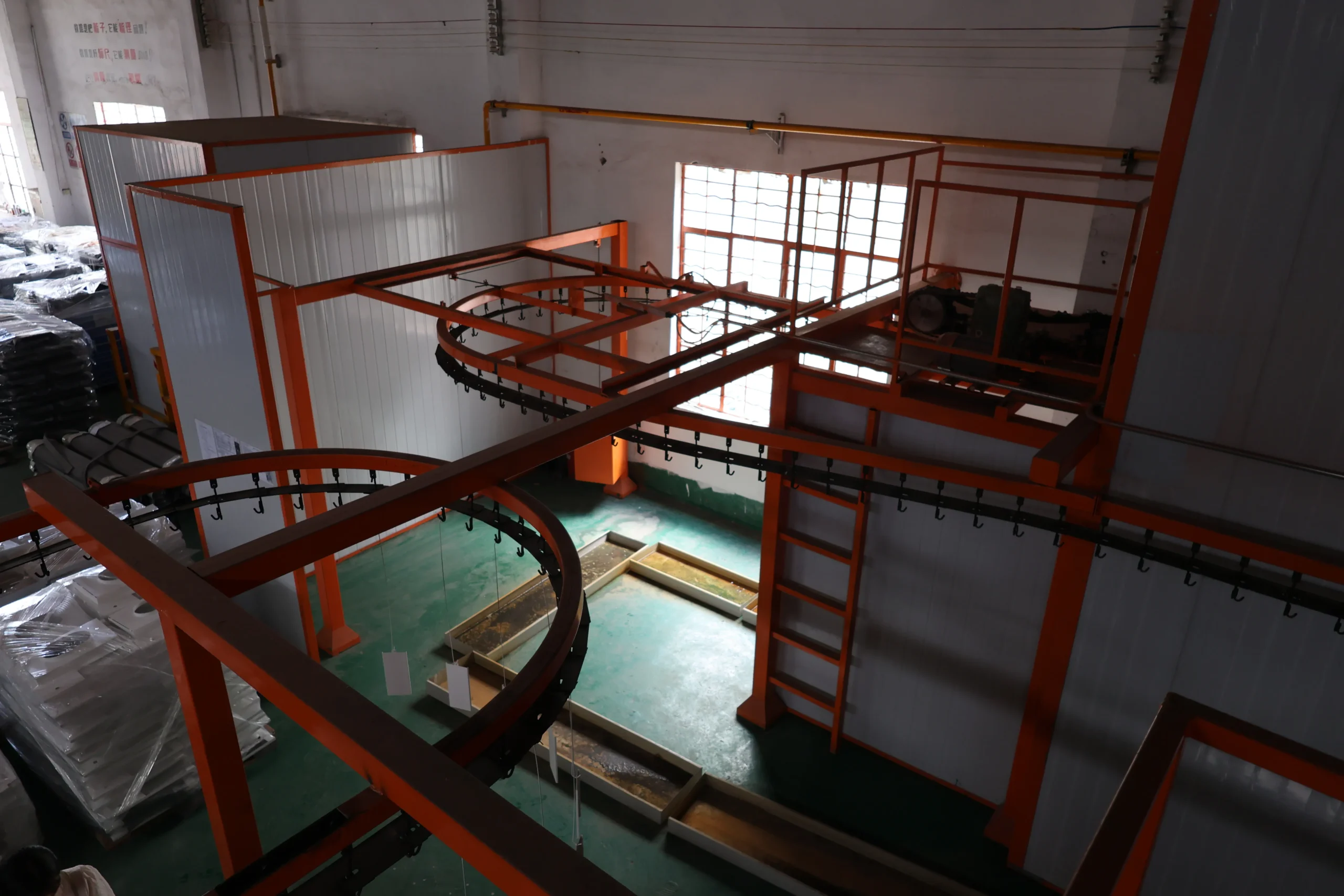
Drying Oven
Remove moisture after pretreatment before powder coating
-
80-120°C temperature range -
Gas/electric/diesel options -
Prevents coating defects
Coating Stage
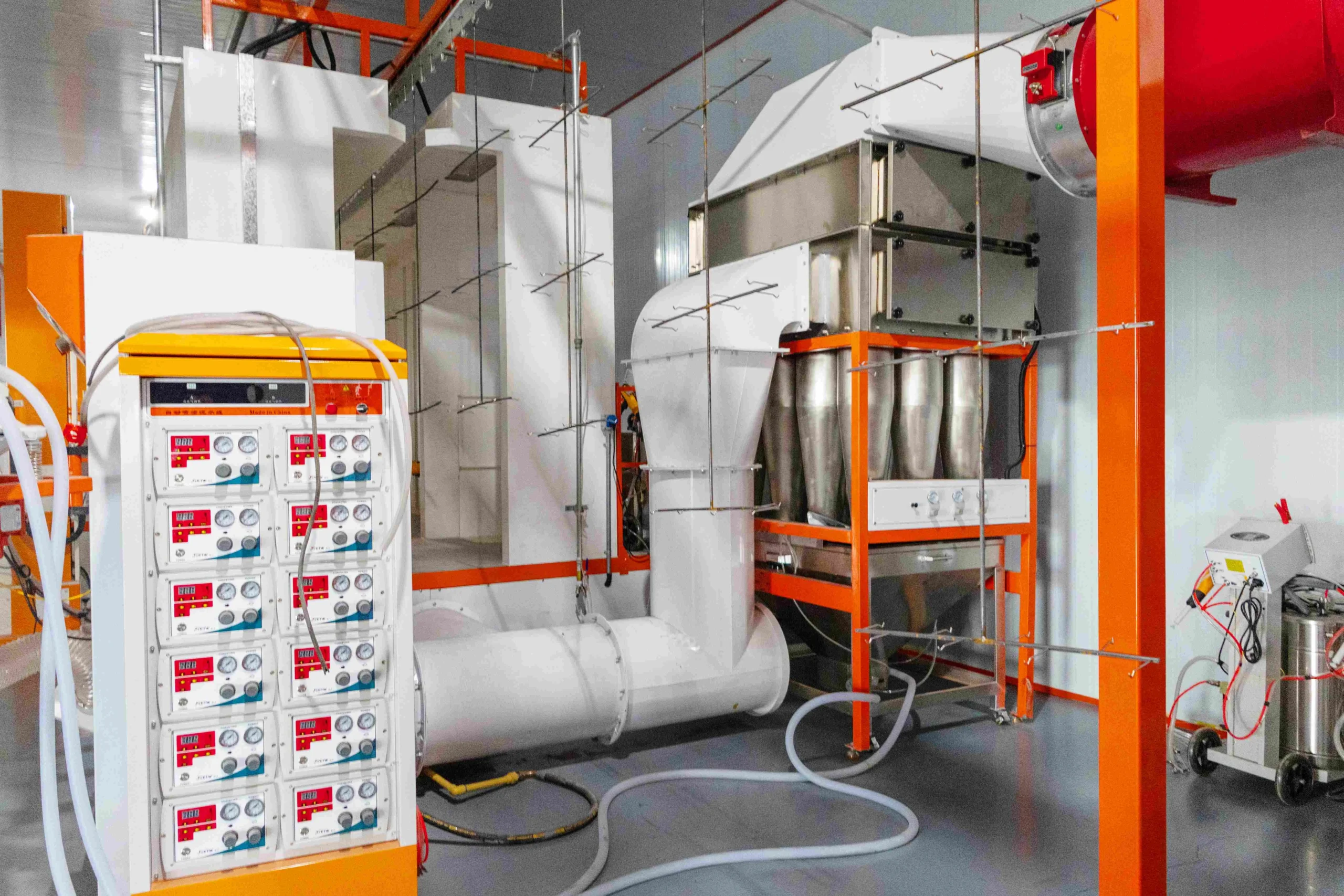
Manual or automatic powder application system
-
Manual & automatic guns -
Integrated powder recovery -
Quick color change options
Curing Stage
Curing Oven
Cross-link powder coating for final hardness and durability
-
180-220°C curing temperature -
±5°C temperature uniformity -
Gas/electric/diesel options
Need a Complete Powder Coating Line?
Pretreatment + Drying Oven + Coating Booth + Curing Oven + Conveyor
 English
  German
  Vietnamese
  French