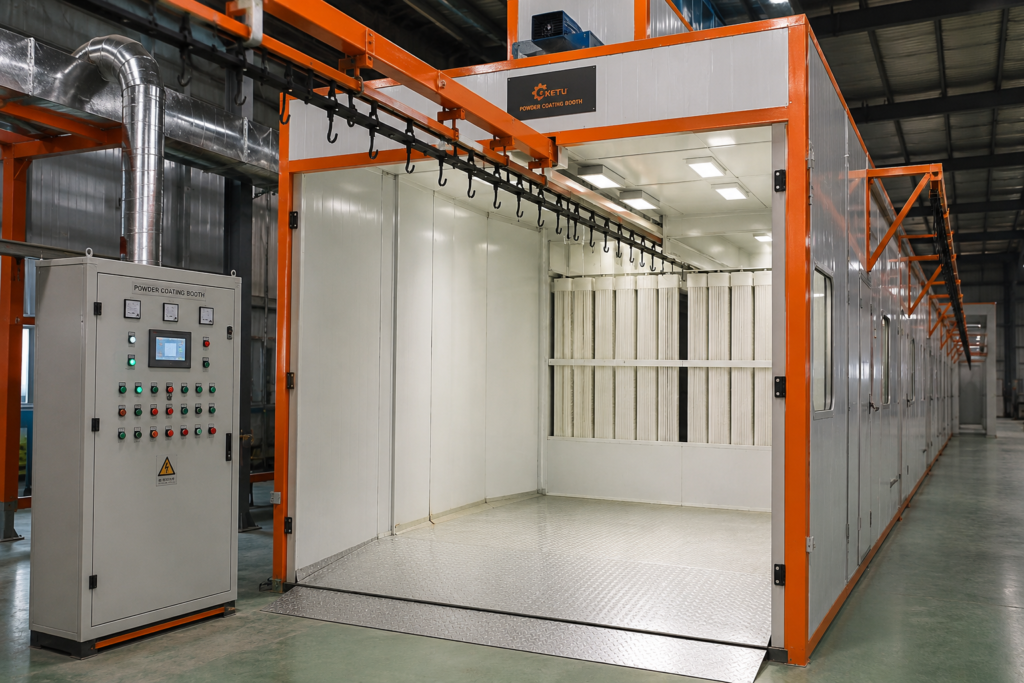
The Maintenance of Fast Automatic Color Change Powder Coating Booth: A Complete Guide to System Reliability and Downtime Prevention
Why Maintenance Matters: The True Cost of Neglecting Fast Automatic Color Change Systems
I've seen it happen too many times in coating operations: a factory invests in a fast automatic color change powder booth expecting dramatic improvements in efficiency and product quality. For the first few months, everything runs smoothly. But then, without warning, the color transition fails. Residual powder from the previous color contaminates the new batch. Production stops. The line sits idle while technicians scramble to troubleshoot. By the time the system is back online, the factory has lost hours of productivity, disappointed customers, and thousands in revenue.
The truth is, fast automatic color change systems are more complex than traditional powder booths. They depend on precise coordination between multiple components—electromagnetic solenoid valves[^1], pneumatic lines, filter systems, powder supply mechanisms, and sensors—all working in perfect synchronization. When maintenance is neglected, any one of these components can fail, and the entire advantage of rapid color switching evaporates.
What we typically observe in real-world projects is that 80% of fast automatic color change booth failures stem from preventive maintenance neglect rather than equipment defects. The good news is that most of these failures are entirely avoidable.
From our experience, factories that invest in structured maintenance—particularly preventive maintenance based on actual operating conditions—see failure rates drop by 70% and extend equipment lifespan by several years. The initial time and cost investment in maintenance is repaid many times over through reduced downtime, consistent coating quality, and extended equipment life.
Core Components and Their Maintenance Requirements
A fast automatic color change powder booth isn't a single piece of equipment—it's an integrated system. To maintain it effectively, you need to understand which components are most critical and what each one demands.
Filtration System and Air Quality Management
The filtration system is the hidden hero of any powder booth, and it's especially critical in fast automatic color change operations. Here's why: when you're switching colors rapidly, unfiltered air containing moisture, oil particles, or dust can cause several catastrophic problems. It can degrade solenoid valve performance, cause powder clumping in supply lines, create static discharge anomalies, and worst of all, result in color contamination that's extremely difficult to reverse.
From our experience, compressed air quality is far more critical than most factories initially assume. I've worked with customers who had invested heavily in the latest color change technology, yet their systems were perpetually failing because the compressed air being supplied was inadequate.
The filtration system typically includes:
- Primary filtration stage (captures larger particles and moisture)
- Secondary filtration stage (removes oil vapor and ultra-fine particles)
- Air drying mechanism (reduces humidity to specification)
Maintenance requirements for filtration:
Weekly inspection of filter element condition. Look for visible dust accumulation, discoloration, or damage. Biweekly pressure drop testing—excessive pressure drop indicates a clogged filter that needs replacement even if it doesn't look visibly dirty. Monthly drainage of accumulated moisture and condensate from filter bowls. Quarterly replacement of filter elements according to manufacturer specifications (this is not optional; degraded filters allow contamination that manifests days or weeks later as phantom coating defects).
The compressed air must meet ISO 8573-1 Class 5[^2] standards minimum—this means air dryness of -40°C dew point or better, with oil content below 1 mg/m³.
Automatic Color Change Mechanism (Solenoid Valves and Powder Feed Lines)
This is where fast automatic color change systems differ fundamentally from manual or semi-automatic booths. The automatic color change mechanism relies on electromagnetic solenoid valves that must open and close with split-second precision, often 10-20 times per shift or more in high-volume operations.
Here's what actually happens during a color change at the component level:
The control system sends an electrical signal to the solenoid valve. The valve opens, allowing compressed air to purge powder from the supply line and reservoir. Simultaneously, new powder is drawn into the system from a different supply hopper or cartridge. The system must achieve complete color transition within seconds while preventing any cross-contamination. This demands mechanical precision and flawless air pressure regulation.
The solenoid valves in these systems are engineered to handle high cycle counts, but they don't last forever. Internal seals wear, the plunger response time degrades, and small leaks develop. When solenoid performance declines even slightly, the powder transition becomes imprecise—you get incomplete purging, residual color mixing with the new batch, and quality issues that are almost impossible to trace.
From our field observations, premature solenoid valve failure is the single most common cause of color change degradation. We've documented cases where valves that appeared to be functioning were actually operating at only 85% efficiency, resulting in a 2-3% color contamination rate that the customer attributed to coating formula problems rather than equipment maintenance.
Maintenance requirements:
- Weekly: Listen and observe solenoid valve operation. You should hear a crisp, sharp click when the valve actuates. A muted or sluggish sound indicates developing problems.
- Biweekly: Test solenoid response time using the booth's control system diagnostics (most modern booths have this built-in). Response time should be consistent and within manufacturer specification.
- Monthly: Inspect valve connection fittings for micro-leaks or weeping. Even a small drip indicates seal degradation.
- Quarterly: Consider solenoid valve replacement on a scheduled basis if you're running high-frequency color changes (more than 15 per day). Preventive replacement costs far less than unexpected failure.
For powder feed lines, the requirement is simpler but equally critical. These lines accumulate powder buildup over weeks or months, particularly in areas with lower air flow velocity. Blockages don't announce themselves—they develop gradually, causing incomplete powder transfer during color changes.
Maintenance:
- Biweekly: Visually inspect powder lines for exterior accumulation or discoloration suggesting internal blockage.
- Monthly: Perform a purging cycle using compressed air at elevated pressure (6-8 kg/cm²) to blow out accumulated powder residue. Do this even if lines appear clear.
- Quarterly: For high-frequency operations, disconnect powder lines and manually inspect interior for crusty buildup. Use appropriate solvents (following safety protocols) to clean if necessary.
Spray Gun and Internal Chamber Sealing
The spray gun[^3] is the final execution point, and its condition directly determines coating quality. In fast color change operations, the spray gun experiences rapid solenoid activation cycles and frequent powder type changes, which stress internal components more than in single-color operations.
The internal chamber sealing is particularly important. A compromised seal allows powder to escape into areas where it shouldn't be—around the trigger mechanism, along the barrel, near the air inlet. This powder accumulation creates:
- Reduced spray pattern uniformity
- Increased electrical discharge anomalies
- Risk of electrode arcing or sparking
- Difficulty achieving consistent powder atomization
Maintenance requirements:
- After every color change: Brief visual inspection for residual powder around the gun barrel and electrode area. A quick wipe with a dry cloth (never use solvents on the gun while powered) prevents accumulation.
- Weekly: Detailed cleaning of the spray gun including the electrode assembly, nozzle opening, and powder cup. Use appropriate cleaning tools and procedures per manufacturer documentation.
- Monthly: Inspect internal gun seals by observing powder behavior during test spraying. Uneven or erratic spray patterns suggest seal degradation.
- Quarterly: Consider professional gun servicing or replacement of wear items (seal kits, electrode tips) if operating at high cycle volumes.

Daily, Weekly, and Monthly Maintenance Protocols
Structured maintenance is the difference between a system that works reliably for years and one that becomes a source of frustration. From our experience commissioning and supporting dozens of powder coating facilities, the most reliable operations follow a clear maintenance hierarchy.
Daily Cleaning and Visual Inspection Checklist
Daily maintenance takes 20-30 minutes and should be performed by the operator at shift start or end.
Spray gun and powder cup:
- Remove dried powder residue from gun barrel, electrode, and surrounding surfaces
- Check nozzle opening for blockage
- Verify powder cup is clean and properly seated
- Look for any visible cracks, damage, or powder leakage
Spray booth interior:
- Wipe down booth walls using a dry cloth to remove powder dust
- Check floor for excessive powder accumulation and sweep clear
- Verify booth lighting is functioning properly
- Check that booth ventilation is active and audible
Filter visual check:
- Observe filter element from outside booth window if equipped
- Look for unusual dust accumulation or discoloration
- Note pressure gauge reading (if equipped) and compare to baseline
Solenoid valve and air line connections:
- Inspect visible air lines for damage, kinks, or leaks
- Check solenoid valve mounting for any looseness or visible damage
- Listen for unusual hissing or air leaks
Control system indicators:
- Verify all control panel lights are functioning normally
- Check for any error messages or warning indicators
- Note any unusual sounds or vibrations from the booth
This daily routine only works if you actually do it every day. We recommend creating a simple checklist and having operators sign off daily. This creates accountability and provides a record that helps identify patterns when issues develop.
Weekly Preventive Checks for Electric and Pneumatic Systems
Weekly maintenance is more detailed and typically requires 45-60 minutes. This should be performed by someone with more technical knowledge than a basic operator—ideally a maintenance technician.
Pneumatic system pressure and flow:
- Test main compressed air pressure at the booth inlet using a calibrated gauge. Should match specification (typically 4-6 kg/cm² for powder booths).
- Check pressure stability by monitoring for fluctuations over 10 minutes. Fluctuation beyond ±0.3 kg/cm² indicates compressor or regulator problems.
- Test air quality by placing a clean white cloth over the booth air outlet for 5 minutes. Cloth should show no discoloration or moisture staining.
Solenoid valve operation testing:
- Activate color change sequence manually through the control system
- Observe valve response time and consistency
- Listen for any unusual sounds (hissing, rattling, or slow actuation)
- Perform this test 5 times and note if response is consistent
Filter pressure differential:
- Record current pressure differential reading if gauge equipped
- Compare to baseline reading from previous weeks
- If pressure differential has increased more than 10% since last reading, plan for filter replacement in next maintenance cycle
Electrical connections and safety systems:
- Inspect all visible electrical connections for corrosion, looseness, or burn marks
- Verify grounding connections are secure and clean
- Test emergency stop button function
- Check that all safety interlocks are functioning (booth access door interlock, etc.)
Powder supply system:
- Check powder hopper level and verify powder isn't caked or compacted
- Verify powder pump is responding to control signals
- Check powder feed lines for external accumulation indicating possible blockages
- Inspect powder recovery system (if equipped) for proper operation
Monthly Deep Maintenance and Component Replacement Schedule
Monthly maintenance is more intensive—typically 2-3 hours—and involves more detailed inspections and component replacement.
Filter element inspection and replacement:
- Physically remove and inspect filter elements
- Look for tears, pin holes, or physical damage
- If operating high-frequency color changes (daily), replace filter elements proactively rather than waiting for visible degradation
- After replacement, run booth in idle mode for 5 minutes and re-check pressure differential to establish new baseline
Solenoid valve detailed inspection:
- If available, use the control system's diagnostic mode to test solenoid response time and consistency
- If response time has degraded more than 10% from baseline, plan for solenoid valve replacement
- Inspect solenoid coil housing for any signs of water damage or corrosion
Powder line purging and inspection:
- Disconnect powder lines at safe points (following lockout-tagout procedures if applicable)
- Use compressed air at elevated pressure (6-8 kg/cm²) to purge lines thoroughly
- Visually inspect internal line condition if possible
- Reconnect and verify no leaks at connection points
Spray gun seal and component inspection:
- If feasible without complete disassembly, inspect gun seals for degradation
- Check electrode tip for erosion or excessive wear
- Verify gun mechanical integrity (no cracks, bent components, etc.)
Environmental and facility factors:
- Check booth exterior for any signs of powder escape (indicating seal problems)
- Verify booth ventilation system is functioning at full capacity
- Check workshop air quality—if workshop air is heavily contaminated with dust or powder, this will degrade booth air quality regardless of internal filtration
Documentation and trending:
- Record all measurements and observations
- Compare current readings to previous months' data
- Look for trends that might indicate developing problems
- Update maintenance schedule based on actual performance patterns
| Maintenance Task | Frequency | Time Required | Responsibility |
|---|---|---|---|
| Spray gun visual check | Daily | 5 min | Operator |
| Booth interior cleaning | Daily | 10 min | Operator |
| Filter visual inspection | Daily | 2 min | Operator |
| Solenoid operation test | Weekly | 10 min | Technician |
| Air pressure/quality check | Weekly | 15 min | Technician |
| Electrical system check | Weekly | 10 min | Technician |
| Powder line purging | Weekly | 15 min | Technician |
| Filter element inspection | Monthly | 20 min | Technician |
| Solenoid response time test | Monthly | 15 min | Technician |
| Powder line detailed check | Monthly | 30 min | Technician |
| Spray gun seal inspection | Monthly | 15 min | Technician |
| Documentation/trending | Monthly | 10 min | Technician |
Common Failure Points and Quick Troubleshooting
Understanding what typically goes wrong allows you to recognize problems before they cause production stoppage. Based on hundreds of installations we've commissioned and supported, certain failure patterns repeat consistently.
Color Change Precision Degradation and Residual Powder Contamination
The problem: You notice that color transitions are no longer clean. The first few parts after a color change show noticeable color mixing or contamination. The problem might not be immediately obvious—it often appears as a slight hue shift or surface speckle rather than complete color failure.
Root causes:
- Solenoid valve response degradation (most common)
- Incomplete powder line purging due to low air pressure or blockage
- Powder settling or bridging in supply lines between use
- Control system timing issue causing premature powder introduction before complete purge
- Particle contamination in compressed air mixing with new powder color
Troubleshooting sequence:
- Check compressed air pressure at booth inlet. Should be within specification. If low, address at compressor.
- Manually perform a color change sequence and observe timing. Note if powder appears in new color quickly or if there's a delay suggesting line blockage.
- Perform an air-only purge cycle (run color change without powder) and observe. Air should exit lines cleanly without powder residue.
- If air-only purge shows powder, run this cycle 3-5 times until air exits clean. This purges accumulated residue.
- If problem persists, test solenoid valve response time. If response is delayed or inconsistent, solenoid valve replacement is likely needed.
From our field experience: In about 60% of these cases, the issue resolves after thorough powder line purging and compressed air pressure verification. In 30%, the solenoid valve is the culprit. In the remaining 10%, the control system timing or a contaminated powder supply is responsible.
Filter Clogging, Solenoid Response Delays, and Powder Line Blockages
The problem: Production slows down, or the booth stops working intermittently. You notice longer purge times, reduced powder flow, or error messages.
Root causes:
- Filter element clogging from accumulated powder dust
- Solenoid valve wear causing slow opening/closing response
- Powder accumulation in supply or return lines
- Moisture or contamination in compressed air system
- Powder pump degradation
Troubleshooting sequence:
- If booth has a pressure differential gauge on the filter, check reading. If significantly elevated from baseline (more than 15-20%), filter replacement is urgently needed.
- Check compressed air supply pressure and quality. Run the cloth test described in the weekly maintenance section.
- Perform manual powder line purging at elevated air pressure.
- If booth has diagnostic capability, run solenoid valve response time test. Compare to baseline.
- If pressure differential is within normal range but problems persist, suspect solenoid or pump issue requiring replacement.
Prevention: This is where preventive maintenance pays enormous dividends. Scheduled filter replacement before visible clogging, regular compressed air quality verification, and monthly powder line purging eliminate about 90% of these issues.
Sensor and PLC Malfunction Detection
The problem: The booth control system gives error messages, the automatic color change doesn't activate, or sensors report incorrect values.
Root causes:
- Powder or moisture contamination on sensors
- Loose electrical connections or corroded contacts
- Software/firmware issue
- Sensor failure
- Air line disconnection preventing sensor activation
Troubleshooting sequence:
- Note the specific error message and reference booth documentation
- Visually inspect electrical connections to the control system and sensors. Look for loose connectors, corrosion, or burn marks.
- If sensors appear to have powder or moisture accumulation, carefully clean using dry compressed air
- Power cycle the system (turn off, wait 30 seconds, power back on) to reset control logic
- If error persists, consult system documentation or contact equipment support
- Document the error and timing to help identify patterns
From our experience: About 40% of control system errors resolve after cleaning sensor areas and reseating electrical connections. 30% require firmware updates or recalibration. 30% indicate actual component failure requiring replacement.
How Compressed Air Quality and Environmental Conditions Impact Maintenance
I cannot overstate the importance of compressed air quality. It's the invisible foundation that determines whether your fast automatic color change system works reliably or becomes a constant source of problems. Many facilities overlook this because compressed air seems like a commodity—you turn on the compressor and air comes out. But powder coating operations demand compressed air[^4] of exceptional quality.
Required Air Drying and Multi-Stage Filtration Standards
Why compressed air matters so much in fast automatic systems:
When solenoid valves cycle rapidly, any moisture in the compressed air can cause valve internal corrosion, sluggish response, and premature failure. Any oil vapor will accumulate on the powder, creating adhesion problems and surface defects. Any particulate matter can block small orifices in solenoid valves or accumulate in powder lines.
Industry standards for powder coating compressed air:
- ISO 8573-1 Class 4[^5] minimum (most facilities should aim for Class 4)
- Dew point of -40°C or better
- Oil content below 1 mg/m³
- Particulate size: 99.5% of particles must be smaller than 1 micron
Achieving these standards requires a multi-stage approach:
First stage: Water separator/trap at the compressor outlet removes bulk moisture and oil
Second stage: Refrigerated dryer or desiccant dryer brings air to target dew point
Third stage: Pre-filter removes particles larger than 5 microns
Fourth stage: Main filter at booth inlet removes particles down to 1-3 microns
Fifth stage: After-filter at point of use removes remaining particles
From our experience: Facilities that invest in proper multi-stage air treatment systems reduce powder booth maintenance requirements by 50% and eliminate about 70% of "mystery" coating defects.
Temperature Fluctuations, Humidity, and Dust Contamination Effects
Temperature impact:
Rapid temperature changes in the workshop can cause compressed air dewpoint to change. When warm air enters the booth and contacts cool components, condensation can form. This moisture accumulates in solenoid valves, corrodes electrical contacts, and causes powder to cake in supply lines.
During winter months or in facilities without climate control, temperature-related maintenance issues increase noticeably.
Humidity impact:
High ambient humidity compounds every air quality problem. Even with a dryer installed, inadequate drying capacity during high-humidity seasons means moisture content rises. This is particularly critical in coastal areas[^6] or regions with seasonal monsoons.
We've documented cases where the same booth requires filter changes every 3 weeks during dry season but every 10 days during monsoon season.
Dust contamination:
If the booth is located in a workshop with general dust problems—wood dust from machining, metal dust from grinding, general fabrication debris—external air will continuously contaminate the system. The booth intake should be positioned to minimize exposure to workshop air, or equipped with a remote intake drawing from outside the workshop.
Environmental controls that matter:
- Workshop temperature stability (ideally 15-28°C)
- Relative humidity control (ideally 35-65%)
- Booth air intake position (elevated, away from floor dust)
- External air intake filter if feasible
- Booth housing sealing (visible gaps around booth sections allow workshop contamination)
Preventive Maintenance Strategy vs. Reactive Repair: ROI and Long-Term Cost Control
This is where our real operational experience differs from equipment vendor recommendations. Vendors naturally emphasize preventive maintenance[^7], but the actual ROI depends entirely on how you implement it.
The typical breakdown of maintenance approaches:
Reactive maintenance (fix when broken): Low upfront cost, high downtime cost, component failures cascade
Preventive maintenance (scheduled replacement): Medium upfront cost, minimal downtime, controlled failure prevention
Condition-based maintenance (monitor and replace when degraded): Higher complexity, optimal cost efficiency
From our projects: The most reliable operators use a hybrid approach—preventive maintenance on critical components that fail catastrophically (solenoid valves, filters) combined with condition-based monitoring for components where early failure won't cause total system shutdown.
Actual ROI calculation for fast automatic color change booths:
- Equipment cost: typically $80,000-150,000
- Annual preventive maintenance cost: $8,000-12,000 (parts and technician time)
- Cost of unplanned downtime: $3,000-5,000 per incident × 2-3 incidents annually without proper maintenance = $6,000-15,000
- Quality losses from contamination: $5,000-10,000 annually in rework and customer dissatisfaction
- Total annual cost without maintenance: $11,000-25,000
- Total annual cost with preventive maintenance: $8,000-12,000
- Net annual savings: $3,000-13,000
This calculation also doesn't account for equipment lifespan extension. Properly maintained systems typically last 12-15 years. Neglected systems often become unreliable after 5-7 years, requiring replacement or major rebuilding.
The practical lesson: Budget approximately 10% of equipment capital cost annually for maintenance. It's the best investment you can make.
When to Call for Professional Service and How to Choose the Right Support
At a certain point, field maintenance by your team reaches its limits. Major component replacement, control system troubleshooting, or complete system calibration requires professional expertise. Knowing when to make that call is critical.
When you definitely need professional service:
- Solenoid valve replacement or control system recalibration requires specialized knowledge
- Filter or spray gun replacement when performed by professionals ensures correct assembly and testing
- Compressed air system optimization requires diagnostic equipment and expertise
- Any significant electrical work or PLC programming changes
- Major component failures or system errors beyond your troubleshooting capability
- Annual preventive maintenance comprehensive inspections
Choosing the right service provider:
Your equipment manufacturer or their authorized service partner is the obvious choice for major work. But several other factors matter:
- Response time: Can they come within 24 hours for urgent issues?
- Technical depth: Do they have technicians who understand not just your equipment but your specific application?
- Transparency: Do they explain problems clearly and provide cost estimates before work?
- Training capability: Are they willing to train your staff on maintenance procedures?
- Spare parts availability: Do they stock common replacement parts or require ordering?
From our perspective: We've built our reputation largely on being available for service support beyond what our competitors offer. When we commission a booth, our customers know they can call us with questions, troubleshooting needs, or maintenance planning—not just during the initial warranty period, but for the entire equipment lifespan.
Contact us if you need guidance on setting up a maintenance program for your fast automatic color change booth. We can help you develop a schedule tailored to your specific operating conditions and help you identify the service partner that best fits your needs.
You can reach us at WhatsApp: +8618925987762 or Email: ketucoatingline@gmail.com to discuss your maintenance strategy or schedule professional service.
Conclusion
Fast automatic color change powder coating booths are sophisticated systems capable of delivering excellent productivity and quality when properly maintained. The cost of neglecting maintenance is far higher than the cost of doing it correctly—both in immediate downtime and in cumulative equipment degradation.
The maintenance framework I've outlined isn't theoretical or speculative. It's based on actual operating experience from dozens of installations across multiple countries and industries. The facilities that follow this approach consistently report higher equipment reliability, better coating quality, lower operating costs, and longer equipment lifespan.
Your action plan should be straightforward: establish daily operator checklists, schedule weekly technician inspections, perform monthly deep maintenance, and invest in compressed air quality as your foundation. Document everything, look for trends, and adjust your maintenance schedule based on actual experience rather than generic recommendations.
If you're currently operating a fast automatic color change booth and haven't implemented structured maintenance, start today. If you're planning to purchase one, build maintenance capability into your evaluation. The equipment you choose is important, but the maintenance discipline you establish will ultimately determine whether that equipment becomes a reliable asset or a constant source of frustration.
For specific guidance on your booth's maintenance needs or to discuss professional service options, please contact us.
[^1]: Explains how solenoid valves function as electromagnetic switches to control fluid and air flow in automatic systems.
[^2]: Details the international standard for compressed air quality specifications including dew point, oil content, and particle size requirements.
[^3]: Describes the design, operation, and maintenance requirements for spray application equipment in coating processes.
[^4]: Covers the production, storage, treatment, and industrial applications of pressurized air systems.
[^5]: Specifies the classification system for compressed air purity levels and quality standards used in manufacturing.
[^6]: Provides information about geographic regions near coastlines where environmental conditions like salt spray and humidity affect equipment maintenance.
[^7]: Outlines scheduled maintenance practices designed to prevent equipment failures through regular inspections and component replacement.
 English
  German
  Vietnamese
  French