
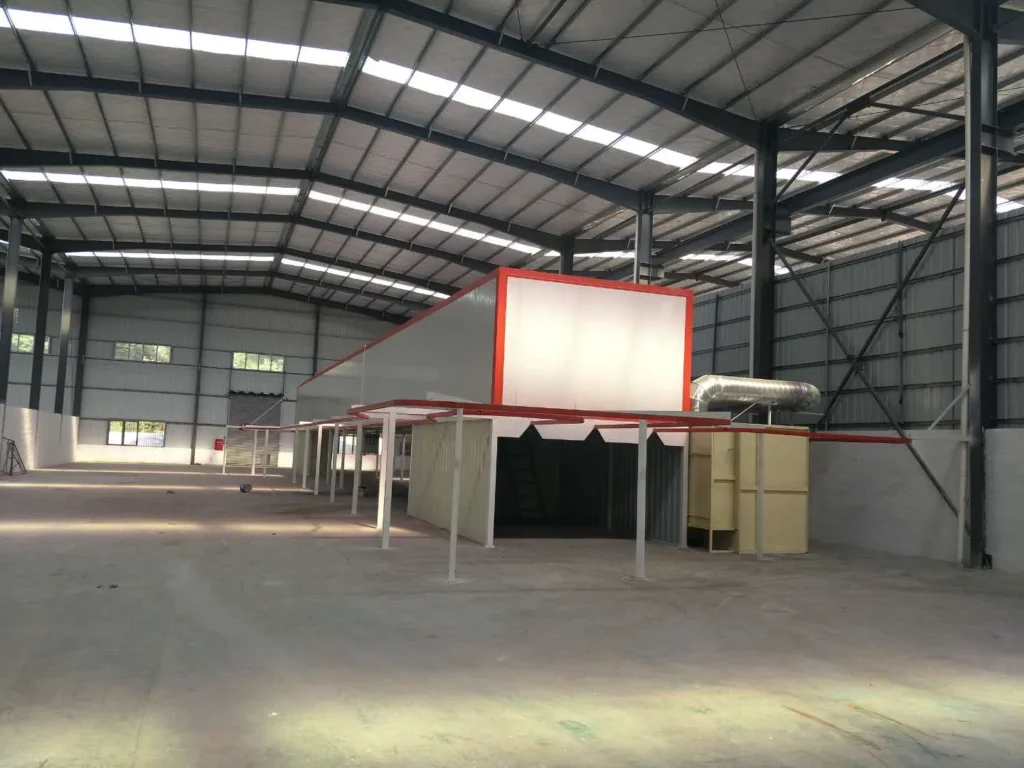
The Advantages of Electrostatic Spraying: Quality, Cost & Efficiency Benefits
If you're considering whether to upgrade your manufacturing process with electrostatic powder spraying technology, the answer likely depends on one critical question: Are you already tired of mediocre coating quality, wasted materials, and the inability to scale production efficiently?
Static electricity doesn't just power your lights—it fundamentally transforms how surface coatings work. Electrostatic spraying uses charged powder particles and a grounded workpiece to achieve something traditional spray methods struggle with: near-perfect transfer efficiency and coating consistency across thousands of units. But that's just the beginning. What makes electrostatic powder coating truly remarkable is how it stacks advantage upon advantage—better quality, lower costs, higher speeds, and environmental compliance—all in the same system.
The key insight from our factory experience: the true advantage of electrostatic spraying isn't about one single benefit. It's about how these advantages compound. Higher transfer efficiency cuts material waste, recovered powder reduces per-unit costs, better coating quality reduces customer returns, and automated consistency frees your team to handle more critical tasks. This is why manufacturers who commit to electrostatic powder coating lines—even those with modest budgets—often outpace competitors who cling to older methods.
Let me walk you through exactly what these advantages mean in real production environments, and help you understand when they actually matter for your business.
What is Electrostatic Spraying and Why It Matters
Electrostatic spraying, also called electrostatic powder coating, is a surface treatment process that uses static electricity to apply dry powder coatings to metal and certain composite workpieces. Unlike liquid paint systems that require solvents to dry and cure—and release volatile organic compounds (VOCs) in the process—electrostatic powder coating applies finely-divided powder particles that are electrostatically charged as they leave the spray gun.
The basic principle is straightforward: powder particles receive a negative charge from the electrostatic gun. Your workpiece is grounded (connected to earth), creating a positive attraction. As the charged particles move toward the workpiece, the electrostatic field pulls them uniformly onto the surface, where they adhere by electrostatic force before the workpiece enters a heating chamber. Once heated, the powder melts, flows into a smooth, continuous film, and chemically cures into a durable coating.
Why does this matter to manufacturing? Because every step of this process is engineered to deliver what traditional spray methods cannot reliably achieve: uniform film thickness, superior adhesion, minimal waste, and repeatable results across high-volume production. In the factory context, that difference translates directly into product quality, operational efficiency, and bottom-line profitability.
![electrostatic Pulverbeschichtungsstation verlässt operation in factory]
Superior Coating Quality and Consistency
The first and most obvious advantage you'll notice when moving to electrostatic powder coating is the dramatic improvement in surface quality. This isn't subjective—it's measurable.
Uniform film thickness and even coverage
In traditional spray methods—whether hand-sprayed liquid paint or older electrostatic systems—achieving consistent film thickness across a complex-shaped workpiece is extremely difficult. Why? Because the operator's technique, the spray distance, the angle of application, and even air currents in the booth all affect how much coating lands on the surface. Some areas end up thick, others thin. Some corners get missed entirely.
With modern electrostatic powder coating, the attraction between charged particles and the grounded workpiece creates what we call a "self-regulating" deposition. Powder particles are drawn toward every surface—flat or curved, smooth or textured—with nearly equal force. This means fewer thin spots, fewer missed areas, and fewer color inconsistencies from one side of a workpiece to the other.
From our experience working with metal cabinet manufacturers, furniture producers, and aluminum profile companies: a well-configured electrostatic line consistently achieves coating thickness variation of ±10–15 microns or better, where traditional methods often see variation of ±30 microns or more. For products that are inspected against tight tolerances—especially export-bound equipment—this translates into a dramatic reduction in rework and customer complaints.
The consistency also matters for appearance. A uniform, smooth coating looks more professional, more finished, and more durable. For high-end outdoor furniture or premium industrial equipment, that surface quality directly affects perceived value and market positioning.
Better adhesion and long-term durability
Why adhesion matters: A coating that looks good when it leaves the spray booth but peels off after six months in the field is worse than no coating at all. It signals poor quality, damages your brand reputation, and creates warranty nightmares.
Electrostatic powder coating's adhesion advantage comes from several factors working together:
First, the pre-treatment foundation. Before any powder touches the workpiece, the surface must be properly cleaned and pretreated. We emphasize this constantly because no amount of perfect spraying can compensate for a dirty or poorly prepared surface. However, when pretreatment is done correctly—degreasing, rust removal, phosphating or chemical conversion coating—electrostatic powder coating bonds to that prepared surface with remarkable tenacity.
Second, the electrostatic charge itself. The electrostatic field doesn't just position powder particles on the surface; it actually forces them into closer contact with the substrate before curing begins. This results in superior mechanical interlocking and chemical bonding compared to passive settling from liquid spray methods.
Third, the heating and curing profile. Once powder is deposited, the workpiece passes through a controlled heating chamber where the powder melts (flow), flows into a continuous film, and cures through chemical cross-linking. This happens at precise temperatures—typically 170–220°C depending on the specific powder formulation—held for a defined time period. When this curing is done correctly, the resulting coating bonds so firmly to the substrate that adhesion failures become extremely rare.
In harsh environments—coastal regions, chemical processing plants, outdoor equipment exposed to UV and moisture—we consistently see electrostatic powder coatings outlast liquid paints by 2–3 years or more. For metal cabinets, shelving systems, and outdoor furniture, this durability directly reduces maintenance costs and extends equipment service life.
Significant Cost Reduction Through Powder Recovery
Here's where electrostatic powder coating reveals a hidden advantage that many buyers don't fully appreciate until they're several months into production: the economics are dramatically better than people initially expect.
How powder recovery rates impact total cost of ownership
cURL Too many subrequests by single Worker invocation. To configure this limit, refer to https://developers.cloudflare.com/workers/wrangler/configuration/#limits.
cURL Too many subrequests by single Worker invocation. To configure this limit, refer to https://developers.cloudflare.com/workers/wrangler/configuration/#limits.
cURL Too many subrequests by single Worker invocation. To configure this limit, refer to https://developers.cloudflare.com/workers/wrangler/configuration/#limits.
Modern electrostatic Pulverbeschichtungssystemss, when properly configured with cyclone recovery, secondary filtration, and automated powder return systems, achieve recovery rates of cURL Too many subrequests by single Worker invocation. To configure this limit, refer to https://developers.cloudflare.com/workers/wrangler/configuration/#limits. cURL Too many subrequests by single Worker invocation. To configure this limit, refer to https://developers.cloudflare.com/workers/wrangler/configuration/#limits.
cURL Too many subrequests by single Worker invocation. To configure this limit, refer to https://developers.cloudflare.com/workers/wrangler/configuration/#limits cURL Too many subrequests by single Worker invocation. To configure this limit, refer to https://developers.cloudflare.com/workers/wrangler/configuration/#limits.
cURL Too many subrequests by single Worker invocation. To configure this limit, refer to https://developers.cloudflare.com/workers/wrangler/configuration/#limits. cURL Too many subrequests by single Worker invocation. To configure this limit, refer to https://developers.cloudflare.com/workers/wrangler/configuration/#limits.
cURL Too many subrequests by single Worker invocation. To configure this limit, refer to https://developers.cloudflare.com/workers/wrangler/configuration/#limits.
cURL Too many subrequests by single Worker invocation. To configure this limit, refer to https://developers.cloudflare.com/workers/wrangler/configuration/#limits
cURL Too many subrequests by single Worker invocation. To configure this limit, refer to https://developers.cloudflare.com/workers/wrangler/configuration/#limits.
cURL Too many subrequests by single Worker invocation. To configure this limit, refer to https://developers.cloudflare.com/workers/wrangler/configuration/#limits
cURL Too many subrequests by single Worker invocation. To configure this limit, refer to https://developers.cloudflare.com/workers/wrangler/configuration/#limits.
cURL Too many subrequests by single Worker invocation. To configure this limit, refer to https://developers.cloudflare.com/workers/wrangler/configuration/#limits.
cURL Too many subrequests by single Worker invocation. To configure this limit, refer to https://developers.cloudflare.com/workers/wrangler/configuration/#limits
- cURL Too many subrequests by single Worker invocation. To configure this limit, refer to https://developers.cloudflare.com/workers/wrangler/configuration/#limits
- cURL Too many subrequests by single Worker invocation. To configure this limit, refer to https://developers.cloudflare.com/workers/wrangler/configuration/#limits
- cURL Too many subrequests by single Worker invocation. To configure this limit, refer to https://developers.cloudflare.com/workers/wrangler/configuration/#limits
cURL Too many subrequests by single Worker invocation. To configure this limit, refer to https://developers.cloudflare.com/workers/wrangler/configuration/#limits.
cURL Too many subrequests by single Worker invocation. To configure this limit, refer to https://developers.cloudflare.com/workers/wrangler/configuration/#limits.
Our judgment: Don't approach electrostatic equipment as a capital expense that needs to be justified purely on cost reduction. Approach it as an investment in production capability that generates returns through three channels simultaneously: material cost reduction, labor efficiency, and quality improvement. When all three channels work together, the ROI becomes compelling.
![metal cabinet production line with powder coating system]
Faster Production and Higher Output Capacity
Speed matters in manufacturing. It always has. But electrostatic powder coating doesn't just speed up the spraying step—it fundamentally changes how you can organize the entire production flow.
Increased spraying speed and line throughput
A human operator hand-spraying liquid paint onto metal cabinets might spray 15–25 units per hour, depending on complexity and surface area. The operator must maintain proper spray technique, manage overspray and ventilation, and move methodically to avoid leaving uncoated areas. Mental and physical fatigue also factor in—sustained concentration for 8 hours of spray work naturally degrades performance by late afternoon.
An automated or semi-automated electrostatic line with properly positioned spray guns can coat 40–80+ units per hour on the same product, with zero fatigue factor and zero technique variation.
The difference is more than raw speed. When your coating step can handle 60 units per hour, but your pre-treatment station can only deliver 40 units per hour, you've identified a bottleneck. With that visibility, you can optimize the entire line—more pre-treatment capacity, faster drying, better scheduling—to remove the constraint.
We've worked with aluminum profile manufacturers who discovered that upgrading to an electrostatic line didn't just speed spraying; it revealed that their conveyor speed was the real bottleneck. Once they upgraded the transport system to match coating speed, overall plant throughput increased by 35%—not because spray capacity improved, but because the entire line became synchronized.
Reduced cycle time per unit
Cycle time per unit is the total time from when a workpiece enters the line until it exits completely (cooled, inspected, packaged). Electrostatic coating reduces this in several ways:
Faster spray time: As mentioned, 60+ units per hour vs. 20 units per hour.
Better first-pass quality: Because coating uniformity is superior, fewer units require rework or touch-up. In our metal cabinet projects, rework drops from typically 8–12% with hand spray to 1–2% with proper electrostatic setup. That's not 8% vs. 1% rework labor—that's 8% vs. 1% of total throughput being diverted from the main line.
Optimized cure time: Modern powder coating resins are formulated for specific cure profiles. A high-quality electrostatic curing oven with precise temperature control can reduce cure time compared to older liquid paint systems. At 200°C with proper hot-air circulation, a polyester powder might cure fully in 8–10 minutes. Liquid paint systems often require 15–20 minutes or longer, depending on film thickness and ambient conditions.
The cumulative effect is substantial. A production line that processed 100 units per day with hand liquid spray might process 200–250 units per day with the same floor space and staffing when equipped with electrostatic powder coating.
| Kennzahl | Hand Liquid Spray | Electrostatic Powder Coating |
|---|---|---|
| Spray speed (units/hr) | 20–25 | 60–80 |
| Material transfer efficiency | 50–65% | cURL Too many subrequests by single Worker invocation. To configure this limit, refer to https://developers.cloudflare.com/workers/wrangler/configuration/#limits |
| Nacharbeitquote | 8–12% | 1–2% |
| Cure time (minutes) | 15–20 | 8–10 |
| Daily throughput (100 units baseline) | 100 | 200–250 |
| Monthly material waste | 35–50% | 2–8% |
Umwelt- und Sicherheitsvorteile
Manufacturing has become inseparable from environmental responsibility. Regulators, customers, and supply chain partners now routinely ask about emissions, waste, and compliance. Electrostatic powder coating is one of the clearest advantages you can implement.
Lower VOC emissions and dust control
Volatile organic compounds (VOCs) are the invisible problem with liquid spray painting. When you spray liquid paint, solvents evaporate into the air, creating toxic vapor that must be captured and processed by ventilation and pollution-control systems. These emissions aren't free—they create regulatory compliance obligations, require expensive air-scrubbing equipment, and in some jurisdictions, incur direct costs through VOC fees or cap-and-trade systems.
Electrostatic powder coating uses zero solvents. The powder particles are applied dry. There's nothing to evaporate.
What about dust? cURL Too many subrequests by single Worker invocation. To configure this limit, refer to https://developers.cloudflare.com/workers/wrangler/configuration/#limits.
cURL Too many subrequests by single Worker invocation. To configure this limit, refer to https://developers.cloudflare.com/workers/wrangler/configuration/#limits
- cURL Too many subrequests by single Worker invocation. To configure this limit, refer to https://developers.cloudflare.com/workers/wrangler/configuration/#limits
- cURL Too many subrequests by single Worker invocation. To configure this limit, refer to https://developers.cloudflare.com/workers/wrangler/configuration/#limits
cURL Too many subrequests by single Worker invocation. To configure this limit, refer to https://developers.cloudflare.com/workers/wrangler/configuration/#limits.
cURL Too many subrequests by single Worker invocation. To configure this limit, refer to https://developers.cloudflare.com/workers/wrangler/configuration/#limits
cURL Too many subrequests by single Worker invocation. To configure this limit, refer to https://developers.cloudflare.com/workers/wrangler/configuration/#limits.
cURL Too many subrequests by single Worker invocation. To configure this limit, refer to https://developers.cloudflare.com/workers/wrangler/configuration/#limits.
cURL Too many subrequests by single Worker invocation. To configure this limit, refer to https://developers.cloudflare.com/workers/wrangler/configuration/#limits cURL Too many subrequests by single Worker invocation. To configure this limit, refer to https://developers.cloudflare.com/workers/wrangler/configuration/#limits. cURL Too many subrequests by single Worker invocation. To configure this limit, refer to https://developers.cloudflare.com/workers/wrangler/configuration/#limits.
cURL Too many subrequests by single Worker invocation. To configure this limit, refer to https://developers.cloudflare.com/workers/wrangler/configuration/#limits.
cURL Too many subrequests by single Worker invocation. To configure this limit, refer to https://developers.cloudflare.com/workers/wrangler/configuration/#limits
cURL Too many subrequests by single Worker invocation. To configure this limit, refer to https://developers.cloudflare.com/workers/wrangler/configuration/#limits.
cURL Too many subrequests by single Worker invocation. To configure this limit, refer to https://developers.cloudflare.com/workers/wrangler/configuration/#limits
cURL Too many subrequests by single Worker invocation. To configure this limit, refer to https://developers.cloudflare.com/workers/wrangler/configuration/#limits.
cURL Too many subrequests by single Worker invocation. To configure this limit, refer to https://developers.cloudflare.com/workers/wrangler/configuration/#limits.
cURL Too many subrequests by single Worker invocation. To configure this limit, refer to https://developers.cloudflare.com/workers/wrangler/configuration/#limits cURL Too many subrequests by single Worker invocation. To configure this limit, refer to https://developers.cloudflare.com/workers/wrangler/configuration/#limits.
cURL Too many subrequests by single Worker invocation. To configure this limit, refer to https://developers.cloudflare.com/workers/wrangler/configuration/#limits.
cURL Too many subrequests by single Worker invocation. To configure this limit, refer to https://developers.cloudflare.com/workers/wrangler/configuration/#limits
cURL Too many subrequests by single Worker invocation. To configure this limit, refer to https://developers.cloudflare.com/workers/wrangler/configuration/#limits.
A properly configured electrostatic line logs spray parameters (gun voltage, current, supply pressure), conveyor speed, oven temperature, and cure time. Over weeks and months, you develop a baseline for normal operation. When a gun becomes partially clogged, or when a heater element begins to degrade, or when a conveyor bearing loosens, these show up as measurable parameter drift.
With that visibility, maintenance teams can schedule repairs during planned downtime rather than discovering problems when the line goes down unexpectedly at 2 PM on a Tuesday.
In our factory's experience, this difference is enormous. A facility running 12-hour shifts with a critical line failure can lose $5,000–$15,000 per hour in lost production. Preventing even one unplanned outage per month more than pays for the cost of systematic monitoring and preventive maintenance.
Industry Applications and ROI Timeline
Electrostatic powder coating isn't universally the best choice for every application. It's best-suited to certain manufacturing contexts, and understanding which ones helps you determine if an investment makes sense for your operation.
Best-fit industries (furniture, cabinetry, aluminum profiles)
Metal furniture and outdoor furniture: This industry is almost tailor-made for electrostatic powder coating. Workpieces are typically moderate in size and complexity, batch volumes are high enough to justify automated lines, and customers increasingly demand quality finishes and environmental compliance. Outdoor furniture manufacturers especially benefit because powder coating's superior durability and UV stability dramatically outlast liquid paint in harsh outdoor environments.
Metal cabinetry and electronic equipment enclosures: These products demand coating uniformity (to look professional) and coating durability (to withstand industrial use and potential corrosion). Electrostatic lines excel at both. Additionally, cabinet manufacturers often handle multiple colors and SKUs, and modern powder lines can execute rapid color changes (5–15 minutes) compared to liquid paint systems (30–60 minutes or more), enabling true small-batch flexibility.
Aluminum profiles and building materials: Aluminum is a challenging substrate—it oxidizes quickly if not protected immediately after cleaning, and it requires precise coating thickness control to avoid material buildup that creates assembly problems. Electrostatic lines handle these requirements better than manual spray methods. The speed of the process (fast cycle times) minimizes the window for re-oxidation, and automated thickness control is more consistent than operator-dependent methods.
Metal shelving, storage, and warehouse equipment: High-volume, relatively simple geometry, strong demand for corrosion protection, customer expectations for professional appearance—this sector is a natural fit.
By contrast, electrostatic powder coating is less suitable for:
- Very small batch runs (setup time for color changes outweighs production benefit)
- Custom or highly complex shapes where extensive masking is required
- Low-volume specialty items where equipment utilization would be poor
- Operations where solvent-based finishes are specifically required for technical reasons
When electrostatic spraying becomes cost-effective
The volume threshold: Most equipment manufacturers recommend a minimum production volume of 3,000–5,000 units per month (or equivalent throughput) to justify the capital investment in a complete electrostatic line. Below that volume, the equipment sits idle too much, and ROI stretches beyond acceptable timelines.
But volume isn't the only factor. We've seen operations with 2,000 units per month justify electrostatic equipment because:
- Their current quality problems were costing them customers or warranty claims
- Their current labor costs were unsustainably high
- They had a clear plan to grow production
Conversely, we've seen operations with 8,000 units per month defer electrostatic investment because their current process was adequate and capital was constrained.
The real question is: what's the total economic opportunity?
Rechnen Sie es so:
-
Current total monthly cost: (Labor cost) + (Material cost) + (Rework/quality issues) + (Energy and ventilation for current system)
-
Projected cost with electrostatic line: (Lower labor) + (Higher material efficiency) + (Lower rework) + (Different energy profile) + (Depreciation of equipment)
-
Monatliche Einsparungen: (Step 1) minus (Step 2)
-
Payback period: (Total equipment investment) divided by (Monthly savings)
If the payback period is 18–30 months, the investment typically makes strong economic sense. If it's 3+ years, you need to have very high confidence in volume growth or other strategic benefits to justify it.
From our project experience: cURL Too many subrequests by single Worker invocation. To configure this limit, refer to https://developers.cloudflare.com/workers/wrangler/configuration/#limits
- cURL Too many subrequests by single Worker invocation. To configure this limit, refer to https://developers.cloudflare.com/workers/wrangler/configuration/#limits
- cURL Too many subrequests by single Worker invocation. To configure this limit, refer to https://developers.cloudflare.com/workers/wrangler/configuration/#limits
- cURL Too many subrequests by single Worker invocation. To configure this limit, refer to https://developers.cloudflare.com/workers/wrangler/configuration/#limits
- cURL Too many subrequests by single Worker invocation. To configure this limit, refer to https://developers.cloudflare.com/workers/wrangler/configuration/#limits
cURL Too many subrequests by single Worker invocation. To configure this limit, refer to https://developers.cloudflare.com/workers/wrangler/configuration/#limits.
cURL Too many subrequests by single Worker invocation. To configure this limit, refer to https://developers.cloudflare.com/workers/wrangler/configuration/#limits
cURL Too many subrequests by single Worker invocation. To configure this limit, refer to https://developers.cloudflare.com/workers/wrangler/configuration/#limits
cURL Too many subrequests by single Worker invocation. To configure this limit, refer to https://developers.cloudflare.com/workers/wrangler/configuration/#limits.
cURL Too many subrequests by single Worker invocation. To configure this limit, refer to https://developers.cloudflare.com/workers/wrangler/configuration/#limits
- cURL Too many subrequests by single Worker invocation. To configure this limit, refer to https://developers.cloudflare.com/workers/wrangler/configuration/#limits
- cURL Too many subrequests by single Worker invocation. To configure this limit, refer to https://developers.cloudflare.com/workers/wrangler/configuration/#limits
- cURL Too many subrequests by single Worker invocation. To configure this limit, refer to https://developers.cloudflare.com/workers/wrangler/configuration/#limits
- cURL Too many subrequests by single Worker invocation. To configure this limit, refer to https://developers.cloudflare.com/workers/wrangler/configuration/#limits
cURL Too many subrequests by single Worker invocation. To configure this limit, refer to https://developers.cloudflare.com/workers/wrangler/configuration/#limits cURL Too many subrequests by single Worker invocation. To configure this limit, refer to https://developers.cloudflare.com/workers/wrangler/configuration/#limits. cURL Too many subrequests by single Worker invocation. To configure this limit, refer to https://developers.cloudflare.com/workers/wrangler/configuration/#limits.
cURL Too many subrequests by single Worker invocation. To configure this limit, refer to https://developers.cloudflare.com/workers/wrangler/configuration/#limits
cURL Too many subrequests by single Worker invocation. To configure this limit, refer to https://developers.cloudflare.com/workers/wrangler/configuration/#limits cURL Too many subrequests by single Worker invocation. To configure this limit, refer to https://developers.cloudflare.com/workers/wrangler/configuration/#limits.
cURL Too many subrequests by single Worker invocation. To configure this limit, refer to https://developers.cloudflare.com/workers/wrangler/configuration/#limits cURL Too many subrequests by single Worker invocation. To configure this limit, refer to https://developers.cloudflare.com/workers/wrangler/configuration/#limits.
Mistake 3: Treating installation and commissioning as secondary details. A well-designed line that's poorly installed or rushed through commissioning will struggle. We recommend 2–3 weeks of careful setup, parameter tuning, and operator training. Skipping that to "get into production faster" almost always backfires.
Mistake 4: Failing to account for the ongoing chemistry.** Powder coating isn't a "set it and forget it" process. Powder chemistry, spray parameters, cure profiles, and maintenance all require active management. Operators need training and ongoing support.
That's why we place so much emphasis on commissioning, operator training, and post-installation support. The equipment itself is important, but the human and process elements around it are equally critical.
Making the Decision: Is Electrostatic Coating Right for Your Operation?
Use this checklist to help assess whether electrostatic powder coating makes sense for your business:
Green flags (advantages in your favor):
- Monthly production volume of 3,000+ units
- Products with complex shapes or tight coating requirements
- Multiple colors or SKUs (you need color-change flexibility)
- Current quality issues or customer complaints about coatings
- High current labor costs for coating operations
- Export markets requiring environmental compliance
- Long product lifecycle (coating durability matters)
- Adequate floor space for conveyor and curing equipment
Yellow flags (complications that require careful planning):
- Current production volume 1,500–3,000 units/month (borderline; need strong secondary ROI driver)
- Very small or very intricate workpieces (complex masking requirements)
- Extremely tight capital constraints
- Existing skilled labor force highly proficient with current method
- Current system adequate for current needs with no growth plan
Red flags (suggest electrostatic may not be ready):
- Monthly volume consistently under 1,000 units
- High product variability requiring extensive reconfiguration
- Coating requirements can only be met with liquid systems for technical reasons
- No capital budget in next 12–18 months
- Current coating is adequate and no strategic drivers for change
If you're reading this and recognizing your operation in the green flag category, the next step is realistic: bring in expertise to assess your specific situation. We regularly conduct factory assessments where we observe your current process, understand your product requirements, and sketch out what an appropriate electrostatic solution would look like—with credible cost and ROI projections specific to your operation.
That conversation is more valuable than generic specifications, because context matters. A line for aluminum profiles looks very different from a line for metal cabinets, which looks different from a line for outdoor furniture frames.
The Bottom Line
Electrostatic powder coating isn't a perfect solution for every manufacturer. But for operations that meet the right criteria—adequate volume, products suitable for the technology, and quality or efficiency challenges to solve—it's one of the highest-impact operational improvements available.
The advantages compound: higher quality drives customer confidence and pricing power, lower material costs improve margins, faster throughput increases capacity without expanding the factory, and environmental compliance opens new market opportunities. When all these factors align, an electrostatic coating investment becomes not just justified, but essential for competitiveness.
If you're evaluating this technology for your operation, don't base your decision on equipment specifications alone. Engage with suppliers who understand your industry, who can show you real working installations with actual customers producing products similar to yours, and who take the implementation and support process seriously.
At Ketu, we've spent years building expertise in electrostatic powder coating across cabinetry, furniture, aluminum, and metal products in different markets. We approach each project not as a standard equipment sale, but as a customized solution matched to the specific requirements of the client's operation, products, and market conditions. We're happy to discuss your situation, answer technical questions, and help you think through whether and how an electrostatic line could work for you.
Contact us via WhatsApp at +8618064668879 or email ketucoatingline@gmail.com to discuss your specific application. We can arrange a call with our technical team to explore whether electrostatic coating makes sense for your operation—and if it does, what the right configuration would look like.
 German
  English
  Vietnamese
  French