

cURL Too many subrequests by single Worker invocation. To configure this limit, refer to https://developers.cloudflare.com/workers/wrangler/configuration/#limits Spraying Process Can Improve the Utilization of Coating Powder
What Is Electrostatic Pulverspritzening and How Does It Work?
When I first started working with electrostatic powder spraying systems, what struck me most was how fundamentally different this technology is from traditional liquid coating methods. It's not just a variation on the same theme—it's a completely different approach to how we apply protective finishes to metal parts.
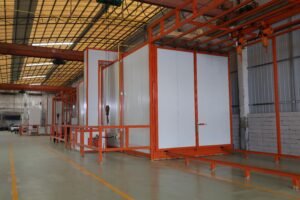
Electrostatic powder spraying[^1] is a process that applies a dry powder coating to a workpiece through the force of static electricity. Here's the basic idea: charged powder particles are attracted to a grounded workpiece, adhere uniformly across its surface, and then are heat-cured to form a solid, durable coating. The result is a finish that's thicker, more uniform, and more cost-effective than what most traditional spray methods can achieve.
Basic Principle of Electrostatic Attraction
The core of this technology rests on a simple physics principle: opposites attract. In the spray gun, powder particles are charged with a high-voltage elektrostatisches Feld[^2]—typically between 60–90 kV. The workpiece, meanwhile, is grounded (connected to earth). This creates an electric field between the charged powder and the grounded part, pulling the powder onto the surface with remarkable consistency.
What I've observed in our production environments is that this electrostatic force works almost independently of the spray gun operator's technique. Even if the hand movement isn't perfectly steady, or if the distance varies slightly, the powder still finds its way onto the workpiece. This is very different from liquid spray systems, where consistency depends heavily on operator skill.
The powder doesn't just land on the surface randomly either. Because of the uniform electric field, it spreads evenly across flat areas, wraps around edges, and even reaches into recessed areas—as long as the grounding is solid and the spray parameters are correct.
How the Process Differs from Traditional Liquid Coating Methods
I think it's important to be clear about why we even adopted electrostatic powder spraying in the first place. Liquid paint has been around for centuries, and for many applications it still works. But when you're running a manufacturing operation at scale, the differences become painfully obvious.
With liquid spray painting, most of the material that leaves the spray gun never reaches the workpiece. Overspray[^3]—paint that drifts past the part—is a massive waste stream. In my experience, solvent-based spray systems typically achieve only 60–70% transfer efficiency. That means 30–40% of the material you're paying for ends up as waste.
With electrostatic powder spraying, the physics itself reduces waste. Because the powder is attracted to the grounded workpiece, far less overspray occurs. More powder reaches the part, period. The transfer efficiency in a well-designed system routinely reaches 90–95%, and with optimized recovery systems, we see effective utilization rates of 85–90% or higher.
There's also a massive difference in environmental impact. Liquid paints release volatile organic compounds[^4] (VOCs) into the air. This creates health hazards for operators, requires expensive ventilation systems, and triggers regulatory scrutiny. Powder coatings release essentially no VOCs—the process is inherently cleaner.
And then there's the matter of speed and film quality. Powder coatings cure faster, adhere better to metal, and produce thicker, more uniform films with better corrosion resistance. The coating thickness is also far more consistent and controllable, which matters enormously for parts destined for demanding environments.
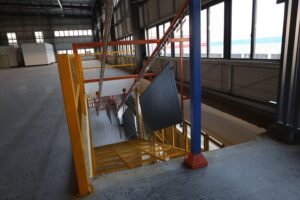
Powder Utilization Rate: Definition, Benchmarks, and Real-World Performance
Before I go deeper into how electrostatic systems improve powder utilization, I need to clarify exactly what we mean by "utilization rate"—because the numbers can be misleading if you don't understand what you're measuring.
What Is Powder Utilization Rate (Transfer Efficiency)?
Powder utilization rate, or transfer efficiency[^5] as it's also called, is simply the percentage of powder that actually adheres to the workpiece divided by the total amount of powder sprayed.
If I spray 100 kg of powder and 90 kg ends up on the part, my transfer efficiency is 90%. The other 10 kg is "waste"—it either falls to the floor, escapes into the air, or gets caught by the recovery system.
In practice, I think of transfer efficiency in two ways.
First-pass transfer efficiency is what the spray gun itself achieves in the moment—how much of what exits the nozzle actually lands on the workpiece. This can vary from 50% to 95% depending on the process.
Overall utilization rate, which is what really matters for your bottom line, includes recovery. If the recovery system captures waste powder that can be reused, then even if only 70% of spray reaches the part on the first pass, you might still end up reusing 85–90% of all powder you purchase.
The distinction matters because many vendors will quote you the first number and make it sound fantastic. I prefer to focus on what actually impacts cost and waste—the overall utilization rate after recovery.
Typical Utilization Rates: Powder Spraying vs. Conventional Spray Painting
Here's where the comparison gets striking.
With conventional liquid spray painting, you're typically looking at 60–70% transfer efficiency on a good day. Some sources cite numbers as low as 40–50% for hand-spray operations. The physics works against you—liquid paint atomizes into a mist, much of which drifts away from the workpiece.
With electrostatic powder spraying, first-pass transfer efficiency routinely reaches 85–95%. And because powder is 100% reusable (unlike liquid paint, which dries out and becomes unusable), recovered powder goes right back into the system.
Let me show you what this means in real dollars.
If you're coating metal parts with a $15/kg powder at 70% efficiency versus 92% efficiency, the material cost per part changes dramatically:
| Szenario | Übertragungseffizienz | Powder Cost per kg | cURL Too many subrequests by single Worker invocation. To configure this limit, refer to https://developers.cloudflare.com/workers/wrangler/configuration/#limits | cURL Too many subrequests by single Worker invocation. To configure this limit, refer to https://developers.cloudflare.com/workers/wrangler/configuration/#limits |
|---|---|---|---|---|
| cURL Too many subrequests by single Worker invocation. To configure this limit, refer to https://developers.cloudflare.com/workers/wrangler/configuration/#limits | 65% | $15 | $23.08 | $384,615 |
| cURL Too many subrequests by single Worker invocation. To configure this limit, refer to https://developers.cloudflare.com/workers/wrangler/configuration/#limits | 92% | $15 | $16.30 | $153,846 |
| cURL Too many subrequests by single Worker invocation. To configure this limit, refer to https://developers.cloudflare.com/workers/wrangler/configuration/#limits | cURL Too many subrequests by single Worker invocation. To configure this limit, refer to https://developers.cloudflare.com/workers/wrangler/configuration/#limits | $15 | cURL Too many subrequests by single Worker invocation. To configure this limit, refer to https://developers.cloudflare.com/workers/wrangler/configuration/#limits | cURL Too many subrequests by single Worker invocation. To configure this limit, refer to https://developers.cloudflare.com/workers/wrangler/configuration/#limits |
cURL Too many subrequests by single Worker invocation. To configure this limit, refer to https://developers.cloudflare.com/workers/wrangler/configuration/#limits.
cURL Too many subrequests by single Worker invocation. To configure this limit, refer to https://developers.cloudflare.com/workers/wrangler/configuration/#limits
cURL Too many subrequests by single Worker invocation. To configure this limit, refer to https://developers.cloudflare.com/workers/wrangler/configuration/#limits.
cURL Too many subrequests by single Worker invocation. To configure this limit, refer to https://developers.cloudflare.com/workers/wrangler/configuration/#limits
cURL Too many subrequests by single Worker invocation. To configure this limit, refer to https://developers.cloudflare.com/workers/wrangler/configuration/#limits. cURL Too many subrequests by single Worker invocation. To configure this limit, refer to https://developers.cloudflare.com/workers/wrangler/configuration/#limits.
cURL Too many subrequests by single Worker invocation. To configure this limit, refer to https://developers.cloudflare.com/workers/wrangler/configuration/#limits. cURL Too many subrequests by single Worker invocation. To configure this limit, refer to https://developers.cloudflare.com/workers/wrangler/configuration/#limits.
cURL Too many subrequests by single Worker invocation. To configure this limit, refer to https://developers.cloudflare.com/workers/wrangler/configuration/#limits. cURL Too many subrequests by single Worker invocation. To configure this limit, refer to https://developers.cloudflare.com/workers/wrangler/configuration/#limits.
cURL Too many subrequests by single Worker invocation. To configure this limit, refer to https://developers.cloudflare.com/workers/wrangler/configuration/#limits. cURL Too many subrequests by single Worker invocation. To configure this limit, refer to https://developers.cloudflare.com/workers/wrangler/configuration/#limits.
cURL Too many subrequests by single Worker invocation. To configure this limit, refer to https://developers.cloudflare.com/workers/wrangler/configuration/#limits. cURL Too many subrequests by single Worker invocation. To configure this limit, refer to https://developers.cloudflare.com/workers/wrangler/configuration/#limits.
6. Air pressure and flow rate. The atomization air carries powder particles to the gun and expels them toward the part. Too much air pressure, and you get excessive overspray. Too little, and powder doesn't flow reliably. There's a sweet spot.
7. Workpiece geometry. Complex shapes with recesses, internal cavities, and tight angles create "dead zones" where the electric field can't penetrate—the so-called Faraaday-Käfig[^6] effect. These areas get less powder, dragging overall efficiency down.
In my projects, I find that when clients are frustrated with utilization rates, it's rarely a problem with the spray gun itself. It's almost always one of these seven factors—and usually it's a combination of poor surface prep, weak grounding, and non-optimized spray parameters.
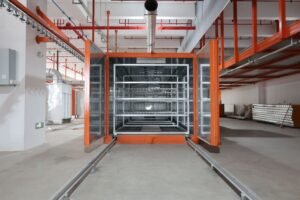
Why Electrostatic Powder Spraying Achieves Higher Powder Utilization
Now that we've established the performance gap, let me explain exactly why electrostatic powder spraying delivers such dramatically better utilization than traditional methods.
The Role of Stable Electrostatic Adhesion
The fundamental reason electrostatic powder spraying wastes less material is the adhesion mechanism itself.
When you spray liquid paint without electrostatic assistance, gravity and air currents are the only forces pulling the paint toward the part. A lot of the mist simply floats away. You get better results if the part is positioned vertically or if you have skilled sprayers, but there's a hard ceiling on how much you can recover.
With electrostatic powder spraying, the electric field is always working. Every charged powder particle experiences a constant pull toward the grounded workpiece. This isn't contingent on operator skill, air movement, or gravity. It's physics.
What I've observed is that this stable adhesion force does three critical things:
First, it keeps powder particles moving toward the part even from oblique angles. Powder that would miss a non-energized part gets pulled into place.
Second, it reduces the particle velocity needed for adhesion. In liquid spray, you need force to overcome inertia and make paint stick. In electrostatic powder spraying, the electric attraction does much of the work. Powder can be applied at lower pressures, which means fewer particles are deflected or bounce off.
Third, it allows powder to reach surfaces that would be hard to coat with manual spraying. Undercuts, internal corners, and recessed areas that a spray gun operator might hesitate to point at—the electrostatic field pulls powder into these areas naturally.
The net effect: more of what you spray lands on the part and stays there.
How Pulverrückgewinnung and Recirculation Systems Work
But here's the critical insight that many manufacturers miss: even with 90% first-pass transfer efficiency, you're still losing 10% of your powder. That's not trivial.
The real magic of electrostatic powder spraying isn't just the spray gun. It's the recovery and recirculation system[^7].
In our production environments, after powder is sprayed and doesn't adhere to the workpiece, it's sucked up by the exhaust system. The first stage is usually a cyclone separator. The cyclone works on centrifugal force—powder heavier than air gets flung outward and collected, while clean air exits the top.
A well-designed cyclone recovers 90–95% of overspray powder with a single pass. That powder—now called "recovery powder" or "reclaim"—is perfectly clean and usable. It goes back into the hopper and gets sprayed again.
Then comes the second stage: a secondary recovery cabinet with bag filters or cartridge filters. This catches the ultra-fine powder dust that escaped the cyclone, recovering an additional 3–5% of material that would otherwise be lost to the air.
The result is staggering: we recover and reuse 85–90% of the powder that didn't stick on the first pass.
If first-pass efficiency is 92%, and recovery efficiency is 87%, the effective overall utilization rate approaches 98% in real-world conditions. That means only about 2% of the powder you purchase actually becomes waste.
Let me be candid: these numbers assume a well-maintained system. If your cyclone is clogged, if your filters are overdue for replacement, or if your ducting has leaks, recovery rates plummet. But in a properly engineered and operated line, these recovery rates are absolutely achievable.
The Critical Role of Pre-treatment and Surface Preparation
I can't stress this enough: a good recovery system only works if the powder that reaches the part actually sticks. And that depends on pre-treatment.
In my experience, this is where many manufacturers lose efficiency without even realizing it.
When a metal workpiece is covered with oil, factory dust, rust, or oxide scale, the electrostatic force can still pull powder onto it. But adhesion is weak. Much of the powder falls off during handling, transport, or the curing process. It becomes scrap instead of a finished part.
This creates a vicious cycle: you spray powder, it doesn't adhere properly, it falls off and goes into scrap, and you never recover it because it's contaminated.
Vorbehandlung[^8] breaks this cycle. A proper pre-treatment system—typically involving degrease, rinse, acid etching (for steel), or alkaline wash (for aluminum), followed by phosphate or chromate conversion coating—does two things:
First, it removes all contamination, giving powder a clean metal surface to adhere to.
Second, cURL Too many subrequests by single Worker invocation. To configure this limit, refer to https://developers.cloudflare.com/workers/wrangler/configuration/#limits.
cURL Too many subrequests by single Worker invocation. To configure this limit, refer to https://developers.cloudflare.com/workers/wrangler/configuration/#limits.
cURL Too many subrequests by single Worker invocation. To configure this limit, refer to https://developers.cloudflare.com/workers/wrangler/configuration/#limits.
cURL Too many subrequests by single Worker invocation. To configure this limit, refer to https://developers.cloudflare.com/workers/wrangler/configuration/#limits
cURL Too many subrequests by single Worker invocation. To configure this limit, refer to https://developers.cloudflare.com/workers/wrangler/configuration/#limits.
cURL Too many subrequests by single Worker invocation. To configure this limit, refer to https://developers.cloudflare.com/workers/wrangler/configuration/#limits
cURL Too many subrequests by single Worker invocation. To configure this limit, refer to https://developers.cloudflare.com/workers/wrangler/configuration/#limits cURL Too many subrequests by single Worker invocation. To configure this limit, refer to https://developers.cloudflare.com/workers/wrangler/configuration/#limits.
cURL Too many subrequests by single Worker invocation. To configure this limit, refer to https://developers.cloudflare.com/workers/wrangler/configuration/#limits cURL Too many subrequests by single Worker invocation. To configure this limit, refer to https://developers.cloudflare.com/workers/wrangler/configuration/#limits.
cURL Too many subrequests by single Worker invocation. To configure this limit, refer to https://developers.cloudflare.com/workers/wrangler/configuration/#limits cURL Too many subrequests by single Worker invocation. To configure this limit, refer to https://developers.cloudflare.com/workers/wrangler/configuration/#limits.
PulverflussratecURL Too many subrequests by single Worker invocation. To configure this limit, refer to https://developers.cloudflare.com/workers/wrangler/configuration/#limits.
cURL Too many subrequests by single Worker invocation. To configure this limit, refer to https://developers.cloudflare.com/workers/wrangler/configuration/#limitscURL Too many subrequests by single Worker invocation. To configure this limit, refer to https://developers.cloudflare.com/workers/wrangler/configuration/#limits.
cURL Too many subrequests by single Worker invocation. To configure this limit, refer to https://developers.cloudflare.com/workers/wrangler/configuration/#limits.
cURL Too many subrequests by single Worker invocation. To configure this limit, refer to https://developers.cloudflare.com/workers/wrangler/configuration/#limits
cURL Too many subrequests by single Worker invocation. To configure this limit, refer to https://developers.cloudflare.com/workers/wrangler/configuration/#limits.
cURL Too many subrequests by single Worker invocation. To configure this limit, refer to https://developers.cloudflare.com/workers/wrangler/configuration/#limits
cURL Too many subrequests by single Worker invocation. To configure this limit, refer to https://developers.cloudflare.com/workers/wrangler/configuration/#limits.
cURL Too many subrequests by single Worker invocation. To configure this limit, refer to https://developers.cloudflare.com/workers/wrangler/configuration/#limits
- cURL Too many subrequests by single Worker invocation. To configure this limit, refer to https://developers.cloudflare.com/workers/wrangler/configuration/#limits
- Material cost: 2,857 × $15 = $42,857
At 92% utilization (achievable with electrostatic spraying, no recovery):
- Powder purchased: 2,000 kg ÷ 0.92 = 2,174 kg
- Material cost: 2,174 × $15 = $32,609
Difference: $10,248 per year just from better first-pass efficiency.
Now add recovery. With 85% recovery of waste powder, your effective utilization rate approaches 98%:
- Powder purchased: 2,000 kg ÷ 0.98 = 2,041 kg
- Material cost: 2,041 × $15 = $30,615
Difference from liquid spray: $12,242 per year.
Scale this to 50,000 parts annually, and you're looking at savings exceeding $60,000 per year. For a factory with multiple product lines, the accumulated savings can exceed $200,000–300,000 annually.
Lower Waste and Disposal Expenses
Beyond material costs, there's the hidden cost of waste disposal.
Liquid paint overspray and waste material must be treated as hazardous waste in most jurisdictions. Disposal can cost $500–1,500 per ton depending on your location and waste stream composition.
With liquid spray at 65% efficiency, a 2,000-unit annual production might generate 700–800 kg of paint waste. Disposal cost: $400–1,200 per year.
With powder spraying at 92% efficiency with recovery, waste is nearly eliminated. You're left with only the fine dust that escapes recovery—perhaps 20–30 kg annually. Disposal cost: $10–45 per year.
This isn't a massive number, but it's real savings, and it scales. More importantly, it eliminates the administrative burden and regulatory risk of hazardous waste management.
ROI Comparison: Powder Spraying vs. Liquid Coating Systems
The economic comparison is striking. A complete electrostatic powder spraying line costs more upfront than a basic liquid spray booth—typically $80,000–300,000+ depending on automation and recovery system complexity.
But the payback period is short.
Scenario: 10,000 parts annually, existing liquid spray operation
- Current liquid spray costs: ~$43,000/year in materials + ~$500/year waste disposal = $43,500/year
- Additional costs: operator training, hazmat compliance, ventilation maintenance = ~$2,000–5,000/year
- Total liquid spray cost: ~$45,500–48,500/year
Scenario: Same production with new electrostatic powder line
- Equipment investment: $150,000 (all-in for spray booth, recovery, curing oven, controls)
- Annual material costs: ~$31,000 (powder at 95% effective utilization)
- Energy costs: ~$8,000/year (electric curing oven)
- Maintenance and filters: ~$3,000/year
- Total first-year cost: $192,000
- Ongoing annual cost: ~$42,000/year
Payback calculation:
- Year 1 savings: $45,500 − $42,000 = $3,500 (plus $150,000 equipment cost = net year 1 negative $146,500)
- Year 2 savings: $45,500 − $42,000 = $3,500 (cumulative break-even at year 43)
Wait, that doesn't look good. But here's where I need to add context: cURL Too many subrequests by single Worker invocation. To configure this limit, refer to https://developers.cloudflare.com/workers/wrangler/configuration/#limits. cURL Too many subrequests by single Worker invocation. To configure this limit, refer to https://developers.cloudflare.com/workers/wrangler/configuration/#limits
- cURL Too many subrequests by single Worker invocation. To configure this limit, refer to https://developers.cloudflare.com/workers/wrangler/configuration/#limits
- cURL Too many subrequests by single Worker invocation. To configure this limit, refer to https://developers.cloudflare.com/workers/wrangler/configuration/#limits
- cURL Too many subrequests by single Worker invocation. To configure this limit, refer to https://developers.cloudflare.com/workers/wrangler/configuration/#limits
cURL Too many subrequests by single Worker invocation. To configure this limit, refer to https://developers.cloudflare.com/workers/wrangler/configuration/#limits.
cURL Too many subrequests by single Worker invocation. To configure this limit, refer to https://developers.cloudflare.com/workers/wrangler/configuration/#limits.
cURL Too many subrequests by single Worker invocation. To configure this limit, refer to https://developers.cloudflare.com/workers/wrangler/configuration/#limits
cURL Too many subrequests by single Worker invocation. To configure this limit, refer to https://developers.cloudflare.com/workers/wrangler/configuration/#limits.
cURL Too many subrequests by single Worker invocation. To configure this limit, refer to https://developers.cloudflare.com/workers/wrangler/configuration/#limits
cURL Too many subrequests by single Worker invocation. To configure this limit, refer to https://developers.cloudflare.com/workers/wrangler/configuration/#limits.
cURL Too many subrequests by single Worker invocation. To configure this limit, refer to https://developers.cloudflare.com/workers/wrangler/configuration/#limits.
cURL Too many subrequests by single Worker invocation. To configure this limit, refer to https://developers.cloudflare.com/workers/wrangler/configuration/#limits
- cURL Too many subrequests by single Worker invocation. To configure this limit, refer to https://developers.cloudflare.com/workers/wrangler/configuration/#limits
- cURL Too many subrequests by single Worker invocation. To configure this limit, refer to https://developers.cloudflare.com/workers/wrangler/configuration/#limits
- cURL Too many subrequests by single Worker invocation. To configure this limit, refer to https://developers.cloudflare.com/workers/wrangler/configuration/#limits
- cURL Too many subrequests by single Worker invocation. To configure this limit, refer to https://developers.cloudflare.com/workers/wrangler/configuration/#limits
cURL Too many subrequests by single Worker invocation. To configure this limit, refer to https://developers.cloudflare.com/workers/wrangler/configuration/#limits.
cURL Too many subrequests by single Worker invocation. To configure this limit, refer to https://developers.cloudflare.com/workers/wrangler/configuration/#limits.
cURL Too many subrequests by single Worker invocation. To configure this limit, refer to https://developers.cloudflare.com/workers/wrangler/configuration/#limits
cURL Too many subrequests by single Worker invocation. To configure this limit, refer to https://developers.cloudflare.com/workers/wrangler/configuration/#limits.
cURL Too many subrequests by single Worker invocation. To configure this limit, refer to https://developers.cloudflare.com/workers/wrangler/configuration/#limits.
Electrostatic powder spraying bypasses these restrictions entirely. Because emissions are negligible, facility expansions are easier to permit. Operations don't trigger the same regulatory scrutiny.
I've seen this in practice: when a customer moves to powder coating, permitting timelines compress from 6–12 months to 2–3 months. That's a competitive advantage.
Sustainability Benefits for Corporate ESG Goals
Finally, there's the matter of corporate sustainability reporting and ESG (Environmental, Social, and Governance) performance.
For manufacturers with upstream customers who care about supply chain sustainability—automotive OEMs, appliance makers, consumer product companies—adopting electrostatic powder coating is a tangible, measurable improvement in environmental footprint.
It reduces:
- VOC emissions (often by 95%+)
- Hazardous waste disposal (typically by 80–90%)
- Energy consumption per part coated (depending on system design, 15–25% reduction vs. liquid spray lines)
- Water consumption (powder coating uses no water; liquid spray uses significant water for cleaning and rinsing)
These metrics directly feed into ESG reporting. And for B2B manufacturers, supply chain sustainability increasingly influences purchasing decisions. A supplier with a powder-coated product is more attractive than one with liquid-sprayed equivalents.
Key Conditions and Equipment Configuration That Affect Powder Utilization
Here's where theory meets practice. Achieving 90%+ powder utilization isn't automatic. It requires specific conditions and careful equipment configuration.
Proper Grounding and Surface Preparation Quality
Let me start with what can't be compromised: grounding and pre-treatment.
Grounding is the foundation. Every workpiece, every fixture, every transport system must maintain electrical continuity back to ground. If a part is insulated—if it sits on a non-conductive surface or if its contact points are oxidized—the electrostatic force can't work.
In my audits, I find that inadequate grounding is the #1 cause of utilization problems. I've seen facilities where the grounding conductor was loose, or where grounding wasn't maintained between stations, or where the parts weren't making firm contact with the fixture.
The fix is often simple: ensure clean, low-resistance contact at every point where a part is held. Use conductive carriers and fixtures. Regularly clean electrical contact points. Monitor grounding resistance to ensure it stays below 1 megohm (the industry standard).
Surface preparation, as I've discussed, is equally critical. Pre-treatment not only cleans the part but also creates the chemical substrate that powder adheres to. A robust pre-treatment process includes:
- Degrease: Remove all oils and cutting fluids
- Acid etching or alkaline wash: Remove rust and oxide scale
- Rinse: Remove residual chemicals
- Phosphate or chromate conversion: Create adhesion-promoting layer
- Final rinse: Remove conversion chemicals
- Dry: Ensure no residual moisture
Compromising on any step will reduce utilization. And degraded bath chemistry—exhausted degrease, oxidized rinse water, depleted phosphate—is one of the most common problems I find in existing facilities.
Spray Gun Tuning and Electrostatic Parameters
Once grounding and pre-treatment are solid, the spray gun parameters become the tuning knobs.
The spray gun has several adjustable variables:
-
cURL Too many subrequests by single Worker invocation. To configure this limit, refer to https://developers.cloudflare.com/workers/wrangler/configuration/#limits (60–90 kV range typical): Higher voltage pulls more powder to the part and increases adhesion force. But excessive voltage creates edge buildup, powder bounce-back, and can cause arcing/electrical discharge. The optimal voltage typically falls in the 70–85 kV range for most applications, but this varies by part geometry and powder type.
-
Current (10–20 μA typical): Current determines how much charge each powder particle carries. It's somewhat independent of voltage. Tuning current allows fine control of deposition rate. Too much current reduces transfer efficiency; too little reduces deposition rate.
-
Spray gun distance (150–300 mm typical): Closer distances improve transfer efficiency but increase risk of overspray and edge accumulation. Farther distances reduce efficiency. For most applications, 180–250 mm is optimal, but this varies.
-
Spray angle: The angle at which the gun points relative to the surface affects how powder lands. For flat surfaces, perpendicular is ideal. For recessed areas or complex geometry, angled spraying sometimes improves coverage.
In practice, I recommend starting with conservative settings (moderate voltage, medium current, standard distance) and then incrementally increasing voltage until you hit either maximum efficiency or signs of overspray/edge buildup. That's typically your optimal point.
Powder Recovery System Design and Maintenance
cURL Too many subrequests by single Worker invocation. To configure this limit, refer to https://developers.cloudflare.com/workers/wrangler/configuration/#limits.
cURL Too many subrequests by single Worker invocation. To configure this limit, refer to https://developers.cloudflare.com/workers/wrangler/configuration/#limits.
cURL Too many subrequests by single Worker invocation. To configure this limit, refer to https://developers.cloudflare.com/workers/wrangler/configuration/#limits.
cURL Too many subrequests by single Worker invocation. To configure this limit, refer to https://developers.cloudflare.com/workers/wrangler/configuration/#limits.
cURL Too many subrequests by single Worker invocation. To configure this limit, refer to https://developers.cloudflare.com/workers/wrangler/configuration/#limits.
cURL Too many subrequests by single Worker invocation. To configure this limit, refer to https://developers.cloudflare.com/workers/wrangler/configuration/#limits.
cURL Too many subrequests by single Worker invocation. To configure this limit, refer to https://developers.cloudflare.com/workers/wrangler/configuration/#limits
cURL Too many subrequests by single Worker invocation. To configure this limit, refer to https://developers.cloudflare.com/workers/wrangler/configuration/#limits.
cURL Too many subrequests by single Worker invocation. To configure this limit, refer to https://developers.cloudflare.com/workers/wrangler/configuration/#limits.
cURL Too many subrequests by single Worker invocation. To configure this limit, refer to https://developers.cloudflare.com/workers/wrangler/configuration/#limits
- cURL Too many subrequests by single Worker invocation. To configure this limit, refer to https://developers.cloudflare.com/workers/wrangler/configuration/#limits
- cURL Too many subrequests by single Worker invocation. To configure this limit, refer to https://developers.cloudflare.com/workers/wrangler/configuration/#limits
- cURL Too many subrequests by single Worker invocation. To configure this limit, refer to https://developers.cloudflare.com/workers/wrangler/configuration/#limits
- cURL Too many subrequests by single Worker invocation. To configure this limit, refer to https://developers.cloudflare.com/workers/wrangler/configuration/#limits
cURL Too many subrequests by single Worker invocation. To configure this limit, refer to https://developers.cloudflare.com/workers/wrangler/configuration/#limits.
cURL Too many subrequests by single Worker invocation. To configure this limit, refer to https://developers.cloudflare.com/workers/wrangler/configuration/#limits.
cURL Too many subrequests by single Worker invocation. To configure this limit, refer to https://developers.cloudflare.com/workers/wrangler/configuration/#limits
cURL Too many subrequests by single Worker invocation. To configure this limit, refer to https://developers.cloudflare.com/workers/wrangler/configuration/#limits.
cURL Too many subrequests by single Worker invocation. To configure this limit, refer to https://developers.cloudflare.com/workers/wrangler/configuration/#limits
cURL Too many subrequests by single Worker invocation. To configure this limit, refer to https://developers.cloudflare.com/workers/wrangler/configuration/#limits.
cURL Too many subrequests by single Worker invocation. To configure this limit, refer to https://developers.cloudflare.com/workers/wrangler/configuration/#limits
- cURL Too many subrequests by single Worker invocation. To configure this limit, refer to https://developers.cloudflare.com/workers/wrangler/configuration/#limits during the period (in kg)
- Total parts produced during the period (number of parts)
- Target coating weight per part (in kg of powder, based on specifications)
- Expected total powder consumption if all powder adhered perfectly
- Calculation: (Total powder purchased − Expected consumption) ÷ Total powder purchased = Utilization shortfall percentage
For example:
- 500 kg of powder purchased in a week
- 2,000 parts produced, each requiring 0.2 kg of powder
- Expected consumption if 100% adhesion: 2,000 × 0.2 = 400 kg
- Shortfall: (500 − 400) ÷ 500 = 20% shortfall
- Utilization rate: 80%
If your measured utilization is significantly below 85%, there's room for improvement. If it's above 90%, you're performing very well.
Common Reasons for Below-Target Transfer Efficiency
Based on thousands of observations across our customer base, here are the most common culprits when utilization is suboptimal:
| Problem | Typical Symptom | Impact on Utilization |
|---|---|---|
| Poor surface pre-treatment | Powder falls off parts during handling or curing | -8–15% |
| Weak or inconsistent grounding | Parts in certain fixtures coat better than others | -5–12% |
| Electrostatic voltage too low | Light powder coverage; poor adhesion | -5–10% |
| Spray gun distance incorrect | Excessive overspray; uneven coverage | -5–8% |
| Clogged cyclone separator | Powder escapes to atmosphere without recovery | -3–8% |
| Dirty or compromised recovery filters | Fine powder lost to exhaust; reduced recovery | -3–6% |
| cURL Too many subrequests by single Worker invocation. To configure this limit, refer to https://developers.cloudflare.com/workers/wrangler/configuration/#limits | cURL Too many subrequests by single Worker invocation. To configure this limit, refer to https://developers.cloudflare.com/workers/wrangler/configuration/#limits | -5–12% |
| cURL Too many subrequests by single Worker invocation. To configure this limit, refer to https://developers.cloudflare.com/workers/wrangler/configuration/#limits | cURL Too many subrequests by single Worker invocation. To configure this limit, refer to https://developers.cloudflare.com/workers/wrangler/configuration/#limits | -5–10% |
| cURL Too many subrequests by single Worker invocation. To configure this limit, refer to https://developers.cloudflare.com/workers/wrangler/configuration/#limits | cURL Too many subrequests by single Worker invocation. To configure this limit, refer to https://developers.cloudflare.com/workers/wrangler/configuration/#limits | cURL Too many subrequests by single Worker invocation. To configure this limit, refer to https://developers.cloudflare.com/workers/wrangler/configuration/#limits |
cURL Too many subrequests by single Worker invocation. To configure this limit, refer to https://developers.cloudflare.com/workers/wrangler/configuration/#limits.
cURL Too many subrequests by single Worker invocation. To configure this limit, refer to https://developers.cloudflare.com/workers/wrangler/configuration/#limits
cURL Too many subrequests by single Worker invocation. To configure this limit, refer to https://developers.cloudflare.com/workers/wrangler/configuration/#limits
cURL Too many subrequests by single Worker invocation. To configure this limit, refer to https://developers.cloudflare.com/workers/wrangler/configuration/#limits cURL Too many subrequests by single Worker invocation. To configure this limit, refer to https://developers.cloudflare.com/workers/wrangler/configuration/#limits
- cURL Too many subrequests by single Worker invocation. To configure this limit, refer to https://developers.cloudflare.com/workers/wrangler/configuration/#limits
- cURL Too many subrequests by single Worker invocation. To configure this limit, refer to https://developers.cloudflare.com/workers/wrangler/configuration/#limits
- cURL Too many subrequests by single Worker invocation. To configure this limit, refer to https://developers.cloudflare.com/workers/wrangler/configuration/#limits
- cURL Too many subrequests by single Worker invocation. To configure this limit, refer to https://developers.cloudflare.com/workers/wrangler/configuration/#limits
cURL Too many subrequests by single Worker invocation. To configure this limit, refer to https://developers.cloudflare.com/workers/wrangler/configuration/#limits cURL Too many subrequests by single Worker invocation. To configure this limit, refer to https://developers.cloudflare.com/workers/wrangler/configuration/#limits
- cURL Too many subrequests by single Worker invocation. To configure this limit, refer to https://developers.cloudflare.com/workers/wrangler/configuration/#limits
- cURL Too many subrequests by single Worker invocation. To configure this limit, refer to https://developers.cloudflare.com/workers/wrangler/configuration/#limits
- cURL Too many subrequests by single Worker invocation. To configure this limit, refer to https://developers.cloudflare.com/workers/wrangler/configuration/#limits
cURL Too many subrequests by single Worker invocation. To configure this limit, refer to https://developers.cloudflare.com/workers/wrangler/configuration/#limits (cost: ~$0; typical recovery: 3–8 percentage points)
- Conduct a test sequence, incrementally increasing voltage from 60 kV upward
- Monitor first-pass transfer efficiency at each voltage level using a weight balance or visual inspection
- Document optimal voltage, current, and distance for each product type
- Train operators to use these parameters consistently
Step 4: Maintenance blitz on recovery system (cost: $1,000–2,000; typical recovery: 3–8 percentage points)
- Clean out cyclone thoroughly; inspect for damage or wear
- Replace or thoroughly clean all filtration elements
- Test collection hopper for moisture; ensure it's dry
- Verify all ducting connections are tight and unobstructed
Step 5: Optimize booth airflow and dust control (cost: $2,000–5,000; typical recovery: 2–6 percentage points)
- Check airflow velocity inside booth; should be uniform at 0.5–1.5 m/s
- If velocity is low, verify fan is operating at full capacity; replace if worn
- Ensure ductwork is sized correctly and slopes properly
- Minimize powder settling in horizontal runs by angling ducts toward the recovery system
These five steps, implemented systematically, often recover utilization rates from 75–80% up to 87–92% with minimal capital outlay. The total investment is typically $5,000–15,000 and usually pays for itself within 1–2 years through reduced powder consumption alone.
Fazit
Electrostatic powder spraying delivers superior powder utilization—90–95% first-pass transfer efficiency and 85–90% effective utilization after recovery—because the underlying physics fundamentally differs from liquid spray processes. The electrostatic field pulls powder to grounded workpieces with minimal waste, and a well-designed recovery system recycles what doesn't adhere.
The business case is compelling. Material cost savings alone can exceed $60,000 annually for a mid-sized operation. Add in quality improvements, reduced waste disposal costs, and productivity gains, and the ROI improves dramatically.
But achieving these results isn't automatic. It requires solid surface pre-treatment, reliable grounding, optimized spray parameters, and diligent maintenance of the recovery system.
If you're operating an existing powder spray line and utilization is below 85%, the answer typically isn't new equipment. It's systematic optimization of the conditions and parameters you already have.
At Ketu, we've built our reputation on understanding exactly this—how to make electrostatic powder spraying lines perform to their potential. We design systems with utilization in mind from the ground up, and we support our customers through the entire optimization journey.
If your operation is ready to evaluate or improve powder utilization, I'd welcome a conversation about your specific situation. The efficiency gains are too significant to leave on the table.
Contact us to discuss your powder spraying needs and explore how we can help you achieve superior coating utilization:
WhatsApp: +8618925987762
E-Mail: ketucoatingline@gmail.com
[^1]: A process that applies charged powder particles to grounded workpieces, using electrostatic attraction to create uniform coatings with minimal waste and overspray.
[^2]: The region around charged particles or objects where electrical forces act on other charged particles, fundamental to how electrostatic powder spraying attracts powder to parts.
[^3]: Atomized paint or powder that drifts past the intended workpiece instead of adhering to it, representing the primary source of waste in conventional spray operations.
[^4]: Organic compounds that evaporate at room temperature, released by liquid paints and creating respiratory hazards, environmental pollution, and requiring expensive ventilation systems.
[^5]: The percentage of material sprayed that actually adheres to the workpiece, measured as the ratio of applied coating weight to total material sprayed, a key efficiency metric.
[^6]: A shielding effect where electric field intensity decreases or becomes blocked inside enclosed spaces and recesses, reducing powder deposition in complex part geometries.
[^7]: Equipment systems that capture unused powder from overspray through cyclone separators and bag filters, allowing powder to be recycled and reused to achieve 85–90% overall material utilization.
[^8]: Chemical and mechanical processes that clean metal surfaces and create micro-textured adhesion-promoting layers, essential for ensuring powder coatings adhere reliably during handling and curing.
 German
  English
  Vietnamese
  French