
Common Metal Surface Treatment Methods: Selection Guide and Performance Comparison
From our experience working with metal fabricators, cabinet manufacturers, furniture producers, and aluminum profile companies across multiple continents, I've seen firsthand how surface treatment decisions directly impact product quality, production efficiency, and long-term costs. This guide reflects what we've learned from hundreds of manufacturing operations—the choices that work, the pitfalls to avoid, and how to match treatment methods to your specific production needs.
What Are the Main Metal Surface Treatment Methods?
Metal surface treatment isn't one-size-fits-all. The main methods available today fall into distinct categories, each with different mechanisms, performance profiles, and economic implications.
Galvanisieren[^1] applies a thin metal coating through electrochemical deposition. It's precise and produces excellent adhesion on properly prepared surfaces, but comes with higher material costs, environmental handling requirements, and disposal concerns. The process generates hazardous waste streams that demand proper treatment infrastructure.
Feuerverzinken[^2] immerses steel in molten zinc, creating a multi-layer coating with exceptional corrosion resistance. It's particularly effective for structural steel and outdoor applications. The thick, metallurgical bond between coating and substrate offers excellent durability. However, the process requires significant capital investment and isn't suitable for complex geometries or tight tolerances.
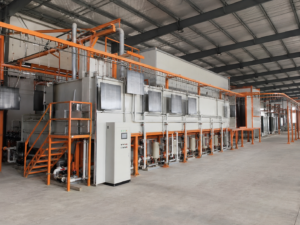
Electrostatic powder coating uses static electricity to apply powder particles to grounded workpieces, then thermally fuses the coating through controlled heating. This is the method we specialize in, and for good reason—it delivers uniform coverage, high transfer efficiency (often 95%+), minimal VOC emissions, and excellent recyclability. The powder that doesn't adhere can be recovered and reused, dramatically reducing material waste.
Liquid paint/spray coating applies liquid coating through conventional or HVLP spray methods. It offers flexibility for small batches and complex colors but requires solvent management, generates higher VOC emissions, and typically results in lower transfer efficiency. Material waste is higher, and worker safety protocols must account for volatile organic compounds[^3].
Eloxieren[^4] oxidizes aluminum surfaces electrochemically to create a protective oxide layer. It's ideal for aluminum requiring corrosion resistance and wear protection, particularly for architectural or consumer-facing applications. The process is environmentally manageable and produces aesthetically superior finishes, though it's aluminum-specific and cannot be applied to steel or other ferrous metals.
Metal plating variants (nickel plating, chrome plating, tin plating) serve specialized needs—decorative finishes, electrical conductivity, wear resistance in specific applications. Each has distinct environmental and cost implications that merit careful evaluation before selection.
![powder coating suppliers comparison]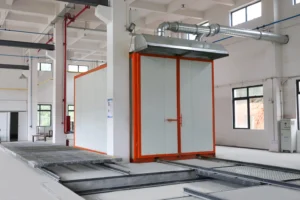
How Do Different Surface Treatment Methods Compare in Performance?
The real decision-making happens here. Performance varies significantly across dimensions that actually matter to manufacturing operations.
Corrosion Resistance and Durability
Hot-dip galvanizing and electrostatic powder coating lead this category, but for different reasons.
Galvanizing offers the thickest protection layer—typically 45-150 microns depending on steel grade. The zinc sacrifices itself, protecting underlying steel even at scratches or cut edges. Salt-fog testing[^5] shows 500+ hours to red rust in most applications. For outdoor structural steel, bridge components, or utility infrastructure, galvanizing remains unmatched.
Electrostatic powder coating achieves excellent corrosion resistance through film integrity. A properly cured polyester or epoxy-polyester powder layer—typically 60-100 microns—creates a continuous barrier. Salt-fog performance reaches 1000+ hours for high-performance formulations. The critical difference: powder coating's durability depends entirely on pre-treatment quality and cure completion. If the pre-treatment is inadequate or the coating undercured, failure accelerates dramatically.
Electroplating and liquid paint offer moderate protection. Electroplating provides good uniformity but is susceptible to pitting if the base substrate isn't perfectly clean. Liquid coatings depend on application technique and environmental conditions during cure; brush or roller application creates inconsistent film thickness.
Anodizing on aluminum is chemically reliable but creates a different protection mechanism—the oxide layer is integral to the aluminum itself and won't peel or chip like applied coatings.
Our view: Pre-treatment is as critical as the coating itself. We've seen countless projects where good powder was applied to poorly treated surfaces, resulting in failures that reflected on the coating supplier, not the customer's process. This is why we embed pre-treatment optimization into every project specification.
Cost and Economic Comparison
This requires looking beyond unit pricing to total cost of ownership.
Hot-dip galvanizing: Initial material and process costs run $2-5 per kg depending on steel grade and quantity. Capital equipment is substantial (large furnaces, quenching systems). Labor is moderate. The process is economical at high volumes but prohibitive for small batches. Once performed, no additional investment is needed—the coating is permanent.
Electrostatic powder coating: Equipment investment ranges from $50k-500k+ depending on automation level and line complexity. Powder costs $8-15 per kg for standard polyester formulations. The critical economic advantage: powder transfer efficiency of 95%+ means minimal waste compared to liquid coating's 60-70% transfer efficiency. For cabinet manufacturers running thousands of identical units, the powder economy becomes compelling—material waste per unit drops substantially, offsetting equipment investment within 2-3 years.
Galvanisieren: Material costs are high ($15-50+ per kg depending on metal), plating chemistry is expensive, and waste management adds costs. Equipment requirements are moderate but chemical management is demanding. Best suited to decorative applications or specialty items where the premium finish justifies cost.
Liquid paint: Low equipment capital ($10k-50k), but material transfer efficiency losses are significant. For 100 units of liquid paint spraying, you might consume 30-35% more material than the same 100 units in powder coating due to overspray and application losses. Labor per unit is higher for coating application and cleanup.
Eloxieren: Moderate equipment investment, chemical costs are reasonable, but the process is dedicated to aluminum only. Excellent long-term value for aluminum-heavy production.
cURL Too many subrequests by single Worker invocation. To configure this limit, refer to https://developers.cloudflare.com/workers/wrangler/configuration/#limits cURL Too many subrequests by single Worker invocation. To configure this limit, refer to https://developers.cloudflare.com/workers/wrangler/configuration/#limits.
cURL Too many subrequests by single Worker invocation. To configure this limit, refer to https://developers.cloudflare.com/workers/wrangler/configuration/#limits
cURL Too many subrequests by single Worker invocation. To configure this limit, refer to https://developers.cloudflare.com/workers/wrangler/configuration/#limits
cURL Too many subrequests by single Worker invocation. To configure this limit, refer to https://developers.cloudflare.com/workers/wrangler/configuration/#limits.
Elektrostatische Pulverbeschichtung cURL Too many subrequests by single Worker invocation. To configure this limit, refer to https://developers.cloudflare.com/workers/wrangler/configuration/#limits
- cURL Too many subrequests by single Worker invocation. To configure this limit, refer to https://developers.cloudflare.com/workers/wrangler/configuration/#limits
- cURL Too many subrequests by single Worker invocation. To configure this limit, refer to https://developers.cloudflare.com/workers/wrangler/configuration/#limits
- cURL Too many subrequests by single Worker invocation. To configure this limit, refer to https://developers.cloudflare.com/workers/wrangler/configuration/#limits
- cURL Too many subrequests by single Worker invocation. To configure this limit, refer to https://developers.cloudflare.com/workers/wrangler/configuration/#limits
- cURL Too many subrequests by single Worker invocation. To configure this limit, refer to https://developers.cloudflare.com/workers/wrangler/configuration/#limits
cURL Too many subrequests by single Worker invocation. To configure this limit, refer to https://developers.cloudflare.com/workers/wrangler/configuration/#limits.
cURL Too many subrequests by single Worker invocation. To configure this limit, refer to https://developers.cloudflare.com/workers/wrangler/configuration/#limits
- cURL Too many subrequests by single Worker invocation. To configure this limit, refer to https://developers.cloudflare.com/workers/wrangler/configuration/#limits
- cURL Too many subrequests by single Worker invocation. To configure this limit, refer to https://developers.cloudflare.com/workers/wrangler/configuration/#limits
- cURL Too many subrequests by single Worker invocation. To configure this limit, refer to https://developers.cloudflare.com/workers/wrangler/configuration/#limits
- cURL Too many subrequests by single Worker invocation. To configure this limit, refer to https://developers.cloudflare.com/workers/wrangler/configuration/#limits
- cURL Too many subrequests by single Worker invocation. To configure this limit, refer to https://developers.cloudflare.com/workers/wrangler/configuration/#limits
Hot-dip galvanizing:
- cURL Too many subrequests by single Worker invocation. To configure this limit, refer to https://developers.cloudflare.com/workers/wrangler/configuration/#limits
- cURL Too many subrequests by single Worker invocation. To configure this limit, refer to https://developers.cloudflare.com/workers/wrangler/configuration/#limits
- cURL Too many subrequests by single Worker invocation. To configure this limit, refer to https://developers.cloudflare.com/workers/wrangler/configuration/#limits
cURL Too many subrequests by single Worker invocation. To configure this limit, refer to https://developers.cloudflare.com/workers/wrangler/configuration/#limits
- Both generate hazardous waste streams requiring treatment infrastructure
- Electroplating is particularly demanding: heavy metal waste, spent chemicals, rinse water all require management
- Neither is easily automated in the sense of hands-off production
How to Choose the Right Surface Treatment Based on Production Scale?
Large-Volume, Standardized Production (500+ units/month, consistent geometry)
Electrostatic powder coating is the economic and quality winner.
At this scale, equipment investment amortizes quickly. A complete automated or semi-automated powder line—including pre-treatment, spray booth, recovery system, and curing—typically costs $150k-400k. At 2000 units/month, this represents $0.75-2 per unit in equipment amortization, often recovered in material savings alone.
Quality consistency improves because automation removes operator variability. Every unit receives the same spray pattern, cure duration, and temperature profile. Batch-to-batch color matching is superior. Your defect rates drop, rework costs decline.
Pre-treatment becomes non-negotiable at this scale. Poor surface prep undermines all downstream work. We consistently find that investing an extra 15-20% in pre-treatment quality (better degreasing, stronger phosphate films, extended rinse cycles) eliminates 80%+ of field failures. The return on that investment is immediate and measurable.
Supply chain becomes simpler: powder suppliers are abundant, price-stable, and logistics are straightforward. Lead times on new colors run 2-3 weeks; liquid paint can sometimes be faster, but consistency often suffers.
Small Batch, Multi-Color, Complex Geometries (50-200 units/month, frequent color changes)
Liquid paint or manual powder coating, with careful selection.
Large powder lines are inflexible for frequent color changes—changeover time can reach 4-8 hours if you're being rigorous about cleaning. Small liquid spray operations can change colors in 30 minutes. For job-shop environments with new designs weekly, this flexibility matters.
Equipment investment is lower: a quality spray booth, ventilation system, and proper paint delivery runs $30k-75k. Per-unit amortization stays reasonable even at 100 units/month.
The trade-off: quality consistency depends more on operator skill. Film thickness varies. Color matching is harder. You absorb higher defect rates—perhaps 5-15% rework vs. 0.5-2% for automated powder. But unit economics can still work if labor costs are low or you're pricing to absorb rework.
Anodizing fits well here for aluminum. The process is naturally suited to smaller batches. Equipment exists at mid-scale (not huge furnaces). Quality is inherently consistent because the coating is electrochemical, not applied.
Unsere Empfehlung: At 50-200 units/month with frequent changes, invest in a modest powder line with quick-change spray guns and efficient recovery systems. This gives you 70% of powder's quality advantage at 30% of the capital cost of a full automated system. Changeover time can be reduced to 1-2 hours with good discipline.
Micro-Batch or Prototyping (<50 units/month, highly variable specifications)
Manual spray coating or outsourced coating services are most practical.
Capital investment in any equipment is hard to justify. Outsourced powder coating shops or plating services absorb the fixed costs across many customers. You pay per-unit premium (often 20-40% above self-coating costs) but avoid infrastructure investment.
If you must handle it in-house, a simple spray booth with recovery and basic ventilation suffices. Liquid paint or manual powder application with backpack recovery systems work at this scale. Quality will be operator-dependent, but you're not exposed to huge capital risk.
Surface Treatment Selection by Metal Material Type
Material choice drives treatment options because chemistry and metallurgy differ fundamentally.
Steel and Iron Components
Steel accepts virtually all surface treatments, giving you maximum flexibility.
For outdoor or high-corrosion environments: Hot-dip galvanizing is the most durable and lowest-maintenance choice. Once applied, it requires no maintenance for 15-30+ years depending on environment. Electroplating is insufficient—the coating is too thin for aggressive environments.
For industrial cabinets, machinery, indoor structures: Electrostatic powder coating is our preferred method. The combination of pre-treatment (phosphate conversion coating) plus 70-100 micron powder achieves 1000+ hour salt-fog performance. Cost per unit is 40-60% lower than galvanizing, and customization (colors, textures) is unlimited.
For decorative applications: Electroplating (nickel, chrome) or high-end liquid paint offers superior aesthetics at premium cost.
Critical point we emphasize: Don't assume "more coating = better protection." A 200-micron poorly-adhered coating fails faster than a 70-micron perfectly-adhered coating. This is why pre-treatment quality matters more than coating thickness.
Aluminium und Aluminiumlegierungen
Aluminum has a natural oxide layer, making it fundamentally different from steel.
Anodizing is the standard choice for aluminum requiring corrosion resistance. The oxide layer integrates with the substrate—it cannot chip, peel, or flake because it's chemically bonded to the aluminum matrix. For architectural aluminum, consumer products, or outdoor exposure, anodizing delivers reliability that applied coatings struggle to match.
Electrostatic powder coating works on aluminum but only with proper cURL Too many subrequests by single Worker invocation. To configure this limit, refer to https://developers.cloudflare.com/workers/wrangler/configuration/#limitscURL Too many subrequests by single Worker invocation. To configure this limit, refer to https://developers.cloudflare.com/workers/wrangler/configuration/#limits.
cURL Too many subrequests by single Worker invocation. To configure this limit, refer to https://developers.cloudflare.com/workers/wrangler/configuration/#limits.
cURL Too many subrequests by single Worker invocation. To configure this limit, refer to https://developers.cloudflare.com/workers/wrangler/configuration/#limits cURL Too many subrequests by single Worker invocation. To configure this limit, refer to https://developers.cloudflare.com/workers/wrangler/configuration/#limits.
Edelstahl
cURL Too many subrequests by single Worker invocation. To configure this limit, refer to https://developers.cloudflare.com/workers/wrangler/configuration/#limits.
cURL Too many subrequests by single Worker invocation. To configure this limit, refer to https://developers.cloudflare.com/workers/wrangler/configuration/#limits cURL Too many subrequests by single Worker invocation. To configure this limit, refer to https://developers.cloudflare.com/workers/wrangler/configuration/#limits.
cURL Too many subrequests by single Worker invocation. To configure this limit, refer to https://developers.cloudflare.com/workers/wrangler/configuration/#limits cURL Too many subrequests by single Worker invocation. To configure this limit, refer to https://developers.cloudflare.com/workers/wrangler/configuration/#limits.
cURL Too many subrequests by single Worker invocation. To configure this limit, refer to https://developers.cloudflare.com/workers/wrangler/configuration/#limits cURL Too many subrequests by single Worker invocation. To configure this limit, refer to https://developers.cloudflare.com/workers/wrangler/configuration/#limits.
cURL Too many subrequests by single Worker invocation. To configure this limit, refer to https://developers.cloudflare.com/workers/wrangler/configuration/#limits
cURL Too many subrequests by single Worker invocation. To configure this limit, refer to https://developers.cloudflare.com/workers/wrangler/configuration/#limits.
Galvanisieren cURL Too many subrequests by single Worker invocation. To configure this limit, refer to https://developers.cloudflare.com/workers/wrangler/configuration/#limits.
cURL Too many subrequests by single Worker invocation. To configure this limit, refer to https://developers.cloudflare.com/workers/wrangler/configuration/#limits cURL Too many subrequests by single Worker invocation. To configure this limit, refer to https://developers.cloudflare.com/workers/wrangler/configuration/#limits.
Pulverbeschichtung: cURL Too many subrequests by single Worker invocation. To configure this limit, refer to https://developers.cloudflare.com/workers/wrangler/configuration/#limits.
cURL Too many subrequests by single Worker invocation. To configure this limit, refer to https://developers.cloudflare.com/workers/wrangler/configuration/#limits
cURL Too many subrequests by single Worker invocation. To configure this limit, refer to https://developers.cloudflare.com/workers/wrangler/configuration/#limits.
cURL Too many subrequests by single Worker invocation. To configure this limit, refer to https://developers.cloudflare.com/workers/wrangler/configuration/#limits.
The pre-treatment process typically includes:
-
cURL Too many subrequests by single Worker invocation. To configure this limit, refer to https://developers.cloudflare.com/workers/wrangler/configuration/#limits cURL Too many subrequests by single Worker invocation. To configure this limit, refer to https://developers.cloudflare.com/workers/wrangler/configuration/#limits.
-
Rostentfernung – for steel, removes mill scale and oxidation. Sandblasting, shot peening, or acid pickling all work, but must achieve consistent surface profile. Incomplete rust removal leaves weak spots where corrosion can restart under the coating.
-
Surface activation – raises surface energy so coating wets and bonds properly. This is why many pre-treatment systems include a light etch or microabrasion step.
-
Umwandlungsbeschichtung[^7] (phosphate, chromate, zirconium) – deposits a thin crystalline layer that enhances adhesion and corrosion resistance. This layer acts as a mechanical key and electrochemical buffer. Phosphate on steel is industry standard; chromate-free systems are increasingly mandated for environmental reasons.
-
Passivation/final rinse – removes excess chemicals, prevents white rust (zinc oxide blooms on galvanized surfaces), and ensures no contaminants remain to corrode later.
What happens when pre-treatment is inadequate:
- Adhesion failure: Coating peels within weeks or months
- Blistering: Water penetrates beneath the coating and causes localized failure
- Corrosion creepage: Oxidation starts at uncoated edges and spreads under the coating
- Color inconsistency: Uneven surface energy causes powder to distribute unevenly
- Reduced gloss/appearance: Surface defects telegraph through applied coatings
We've conducted side-by-side tests: identical coating systems applied to steel that received 10-minute vs. 30-minute degreasing. The 10-minute samples failed in salt-fog at 300 hours; the 30-minute samples reached 1200+ hours. The difference was pre-treatment alone.
The economics: Pre-treatment adds 10-20% to overall coating cost but eliminates 80%+ of field failures. This is why we don't cut corners on pre-treatment. Doing so is false economy.
Matching Surface Treatment Methods to Product Types and Applications
Different end uses have genuinely different requirements. Matching method to application is non-negotiable.
Outdoor Products and Harsh Corrosion Environments
Best choice: Hot-dip galvanizing or high-performance powder coating
Outdoor furniture, marine hardware, bridge components, transmission towers—these face saltwater spray, UV, temperature cycling, and moisture exposure.
Hot-dip galvanizing is the most forgiving. The thick zinc layer sacrifices itself over decades. Once galvanized, outdoor structures require virtually no maintenance. This is why galvanizing dominates utility and infrastructure applications—the 15-30 year service life with zero maintenance justifies the initial cost.
Powder coating works here but requires rigorous specification. High-performance polyester or aliphatic polyester formulations (not standard polyester) deliver UV stability and color retention. Epoxy-polyester blends offer good corrosion resistance but poor UV stability (chalk and discolor outdoors). The pre-treatment must be flawless—phosphate or zirconium conversion, properly applied.
Salt-fog testing to 1000+ hours is mandatory for outdoor applications. If your coating doesn't exceed this benchmark, don't use it outdoors.
Anodizing on aluminum excels here because the oxide layer is integral to the substrate. High-performance anodize (Type III, 25+ microns) provides both corrosion and UV resistance. Unlike applied coatings, anodized aluminum doesn't fail by peeling or chalking—it only thins over decades.
Industrial Machinery, Electrical Cabinets, and Sheet Metal Structures
Best choice: Electrostatic powder coating (for standardized production) or liquid paint (for custom/small batch)
Cabinets, electrical enclosures, machinery frames—these are typically indoor or lightly exposed and produced in moderate-to-high volumes with consistent specifications.
Powder coating dominates here for good reasons: uniform color, excellent appearance, zero maintenance during production or storage, compliance with ISO[^8] or customer standards is straightforward.
Pre-treatment to a phosphate conversion coat (10-20 microns) combined with 70-90 micron powder delivers 1000+ hour salt-fog performance—more than sufficient for indoor environments. Outdoor cabinets require the same rigor as architectural applications.
The uniformity of powder coating makes color matching and batch consistency superior to liquid paint. For OEM customers specifying exact PMS colors or custom RAL codes, powder coating delivers every time if the spray booth is properly maintained.
Hardware, Fasteners, and Small Components
Best choice: Electroplating or specialized coating systems
Small parts present geometric challenges: internal threads, tight tolerances, recessed areas. Coverage uniformity becomes difficult with applied coatings.
Electroplating is the standard for fasteners, bearings, and small hardware because the plating bath chemistry works in tight spaces. You get consistent coating thickness everywhere, including interior surfaces.
cURL Too many subrequests by single Worker invocation. To configure this limit, refer to https://developers.cloudflare.com/workers/wrangler/configuration/#limits.
cURL Too many subrequests by single Worker invocation. To configure this limit, refer to https://developers.cloudflare.com/workers/wrangler/configuration/#limits
cURL Too many subrequests by single Worker invocation. To configure this limit, refer to https://developers.cloudflare.com/workers/wrangler/configuration/#limits
cURL Too many subrequests by single Worker invocation. To configure this limit, refer to https://developers.cloudflare.com/workers/wrangler/configuration/#limits.
cURL Too many subrequests by single Worker invocation. To configure this limit, refer to https://developers.cloudflare.com/workers/wrangler/configuration/#limits.
cURL Too many subrequests by single Worker invocation. To configure this limit, refer to https://developers.cloudflare.com/workers/wrangler/configuration/#limits.
cURL Too many subrequests by single Worker invocation. To configure this limit, refer to https://developers.cloudflare.com/workers/wrangler/configuration/#limits.
cURL Too many subrequests by single Worker invocation. To configure this limit, refer to https://developers.cloudflare.com/workers/wrangler/configuration/#limits
cURL Too many subrequests by single Worker invocation. To configure this limit, refer to https://developers.cloudflare.com/workers/wrangler/configuration/#limits.
cURL Too many subrequests by single Worker invocation. To configure this limit, refer to https://developers.cloudflare.com/workers/wrangler/configuration/#limits
cURL Too many subrequests by single Worker invocation. To configure this limit, refer to https://developers.cloudflare.com/workers/wrangler/configuration/#limits.
cURL Too many subrequests by single Worker invocation. To configure this limit, refer to https://developers.cloudflare.com/workers/wrangler/configuration/#limits
- cURL Too many subrequests by single Worker invocation. To configure this limit, refer to https://developers.cloudflare.com/workers/wrangler/configuration/#limits
- cURL Too many subrequests by single Worker invocation. To configure this limit, refer to https://developers.cloudflare.com/workers/wrangler/configuration/#limits
- cURL Too many subrequests by single Worker invocation. To configure this limit, refer to https://developers.cloudflare.com/workers/wrangler/configuration/#limits
- cURL Too many subrequests by single Worker invocation. To configure this limit, refer to https://developers.cloudflare.com/workers/wrangler/configuration/#limits
cURL Too many subrequests by single Worker invocation. To configure this limit, refer to https://developers.cloudflare.com/workers/wrangler/configuration/#limits.
cURL Too many subrequests by single Worker invocation. To configure this limit, refer to https://developers.cloudflare.com/workers/wrangler/configuration/#limits.
cURL Too many subrequests by single Worker invocation. To configure this limit, refer to https://developers.cloudflare.com/workers/wrangler/configuration/#limits.
cURL Too many subrequests by single Worker invocation. To configure this limit, refer to https://developers.cloudflare.com/workers/wrangler/configuration/#limits
cURL Too many subrequests by single Worker invocation. To configure this limit, refer to https://developers.cloudflare.com/workers/wrangler/configuration/#limits.
VOC-Emissionen: cURL Too many subrequests by single Worker invocation. To configure this limit, refer to https://developers.cloudflare.com/workers/wrangler/configuration/#limits.
Hazardous waste: Electroplating and electroless plating generate hazardous waste streams (heavy metals, spent chemicals) requiring treatment and disposal. This adds 15-30% to actual process cost when fully accounted. Local wastewater treatment availability is a prerequisite.
Energieverbrauch: Powder coating requires controlled curing temperatures (typically 170-200°C). Gas-fired or electric ovens both consume significant energy, but the process is predictable. Liquid paint may require lower cure temperatures but air-handling requirements (to remove VOCs) offset savings.
Water availability and quality: Pre-treatment systems use substantial water for rinsing. Hard water or mineral-heavy water sources require treatment to prevent deposits on workpieces. Local water quality should be analyzed before committing to high-water-use processes.
We've seen projects stall because equipment was specified for one regulatory regime then deployed in a region with incompatible standards. Pre-check your jurisdiction's environmental regulations before finalizing equipment selection.
Equipment Investment and Long-Term Cost Evaluation
Cost evaluation must extend 5-10 years minimum. Per-unit amortization changes dramatically over that timespan.
Powder coating line (automated): $200k-500k capital, $0.10-0.30 per unit material, electricity, gas, and labor combined. At 1000 units/month, total operating cost runs $0.50-0.80 per unit. At 100 units/month, cost rises to $2-3 per unit.
Liquid paint booth: $30k-100k capital, $0.15-0.40 per unit material (higher due to overspray), plus ventilation/compliance costs. At 100 units/month, total cost $0.60-1.50 per unit. At 1000 units/month, cost $0.40-0.80 per unit.
Outsourced coating: $1-5 per unit typically (varies by coating type, volume, complexity). Eliminates capital investment; you pay only for units processed.
Break-even analysis: If you're processing 300 units/month, outsourcing costs approximately $3-4 per unit. In-house powder line costs $200k capital plus $0.30/unit operating. Break-even occurs around 24-36 months. After that, in-house is more economical.
Longer production horizons (5+ years at consistent volume) justify equipment investment. Shorter or variable volumes favor outsourcing.
Comparison Table: Key Performance Metrics Across Methods
| Kennzahl | Hot-Dip Galvanizing | Electrostatic Powder Coating | Flüssiglack | Galvanisieren | Anodizing (Aluminum) |
|---|---|---|---|---|---|
| Salzsprühbeständigkeit | 500-1000+ hrs | 1000+ hrs (with good pre-treatment) | 300-500 hrs | 200-400 hrs | 500+ hrs (Type II) |
| Initial Material Cost/unit | $2-5 | $0.50-1.50 | $0.40-1.20 | $5-15 | $1-3 |
| cURL Too many subrequests by single Worker invocation. To configure this limit, refer to https://developers.cloudflare.com/workers/wrangler/configuration/#limits | $500k+ (large) | $150k-400k (semi-auto) | $30k-100k | $50k-200k | $100k-300k |
| VOC-Emissionen | cURL Too many subrequests by single Worker invocation. To configure this limit, refer to https://developers.cloudflare.com/workers/wrangler/configuration/#limits | Essentially zero | Significant | Minimal | Minimal |
| Material Waste % | 5-10% | 5% | 30-40% | 10-15% | 10-15% |
| Automation Compatibility | Niedrig | Hoch | Mäßig | Mäßig | Niedrig |
| Color/Texture Options | Very limited | Unbegrenzt | Hoch | Begrenzt | Limited (anodize dyes) |
| cURL Too many subrequests by single Worker invocation. To configure this limit, refer to https://developers.cloudflare.com/workers/wrangler/configuration/#limits | cURL Too many subrequests by single Worker invocation. To configure this limit, refer to https://developers.cloudflare.com/workers/wrangler/configuration/#limits | cURL Too many subrequests by single Worker invocation. To configure this limit, refer to https://developers.cloudflare.com/workers/wrangler/configuration/#limits | cURL Too many subrequests by single Worker invocation. To configure this limit, refer to https://developers.cloudflare.com/workers/wrangler/configuration/#limits | cURL Too many subrequests by single Worker invocation. To configure this limit, refer to https://developers.cloudflare.com/workers/wrangler/configuration/#limits | cURL Too many subrequests by single Worker invocation. To configure this limit, refer to https://developers.cloudflare.com/workers/wrangler/configuration/#limits |
| cURL Too many subrequests by single Worker invocation. To configure this limit, refer to https://developers.cloudflare.com/workers/wrangler/configuration/#limits | Mäßig | Sehr hoch | Mäßig | Mäßig | cURL Too many subrequests by single Worker invocation. To configure this limit, refer to https://developers.cloudflare.com/workers/wrangler/configuration/#limits |
| cURL Too many subrequests by single Worker invocation. To configure this limit, refer to https://developers.cloudflare.com/workers/wrangler/configuration/#limits | cURL Too many subrequests by single Worker invocation. To configure this limit, refer to https://developers.cloudflare.com/workers/wrangler/configuration/#limits | cURL Too many subrequests by single Worker invocation. To configure this limit, refer to https://developers.cloudflare.com/workers/wrangler/configuration/#limits | cURL Too many subrequests by single Worker invocation. To configure this limit, refer to https://developers.cloudflare.com/workers/wrangler/configuration/#limits | cURL Too many subrequests by single Worker invocation. To configure this limit, refer to https://developers.cloudflare.com/workers/wrangler/configuration/#limits | cURL Too many subrequests by single Worker invocation. To configure this limit, refer to https://developers.cloudflare.com/workers/wrangler/configuration/#limits |
cURL Too many subrequests by single Worker invocation. To configure this limit, refer to https://developers.cloudflare.com/workers/wrangler/configuration/#limits
cURL Too many subrequests by single Worker invocation. To configure this limit, refer to https://developers.cloudflare.com/workers/wrangler/configuration/#limits
-
cURL Too many subrequests by single Worker invocation. To configure this limit, refer to https://developers.cloudflare.com/workers/wrangler/configuration/#limits cURL Too many subrequests by single Worker invocation. To configure this limit, refer to https://developers.cloudflare.com/workers/wrangler/configuration/#limits.
-
cURL Too many subrequests by single Worker invocation. To configure this limit, refer to https://developers.cloudflare.com/workers/wrangler/configuration/#limits cURL Too many subrequests by single Worker invocation. To configure this limit, refer to https://developers.cloudflare.com/workers/wrangler/configuration/#limits.
-
cURL Too many subrequests by single Worker invocation. To configure this limit, refer to https://developers.cloudflare.com/workers/wrangler/configuration/#limits cURL Too many subrequests by single Worker invocation. To configure this limit, refer to https://developers.cloudflare.com/workers/wrangler/configuration/#limits.
-
If 50-200 units/month, steel, multi-color: Liquid paint or modest powder line with quick changeover. Outsourcing also viable.
-
If decorative or specialized: Electroplating. Accept higher cost for superior finish.
-
If prototyping or <50 units/month: Outsource to avoid capital investment.
Second, validate against environmental and regulatory constraints:
- Check regional VOC limits; eliminate non-compliant methods
- Verify hazardous waste handling infrastructure available
- Confirm water quality suitable for chosen process
- Ensure energy infrastructure (gas, electricity) adequate
Third, calculate true cost over 5-10 years:
- Capital amortization at your actual production volume
- Per-unit material, labor, and energy costs
- Rework/defect costs (automation reduces these)
- Maintenance and compliance costs
- Outsourcing premiums if relevant
Finally, validate quality requirements:
- Salt-fog or corrosion testing benchmarks specified in contract
- Color/appearance consistency requirements
- Adhesion and mechanical property needs
- Environmental exposure conditions
Fazit
Metal surface treatment isn't a commodity decision. The right method depends on your material, production volume, environmental constraints, and ultimate product application. Electrostatic powder coating dominates large-scale manufacturing of standardized products because automation drives consistency and cost-per-unit economics favor volume. Hot-dip galvanizing remains unmatched for outdoor corrosion protection and maintenance-free durability. Anodizing excels for aluminum requiring integrated protection. Liquid paint retains value for small batches and artisan applications.
The error we see repeatedly: underinvestment in pre-treatment in favor of expensive top coatings. A 70-micron perfectly-adhered powder coating outperforms a 150-micron poorly-adhered coating. Surface preparation determines success or failure more than any other variable.
If you're evaluating surface treatment processes for your manufacturing operation—whether you're producing cabinet bodies, aluminum profiles, metal furniture, or industrial components—the right approach is to audit your current process against this framework, then specify the coating system (not just the coating material, but the complete process) that delivers both quality and economic efficiency at your production scale.
We're here to help manufacturers optimize surface treatment performance. Whether you're investigating electrostatic Pulverbeschichtungssystemss or simply want to validate your current process against industry benchmarks, we welcome detailed conversations about your specific application, production volume, and quality requirements.
Contact us for a consultation on your surface treatment strategy:
- WhatsApp: +8618925987762
- Email: ketucoatingline@gmail.com
Let's ensure your coating investment creates value, not liability, for years to come.
[^1]: Electrochemical metal coating method applying thin layers of metal through electrical current flow in a chemical bath.
[^2]: Immersion process creating multi-layer zinc coatings on steel for exceptional long-term outdoor corrosion protection.
[^3]: Organic compounds released during liquid coating application that require capture and management in compliance with environmental regulations.
[^4]: Electrochemical oxidation process that creates protective oxide layers integral to aluminum substrates for corrosion resistance.
[^5]: Standardized accelerated testing method using salt-fog chambers to evaluate coating durability and corrosion resistance performance.
[^6]: Chemical and mechanical surface preparation steps including cleaning, rust removal, and conversion coatings that ensure proper adhesion.
[^7]: Thin crystalline chemical layers applied before coating to enhance adhesion, provide corrosion protection, and improve substrate bond strength.
[^8]: International standards-setting organization providing specifications for coating processes, testing methods, and quality assurance requirements.
 German
  English
  Vietnamese
  French