
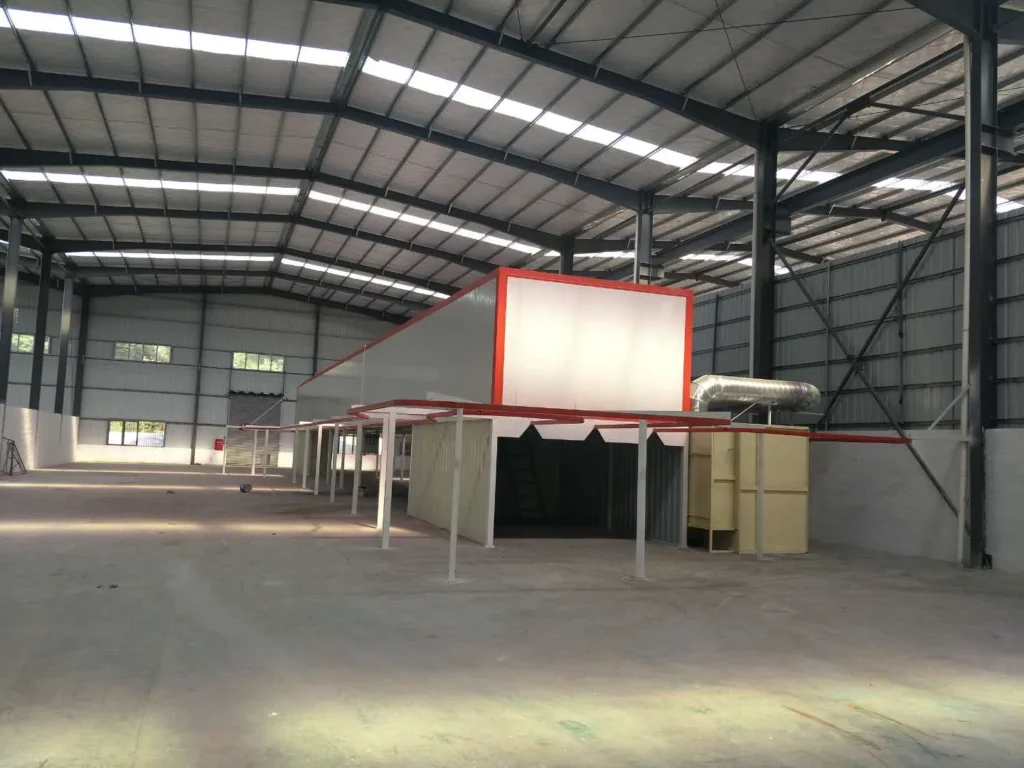
Is It Better to Powder Coat or Paint Aluminum? A Factory Perspective on Durability, Cost & Performance
Opening: Why This Question Matters to Manufacturing
If you're running an aluminum manufacturing operation—whether it's structural components, architectural profiles, or finished consumer products—you've probably faced this decision. The choice between powder coating and traditional paint isn't just about aesthetics. It directly impacts your production timeline, long-term costs, product durability, and ability to meet customer expectations.
From our 20+ years working with aluminum manufacturers and coating system integrators, I can tell you this: for most industrial aluminum applications at medium-to-high production volumes, powder coating is the stronger choice. But that doesn't mean it's universal. Let me walk you through the real differences, the numbers, and when paint might still make sense.
This article covers what aluminum producers actually need to know—not marketing speak, but practical guidance on effect, cost, efficiency, durability, and environmental compliance.
What's the Difference Between Powder Coating and Paint for Aluminum?
How Powder Coating Works on Aluminum
Powder coating uses electrostatic attraction to apply a dry powder to aluminum surfaces. Here's the process:
- Pre-treatment: Aluminum undergoes chemical cleaning (degreasing, desmutting, and conversion coating) to remove oils and oxides and create a receptive surface layer.
- Charging: Powder particles pass through an electrostatic spray gun, where they acquire an electrical charge.
- Application: The charged powder is attracted to the grounded aluminum workpiece, adhering evenly across all exposed surfaces.
- Melting & Fusion: The coated part enters a furnace (typically 350–450°F / 177–232°C) where the powder melts, flows, and chemically cross-links to form a continuous, durable coating.
- Cooling: The part cools, and the coating hardens.
The beauty of this method is zero solvent waste, uniform film thickness, and high transfer efficiency (90%+ powder recovery in closed-loop systems). The coating thickness is precise and repeatable—critical for high-volume production.
How Paint Application Works on Aluminum
Traditional paint (liquid spray) uses a liquid vehicle (resin + solvents) to carry pigment and binders to the surface. The process:
- Surface prep: Similar to powder—cleaning and sometimes priming.
- Spray application: Paint is atomized through a spray gun, either manually or via automated reciprocating systems.
- Drying/curing: Solvent evaporates; the film hardens through air dry, force dry, or low-temperature bake.
- Typical cure time: 8–24 hours (depending on product and conditions).
Paint offers flexibility in color changes, but the spray process is highly operator-dependent. Film thickness varies, overspray is significant, and volatile organic compounds (VOCs) release into the atmosphere.
Why Powder Coating Is Generally Better for Aluminum Products
Superior Adhesion & Corrosion Resistance
Aluminum naturally oxidizes. Without proper treatment, corrosion creeps under coatings and degrades bonds.
Powder coating's pre-treatment (typically a chromate-free conversion coating for aluminum) creates a tight, microscopic layer that:
- Promotes chemical bonding between powder and substrate
- Provides corrosion barrier even if the topcoat chips
- Meets modern environmental compliance (no hexavalent chromium)
Paint adhesion is mechanical, not chemical. It relies on surface roughness and cleanliness. Over 3–5 years, vibration, thermal cycling, and moisture penetration cause adhesion loss—paint lifts from corners and edges.
Our observation: Aluminum products powder-coated with proper pre-treatment routinely survive 10–15 years in outdoor/humid environments. Paint-coated equivalents show visible corrosion and delamination by year 3–5.
Uniform Coverage & Cosmetic Quality
Powder's electrostatic nature ensures even distribution. Every angle, edge, and recess receives consistent coverage. Thickness variation is typically ±20 micrometers across a single part—extraordinarily tight for industrial standards.
Paint, sprayed manually or with simple reciprocators, often shows:
- Sag/run on vertical surfaces
- Uneven color due to operator technique or airflow turbulence
- Thicker accumulation at part bottoms
- Thin spots on upper edges
- Orange-peel texture from poor atomization
For consumer-facing or high-spec products, this inconsistency is unacceptable.
Production Efficiency & Real Cycle Time
This is where powder shines for moderate-to-high volumes (e.g., 20+ parts per day):
| Metric | Powder Coating | Paint |
|---|---|---|
| Cure time | 10–20 min @ 400°F | 2–24 hrs ambient or force-dry |
| Cure temperature | Elevated (cost = energy) | Ambient or low-temp |
| Line speed | 1–3 m/min (continuous) | Often batched; slower throughput |
| Coating thickness | Precisely controlled | ±100 µm (variable) |
| Overspray waste | <10% (recirculated) | 30–50% (discarded or collected via paint booth) |
| Color change time | 20–45 min (filter swap) | 30 min–2 hrs (gun/booth purge) |
Bottom line: For 50 aluminum profile sections per day, a powder line finishes in 8–10 hours. The same job on a paint booth might stretch to 12–16 hours including cure wait-time and paint booth cleanup.
Material & Operating Cost
Over 1 year, for a 1000-ton production run:
Powder coating:
- Material: ~$4–7/kg (resin + pigment; 80–120 µm film)
- Labor: 1 operator + 1 helper per shift (batch or semi-continuous)
- Energy: 60–80 kWh per ton (furnace + line motors)
- Waste: <5% (powder recovery system)
- Total estimate: $1,200–1,800 per ton
Paint (solvent-based liquid):
- Material: ~$3–6/kg (lower density, more solvent)
- Labor: 1–2 manual sprayers + spray booth attendant
- Energy: 40–50 kWh per ton (lower cure temp)
- Waste: 30–40% (spray overspray, booth cleanup)
- Solvent disposal: $0.5–1.5 per liter (VOC control, disposal fees)
- Paint booth maintenance: filters, water curtain, disposal contracts
- Total estimate: $1,800–2,800 per ton (includes hidden waste & compliance costs)
Our experience shows that at 500+ tons/year, powder's TCO (total cost of ownership) is 30–50% lower than paint, even accounting for furnace energy.
Environmental & Regulatory Compliance
Powder:
- Zero VOC release (dry powder, no solvent)
- 100% solids → zero waste streams (unused powder recirculates)
- Meets or exceeds EPA, EU, and most regional air-quality standards
- No solvent disposal costs
- Minimal waste disposal burden
Paint:
- 40–60% solvent (volatile)
- VOC emissions require air-capture systems (scrubbers, carbon filters, incinerators)
- Spent paint disposal = regulated hazardous waste
- Regional air permits often limit paint booth spray hours
- Compliance cost: $5,000–20,000/year for mid-size operations
For manufacturers exporting to EU, North America, or high-regulation markets, powder coating reduces compliance friction and improves marketability—customers prefer coatings with environmental certifications.
Detailed Comparison: Powder Coating vs. Paint Across Five Key Dimensions
1. Surface Finish and Appearance Quality
| Criterion | Powder Coating | Paint |
|---|---|---|
| Surface smoothness | Excellent; flows during melt phase | Good; dependent on spray technique |
| Color consistency (part-to-part) | Exceptional (±ΔE 1–2 color difference) | Moderate (±ΔE 3–5 typical) |
| Gloss uniformity | Highly uniform | Variable; wet spray is harder to control |
| Texture defects | Rare (orange-peel only if oven temp wrong) | Common (sag, runs, orange-peel, dirt inclusions) |
| Edge coverage | Complete; electrostatic pulls powder to edges | Thin or bare edges (dead zones) |
| Interior/complex geometry | Good (Faraday cage effect mitigates) | Poor; difficult to spray deep recesses |
| Touch/feel | Smooth, professional | Smooth if done well; can feel sticky or tacky if not fully cured |
Verdict: Powder wins decisively for cosmetic consistency and defect-free finish, especially on complex geometries.
2. Cost Analysis (Material, Labor, Equipment, and Total Cost of Ownership)
Material Cost (per kg of coating deposited on part)
| Cost Element | Powder | Paint |
|---|---|---|
| Raw material | $4–7/kg | $3–6/kg |
| Utilization rate | 95%+ (closed recovery) | 60–70% (overspray loss) |
| Effective cost per kg deposited | $4.20–7.35 | $4.30–10 |
Paint's higher waste rate erodes the cheaper raw material price.
Labor Cost (per ton coated)
| Category | Powder | Paint |
|---|---|---|
| Spray operator | 1 per 500–800 kg/shift | 1–2 per 300–400 kg/shift |
| Setup/color change | 20–45 min | 45 min–2 hrs |
| Booth maintenance | Minimal (filter cartridge swaps) | Frequent (booth cleaning, water curtain) |
| Estimated labor cost per ton | $150–250 | $300–500 |
Equipment Investment
| System Component | Powder | Paint |
|---|---|---|
| Spray booth/chamber | $30–80K | $40–100K |
| Furnace (curing) | $50–150K | $5–15K (ambient) or $20–50K (oven) |
| Pre-treatment line | $20–60K (required) | $15–40K (often simpler) |
| Dust collection & filtration | $20–40K (critical) | $10–30K (paint booth filters) |
| Total system cost | $120–330K | $70–195K |
| Payback period (vs. outsourcing) | 2–4 years @ 500 T/year | 2–3 years @ 500 T/year |
Paint is cheaper to set up; powder has lower operating cost and payback at volume.
Five-Year Total Cost of Ownership (500 tons/year production)
Powder coating in-house:
- Equipment amortization: $40K/year
- Material (2,500 tons, 95% utilization): $12,500
- Labor (10 full-time + part-time): $80K/year
- Energy (furnace + line): $35K/year
- Maintenance & consumables: $8K/year
- Total: $175.5K/year → $877.5K/5 years
Outsourced paint coating (1,500 T/year, cost $2,200/T):
- Outsourcing cost: $1.1M/year → $5.5M/5 years
- Total: $5.5M/5 years
Paint in-house (same 500 T/year):
- Equipment: $25K/year
- Material: $15K/year
- Labor (12–15 people): $100K/year
- Paint booth operating & disposal: $25K/year
- Energy (lower oven temp): $15K/year
- Total: $180K/year → $900K/5 years
Powder wins on TCO at scale. Paint is cheaper only for very small batches (<100 T/year) or one-off prototypes.
3. Production Efficiency and Timeline
| Metric | Powder | Paint |
|---|---|---|
| Booth capacity | 20–100 parts/hour (depends on line design) | 10–40 parts/hour (manual slower) |
| Cure time | 10–20 min | 4–24 hrs (ambient: overnight; low-temp oven: 1–2 hrs) |
| Changeover/color switch | 20–45 min (filter/hopper swap) | 45 min–3 hrs (spray gun purge, booth clean) |
| Downtime for maintenance | Low (cartridge filters easy swap) | Moderate (booth cleaning, filter changes) |
| Line continuity | Can run 8 hrs continuously | Often batched; cure time breaks workflow |
| Throughput ceiling | 2–5 tons/day (automated line) | 0.5–2 tons/day (dependent on booth + cure space) |
Powder wins for speed, throughput, and production rhythm.
4. Durability, Corrosion Resistance, and Long-Term Performance
Outdoor/Corrosive Environment (marine, industrial, humid)
| Performance Test | Powder Coating | Paint |
|---|---|---|
| ASTM B117 Salt Spray (5,000 hrs) | Pass (typical); red rust at 3,000–5,000 hrs | Fail (typical); red rust by 1,000–2,000 hrs |
| QUV/Accelerated Weathering (1,000 hrs) | Excellent (color stable, gloss retained) | Good; some chalking, gloss loss |
| Outdoor exposure (10 years) | Minor fading; coating intact | Visible corrosion creep, adhesion loss |
| Impact resistance (fall test) | Good; powder is flexible if proper resin | Fair; more brittle if not formulated right |
| Thermal cycling (-40°C to +80°C) | Excellent (resin system expands/contracts uniformly) | Fair; adhesion sometimes fails at extremes |
Indoor/Protected Environment
| Scenario | Powder | Paint |
|---|---|---|
| Office/commercial interiors | Excellent; 15–20 years typical | Good; 8–10 years with minimal maintenance |
| Food/beverage facilities | Excellent (hygiene, no pinhole cracks) | Fair (pinholes trap bacteria; harder to sanitize) |
| High-humidity (sauna, pool enclosure) | Excellent; conversion coat + powder shield moisture | Fair; paint allows vapor transmission, corrosion underneath |
Real-World Case Study (Our Observation)
Aluminum cabinet frames coated in-house at a customer facility:
Powder-coated batch (2019): After 4 years outdoor storage, no visible corrosion, gloss retention ~80%, coating intact. Parts are still in customer's inventory.
Paint-coated batch (same 2019 job, outsourced to paint contractor): After 3 years, white corrosion visible at edges and seams; paint beginning to delaminate. Customer requested replacement.
Verdict: Powder wins decisively for outdoor durability and salt-fog performance.

5. Environmental Impact and Safety Compliance
| Dimension | Powder Coating | Paint (Solvent-Based Liquid) |
|---|---|---|
| VOC Emissions | ~0 g/m² (powder is dry) | 200–400 g/m² (solvent evaporation) |
| Air Quality Permits | Often exempt (<10 lbs VOC/day typical) | Requires Title V permit if >25 lbs/day VOC |
| Waste disposal | Unused powder recirculates; minimal solid waste | Spray overspray captured/incinerated; paint waste = hazardous |
| Water usage | Minimal (no water curtain needed) | Moderate (paint booth water wash-down) |
| Fire hazard | Low (no flammable solvent vapor) | Moderate (spray booth classified as Class II Division 1) |
| Worker safety (exposure) | Powder dust (handled via booth negative pressure) | Organic vapor + solvent fumes (respiratory PPE required) |
| Regulatory compliance | Easier (NESHAP, state VOC rules typically met) | Stricter; ongoing permit reporting, emission controls |
| Certification (e.g., ISO 14001, LEED credit) | Favorable (low VOC, closed-loop recovery) | Acceptable but marked as higher-impact |
Which Coating Should You Choose? Decision Guide by Application Scenario
Powder Coating Is Better If…
✓ Your production volume exceeds 300–500 tons per year. The upfront equipment cost is justified by lower per-unit operating cost.
✓ You need uniform appearance and color consistency. Powder's electrostatic deposition guarantees even coverage and repeatable color from batch to batch.
✓ Aluminum parts will be exposed to outdoor, marine, or humid environments. Powder + proper pre-treatment (conversion coating) provides 10–15 years protection vs. 3–5 for paint.
✓ Your parts have complex geometry or deep recesses. Powder reaches inside cavities electrostatic; paint requires manual spray angles and often leaves dead zones.
✓ You want to reduce compliance complexity. Zero VOC emissions and closed-loop powder recovery minimize permitting, disposal, and reporting headaches.
✓ Long-term cost matters more than upfront equipment spend. Powder's material utilization, energy efficiency, and labor density win at 3+ year horizon.
✓ Your customers demand environmental credentials (LEED, EU compliance, corporate sustainability goals). Powder coating scores better on certification and eco-labeling.
✓ You need fast color changeover. Even with frequent color changes, powder's 20–45 min switch is competitive with paint's 45 min–2 hr purge cycle.
Paint May Be Better If…
✓ You produce fewer than 200 tons per year. In-house powder equipment isn't economical; outsourcing paint is simpler.
✓ You need frequent custom color matches or metallic/special effects. Paint offers more flexibility in formulation. Powder metallics are more limited.
✓ Your parts are one-off or low-volume prototypes. Spray paint setup is faster; no powder line downtime or color cartridge swaps.
✓ Quick turnaround is critical and you can't wait for furnace cure. Paint's ambient dry or low-temp oven is faster than powder's 350–400°F thermal cycle.
✓ Your application is entirely indoor and protected. Paint's 8–10 year indoor lifespan is sufficient if parts never face weather or moisture.
✓ Repair/touch-up matters. Paint is easier to spot-repair on a single part; powder recoat requires full re-entry into the coating process.
✓ You have existing paint booth infrastructure and want to avoid capital reinvestment. If you already operate a spray booth, incremental paint jobs cost less than retrofitting a powder system.
How Long Will Each Coating Last on Aluminum?
Powder Coating Lifespan (by environment)
| Environment | Expected Lifespan | Notes |
|---|---|---|
| Indoor, climate-controlled (office, warehouse) | 15–20+ years | Minimal fading; coating remains intact. |
| Outdoor, temperate climate (moderate sun, rain) | 10–15 years | Color fades slightly; gloss retention ~60–70% at 15 years. |
| Outdoor, UV-intense (desert, high altitude) | 8–12 years | UV-stabilized powder extends life; color shift more noticeable after 8 years. |
| Marine/coastal (salt spray, salt air) | 7–10 years* | Corrosion begins creeping at seams/edges after 7–8 years if edges not sealed. |
| Industrial (chemical fumes, exhaust) | 5–8 years | Depends on chemical exposure; some powders degrade faster if exposed to solvents or acids. |
*With high-quality conversion coating pre-treatment (chromate-free equivalent), lifespan extends to 10–12 years.
Paint Lifespan (by environment)
| Environment | Expected Lifespan | Notes |
|---|---|---|
| Indoor, climate-controlled | 8–10 years | Acceptable for protected use. |
| Outdoor, temperate | 3–5 years | Visible adhesion loss, chalking, color fade by year 3–4. |
| Outdoor, UV-intense | 2–4 years | Rapid UV degradation; recoat needed sooner. |
| Marine/coastal | 1–3 years | Salt air penetrates paint; corrosion visible by year 2. |
| Industrial | 2–4 years | Fumes and moisture degrade adhesion quickly. |
Summary: Powder lasts 2–3x longer than paint in outdoor/harsh environments. In protected indoor settings, both perform acceptably, but powder's superior finish often justifies the small lifespan advantage.
Key Factors That Influence Your Choice: Equipment Investment, Scalability, and Maintenance
Equipment Investment & Scalability
| Factor | Powder | Paint |
|---|---|---|
| Initial capex | $120–330K (line + furnace + dust collection) | $70–195K (booth + low-temp oven or ambient) |
| Scalability (add 20% more volume) | Relatively easy (faster line speed, shift extension) | Harder (booth saturation; requires second booth or extended hours) |
| Modularity (add/swap equipment) | High (modular booth, furnace, recovery) | Medium (booth is fixed; hard to upgrade mid-line) |
| Retrofit cost | Moderate ($30–60K for major changes) | Low to moderate ($10–30K for booth upgrade) |
Maintenance & Downtime
| Maintenance Task | Powder | Paint |
|---|---|---|
| Filter/cartridge replacement | Monthly ($200–500/cartridge) | Monthly ($100–300/filter) |
| Spray gun cleaning | Weekly (quick air-purge) | Weekly to daily (solvent flush, more labor) |
| Furnace inspection | Quarterly (heating elements, insulation) | Semi-annual (burner/coil check if oven-cured) |
| Pre-treatment tank maintenance | Monthly (pH check, concentration monitor) | Monthly (similar if using conversion coating) |
| Dust/overspray collection | Weekly (powder recovery system) | Weekly (booth water-curtain drain) |
| Typical downtime per year | 3–5 days (planned maintenance) | 4–7 days (booth deep-clean, repairs) |
Powder requires more proactive maintenance but has more predictable intervals. Paint booth maintenance is more frequent but lighter in scope.
Final Recommendation: Making the Right Decision for Your Aluminum Products
For Most Aluminum Manufacturers
Choose powder coating if:
- You coat ≥300 tons/year
- Your parts are sold into outdoor, automotive, architectural, or high-spec markets
- You value appearance consistency and long-term durability
- You want to future-proof compliance (environmental, certification)
- Your budget window is 3+ years
Choose paint (outsource or in-house) if:
- You're prototyping or low-volume (<100 tons/year)
- All parts are used indoors in stable conditions
- You need rapid turnaround and can't wait for furnace cure
- You already own paint equipment and want to defer capital
Hybrid Approach (for flexibility)
Many mid-size manufacturers run both systems:
- Powder coating for high-volume, standard-color orders (80% of throughput)
- Paint booth for custom colors, prototypes, and low-volume specials (20% of throughput)
This balances capital efficiency with operational flexibility.
The Factory Floor Truth
From our vantage point working with 200+ aluminum manufacturers:
The companies making the switch from paint to powder rarely regret it. Yes, the upfront furnace and dust-collection cost stings. But within 18–24 months, they're seeing:
- Fewer customer complaints about surface defects
- No more overnight cure-time bottlenecks
- Measurable labor savings (less spray-gun cleanup, fewer rework jobs)
- Easier compliance audits
The companies sticking with paint are almost always doing so because:
- They're too small to justify powder equipment
- They serve niche markets (art, specialty coatings) where paint's flexibility wins
- They outsource and don't want capital exposure
Nobody regrets choosing powder. Some regret waiting too long to switch.
Conclusion: The Right Choice Depends on Your Business, But Powder Has the Edge for Scale
For aluminum products, powder coating is the more durable, cost-effective, and environmentally sound choice—but only if your production volume and time horizon justify the equipment investment.
If you're producing 300+ tons annually and your parts face any outdoor exposure or demanding customer specifications, powder coating will deliver better appearance consistency, 2–3x longer lifespan, lower TCO, and easier regulatory compliance.
Paint remains the pragmatic choice for small operations, prototypes, and protected indoor use—but understand the trade-off: cheaper upfront, but higher long-term cost and visible quality drift.
The decision isn't really about the coating. It's about your business model:
- Growing, high-volume manufacturer with customer quality demands? → Powder
- Lean, boutique producer serving protected markets? → Paint
- Both at different scales? → Run both systems
If you're considering a coating line investment, I recommend getting a clear picture of:
- Your actual annual coating volume and growth forecast
- Where your products end up (indoors vs. outdoors, protected vs. exposed)
- Your customer expectations (finish quality, durability, sustainability)
- Your 5-year cost tolerance and capital availability
Ready to Evaluate Powder Coating for Your Operation?
If you're an aluminum manufacturer exploring how a custom static electrostatic powder coating line could fit your production, we'd welcome a conversation.
We build entire integrated coating systems—from pre-treatment through spray to curing and recovery—tailored to your specific aluminum products, production volume, and facility constraints. We've completed projects across cabinet manufacturing, architectural profiles, automotive components, and industrial fixtures across multiple markets.
Get in touch to discuss your coating challenge:
WhatsApp / Mobile: +8618925987762
Email: ketucoatingline@gmail.com
We're happy to review your product specs, production targets, and facility layout—and give you an honest assessment of whether powder coating makes sense for your business, what a realistic investment looks like, and what kind of timeline you're looking at.
This article draws on direct experience from our powder coating line manufacturing and installation across Asia, the Middle East, and beyond. The performance data reflects real-world observations from customer deployments over the past 20+ years, not lab conditions.
 English
  German
  Vietnamese
  French