
Advantages of cURL Too many subrequests by single Worker invocation. To configure this limit, refer to https://developers.cloudflare.com/workers/wrangler/configuration/#limits Coating: Why Manufacturers Are Switching
When I look at why manufacturers today are abandoning traditional liquid paint spraying for sơn tĩnh điện[^1], the answer isn't just about appearance. It's about three shifts happening simultaneously: product quality gets better, operating costs drop, and environmental impact shrinks. These aren't separate benefits—they reinforce each other, which is why the switch has become nearly unavoidable in serious manufacturing.
Electrostatic powder coating offers several decisive advantages over traditional liquid paint spraying:
• Near-zero Phát thải VOC[^2] with minimal air and water pollution impact
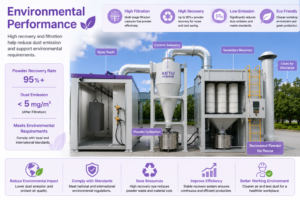
• Powder recovery rates exceeding 95%, creating measurable material savings and lower raw material costs
• Superior coating uniformity, exceptional adhesion, and consistent finishes across complex part geometries
• Faster production cycles with integrated automation, no solvent drying delays required
• Thick, durable protective layers delivering excellent salt-spray performance and long-term corrosion resistance
• Lower total cost of ownership when considering energy use, waste disposal, labor, and rework rates
• Full compatibility with modern manufacturing automation and Industry 4.0 control systems
From our experience working with metal cabinet makers, outdoor furniture manufacturers, and aluminum profile producers, the companies that make this transition rarely look back. They discover that powder coating isn't just cleaner—it solves real production problems they'd been managing quietly for years.
What is Electrostatic Powder Coating and Why It Matters
Electrostatic powder coating is the process of applying finely ground powder pigments and resin onto a grounded metal workpiece using electrostatic attraction, then heating the coated part to fuse and cure the coating into a continuous, protective film. It's fundamentally different from liquid spray painting because there's no solvent evaporation—no VOC release, no drying time penalty, no solvent waste stream.
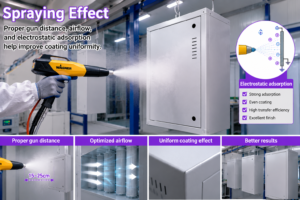
The basic principle is elegant. A spray gun charges powder particles with high-voltage electricity (typically 60–90 kV). The workpiece is grounded. The charged powder is naturally attracted to the grounded surface and adheres uniformly, even into recesses and complex geometry that liquid spray struggles with. Then the coated part moves into a heated curing oven—usually 170–200°C for 10–20 minutes depending on the powder chemistry—where the resin melts, flows smooth, and undergoes chemical cross-linking to form a hard, durable finish.
What makes this process so compelling isn't that it's new. Powder coating has been used in industrial production since the 1960s[^3]. What's changed is adoption. Twenty years ago, powder coating was expensive and required significant infrastructure. Today, the equipment is more accessible, the powder chemistry is more versatile, and the business case is undeniable. Manufacturers in cabinets, furniture, metal structures, and aluminum products have realized that powder coating isn't a premium option anymore—it's simply the more rational choice.
Superior Surface Quality and Coating Consistency
Uniform Coating Thickness and Color Matching Across Batches
One of the first things we notice when customers switch from liquid spray to powder coating is that their quality consistency problems disappear almost immediately. With liquid spray, achieving uniform thickness is difficult. Sprayers must maintain perfect distance, angle, and speed. Environmental factors—humidity, temperature, air currents—all interfere. The result: batch-to-batch color variation, thick spots, thin spots, and the accompanying rework.
Electrostatic powder coating is fundamentally more stable. The electrostatic force distributes powder uniformly across the workpiece surface. Once the system parameters are dialed in—voltage, gun distance, powder flow rate, oven temperature—the coating thickness stays remarkably consistent from part one to part 10,000. We've seen customers reduce their color-match complaints by over 80% simply because the coating process itself is more repeatable.
This matters most when you're producing metal cabinets, outdoor furniture, or aluminum components where customers expect consistent appearance. One cabinet looks different from another, and that difference gets noticed immediately. With powder coating, the entire batch comes out visually uniform.
| Yếu tố | Phun sơn lỏng | Electrostatic Powder Coating |
|---|---|---|
| Coating uniformity | Moderate; dependent on operator skill | High; electrostatically driven |
| Batch-to-batch color consistency | Variable; affected by environment | Stable; repeatable process parameters |
| cURL Too many subrequests by single Worker invocation. To configure this limit, refer to https://developers.cloudflare.com/workers/wrangler/configuration/#limits | Poor on deep recesses, inner edges | Excellent; electrostatic force reaches difficult areas |
| Coating thickness control | Manual, prone to over/under spray | Automated parameter control |
| Tỷ lệ sửa chữa lại | Typically 5–15% | Typically <2% |
| Setup time for color change | 2–4 hours with solvent cleaning | cURL Too many subrequests by single Worker invocation. To configure this limit, refer to https://developers.cloudflare.com/workers/wrangler/configuration/#limits |
cURL Too many subrequests by single Worker invocation. To configure this limit, refer to https://developers.cloudflare.com/workers/wrangler/configuration/#limits
cURL Too many subrequests by single Worker invocation. To configure this limit, refer to https://developers.cloudflare.com/workers/wrangler/configuration/#limits cURL Too many subrequests by single Worker invocation. To configure this limit, refer to https://developers.cloudflare.com/workers/wrangler/configuration/#limitscURL Too many subrequests by single Worker invocation. To configure this limit, refer to https://developers.cloudflare.com/workers/wrangler/configuration/#limits.
cURL Too many subrequests by single Worker invocation. To configure this limit, refer to https://developers.cloudflare.com/workers/wrangler/configuration/#limits.
cURL Too many subrequests by single Worker invocation. To configure this limit, refer to https://developers.cloudflare.com/workers/wrangler/configuration/#limits.
cURL Too many subrequests by single Worker invocation. To configure this limit, refer to https://developers.cloudflare.com/workers/wrangler/configuration/#limits
cURL Too many subrequests by single Worker invocation. To configure this limit, refer to https://developers.cloudflare.com/workers/wrangler/configuration/#limits
cURL Too many subrequests by single Worker invocation. To configure this limit, refer to https://developers.cloudflare.com/workers/wrangler/configuration/#limits.
From a regulatory perspective, this simplifies everything. Facilities with dây chuyền sơn bộts report dramatically lower permitting burden, lower air quality compliance costs, and zero hassle managing solvent waste streams. In jurisdictions with strict VOC limits—increasingly common in North America, Europe, and developing Asian economies—powder coating often becomes the only viable option.
cURL Too many subrequests by single Worker invocation. To configure this limit, refer to https://developers.cloudflare.com/workers/wrangler/configuration/#limits
cURL Too many subrequests by single Worker invocation. To configure this limit, refer to https://developers.cloudflare.com/workers/wrangler/configuration/#limits cURL Too many subrequests by single Worker invocation. To configure this limit, refer to https://developers.cloudflare.com/workers/wrangler/configuration/#limitscURL Too many subrequests by single Worker invocation. To configure this limit, refer to https://developers.cloudflare.com/workers/wrangler/configuration/#limits.
cURL Too many subrequests by single Worker invocation. To configure this limit, refer to https://developers.cloudflare.com/workers/wrangler/configuration/#limits.
cURL Too many subrequests by single Worker invocation. To configure this limit, refer to https://developers.cloudflare.com/workers/wrangler/configuration/#limits.
cURL Too many subrequests by single Worker invocation. To configure this limit, refer to https://developers.cloudflare.com/workers/wrangler/configuration/#limits.
cURL Too many subrequests by single Worker invocation. To configure this limit, refer to https://developers.cloudflare.com/workers/wrangler/configuration/#limits
cURL Too many subrequests by single Worker invocation. To configure this limit, refer to https://developers.cloudflare.com/workers/wrangler/configuration/#limits
cURL Too many subrequests by single Worker invocation. To configure this limit, refer to https://developers.cloudflare.com/workers/wrangler/configuration/#limits.
cURL Too many subrequests by single Worker invocation. To configure this limit, refer to https://developers.cloudflare.com/workers/wrangler/configuration/#limits.
cURL Too many subrequests by single Worker invocation. To configure this limit, refer to https://developers.cloudflare.com/workers/wrangler/configuration/#limits.
Optimized Energy Consumption and Operational Efficiency
Powder coating curing ovens do require heat—typically 170–200°C for 10–20 minutes depending on powder chemistry. This seems energy-intensive, and on the surface it is. But compared to the total energy picture of a liquid spray operation, it's actually lower.
Consider the full energy profile: Liquid spray systems require continuous air handling to capture overspray and manage VOCs. These air handlers run constantly—before, during, and after spraying—pulling heated or cooled facility air through filters and exhausting it outside. That's enormous energy cost. They also require infrared or air drying, which runs for extended periods per part.
Powder coating's energy profile is more compact. The electrostatic spray system uses minimal power. The curing oven is the main energy consumer, but it runs on a schedule—it heats when parts arrive, maintains temperature while parts cure, then can reduce to standby between cycles. We've seen customers reduce facility energy consumption[^6] by 20–35% after switching to powder coating, even accounting for the oven energy.
Lower Long-Term Maintenance and Rework Costs
Here's an advantage that doesn't show up on the first month's P&L but becomes increasingly valuable over time: dramatically lower rework and maintenance costs.
With liquid spray, quality escapes happen regularly. Color mismatch, thin coverage on complex geometry, solvent pop creating surface craters, runs, sags. The typical rework rate is 5–15% of production. That means labor cost, material cost, and delay cost. On a line running 10,000 parts per month, even 5% rework is 500 parts being stripped, recoated, and recured.
Powder coating runs at rework rates typically below 2% because the process is more deterministic. Equipment maintenance is also simpler. No solvent to manage, no HVAC systems overloaded with overspray, no complex waste disposal procedures. The main maintenance is keeping the curing oven heating elements clean and the powder recovery filter elements functional. Both are straightforward, inexpensive tasks.
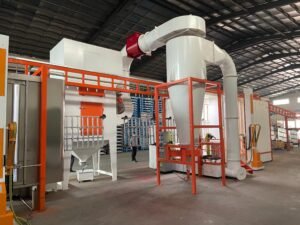
Over a five-year operating window, these maintenance and rework cost savings often equal the initial equipment investment.
Production Speed and Process Automation Advantages
Faster Curing Times and Higher Throughput Rates
One practical advantage that surprises customers: powder coating cures faster than liquid paint, and more predictably. Liquid paint drying time depends heavily on humidity, air temperature, and ventilation. A cabinet that dries in 30 minutes on a dry day might take 90 minutes on a humid day. This inconsistency creates bottlenecks.
Powder coating curing is time-controlled by oven temperature and part residence time. Once you set the oven to 190°C and parts spend 15 minutes inside, they emerge cured and ready to handle. No humidity interference, no surprises. This consistency means you can reliably schedule downstream operations—assembly, packaging, shipping—without waiting for parts to dry.
The practical outcome: higher throughput per square foot of production space, and more predictable output scheduling.
Better Compatibility with Automated Production Lines
Powder coating integrates seamlessly with automated conveyor systems[^7] and robotic spray stations. The electrostatic spray gun can be mounted on a robot arm, programmed to maintain consistent distance and angle across complex part geometry, and run 24 hours if needed without operator fatigue or skill variation.
Liquid spray automation faces constraints. The overspray and solvent vapor create harsh conditions for robots and sensors. Powder coating's lack of overspray drift means robots work in cleaner conditions, sensors stay functional longer, and the automation stays reliable.
We've seen customers triple their production capacity on the same footprint by switching to powder coating with automated spray arms, simply because the process is stable enough to support reliable automation.
Consistent Parameter Control and Reduced Human Error
Điện tĩnh hệ thống sơn tĩnh điện dạng bộts use digital control. Voltage, powder flow rate, oven temperature, part conveyor speed—all are monitored and adjusted automatically. The operator sets parameters once, and the system maintains them continuously. This removes the human error element that's inherent to manual spray work.
A skilled manual sprayer is valuable, but that person's output quality varies based on attention, fatigue, environmental conditions. An automated powder coating line runs with consistent output 24 hours a day, weekend included, without fatigue or distraction.
Superior Protection: Corrosion Resistance and Longevity
Enhanced Rust Prevention and Weathering Resistance
Powder-coated metal parts delivered to harsh environments—coastal installations, outdoor furniture, industrial equipment exposed to salt spray[^8]—routinely survive corrosion testing that's far more severe than liquid-painted equivalents.
The reasons are practical. Powder coating adhesion is stronger, so it doesn't crack and peel, allowing moisture to reach the base metal. The coating thickness, when properly applied, is uniform—no thin spots where corrosion initiates. The cured powder film is denser and harder than liquid paint, making it more resistant to mechanical damage that could expose bare metal.
We've documented cases where powder-coated cabinets survived 1,000+ hours of ASTM B117 salt-spray testing (roughly equivalent to 5+ years of aggressive coastal exposure) while liquid-painted equivalents failed at 300–500 hours. That difference directly translates to product longevity and customer satisfaction.
Thicker, Harder Protective Layers with Better Impact Resistance
Powder coating naturally builds thickness efficiently. Because there's no solvent, the dried coating is 100% solid material. Liquid paint loses 50–70% of its volume to solvent evaporation, so achieving comparable dry thickness requires multiple spray passes. Powder coating achieves thick, hard coatings in fewer application steps.
The resulting coating is also mechanically tougher. The cured resin is harder and more resilient to impact, abrasion, and scratching. Outdoor furniture that gets bumped and worn during use stays protected far longer with powder coating than with liquid paint. We've walked through rental furniture warehouses and outdoor cafes where the powder-coated pieces show minimal visible wear after several years, while liquid-painted pieces show obvious scratches, scuffs, and coating degradation.
Ideal Applications and Industry Use Cases
Best Suited for Metal Furniture, Cabinetry, and Fabricated Parts
Powder coating shines in industries where product appearance matters and durability is required. Metal cabinet manufacturers rely on powder coating because it delivers consistent, professional finishes that customers expect, with corrosion resistance that meets industrial standards. Outdoor furniture manufacturers use powder coating because it's the only realistic way to deliver products that look good and hold up over multiple seasons in wet, sunny, salt-spray environments.
We work regularly with aluminum profile manufacturers, metal fabricators, and sheet metal shops. In every case, they've moved to powder coating because their end customers—whether building contractors, facility managers, or retail brands—now expect it. Powder-coated components command better pricing, face fewer warranty claims, and generate better brand reputation than liquid-painted alternatives.
cURL Too many subrequests by single Worker invocation. To configure this limit, refer to https://developers.cloudflare.com/workers/wrangler/configuration/#limits
cURL Too many subrequests by single Worker invocation. To configure this limit, refer to https://developers.cloudflare.com/workers/wrangler/configuration/#limits
cURL Too many subrequests by single Worker invocation. To configure this limit, refer to https://developers.cloudflare.com/workers/wrangler/configuration/#limits. cURL Too many subrequests by single Worker invocation. To configure this limit, refer to https://developers.cloudflare.com/workers/wrangler/configuration/#limits.
cURL Too many subrequests by single Worker invocation. To configure this limit, refer to https://developers.cloudflare.com/workers/wrangler/configuration/#limits. cURL Too many subrequests by single Worker invocation. To configure this limit, refer to https://developers.cloudflare.com/workers/wrangler/configuration/#limits.
cURL Too many subrequests by single Worker invocation. To configure this limit, refer to https://developers.cloudflare.com/workers/wrangler/configuration/#limits. cURL Too many subrequests by single Worker invocation. To configure this limit, refer to https://developers.cloudflare.com/workers/wrangler/configuration/#limits.
cURL Too many subrequests by single Worker invocation. To configure this limit, refer to https://developers.cloudflare.com/workers/wrangler/configuration/#limits. cURL Too many subrequests by single Worker invocation. To configure this limit, refer to https://developers.cloudflare.com/workers/wrangler/configuration/#limits.
cURL Too many subrequests by single Worker invocation. To configure this limit, refer to https://developers.cloudflare.com/workers/wrangler/configuration/#limits. cURL Too many subrequests by single Worker invocation. To configure this limit, refer to https://developers.cloudflare.com/workers/wrangler/configuration/#limits.
cURL Too many subrequests by single Worker invocation. To configure this limit, refer to https://developers.cloudflare.com/workers/wrangler/configuration/#limits.
cURL Too many subrequests by single Worker invocation. To configure this limit, refer to https://developers.cloudflare.com/workers/wrangler/configuration/#limits
cURL Too many subrequests by single Worker invocation. To configure this limit, refer to https://developers.cloudflare.com/workers/wrangler/configuration/#limits.
cURL Too many subrequests by single Worker invocation. To configure this limit, refer to https://developers.cloudflare.com/workers/wrangler/configuration/#limits.
cURL Too many subrequests by single Worker invocation. To configure this limit, refer to https://developers.cloudflare.com/workers/wrangler/configuration/#limits.
cURL Too many subrequests by single Worker invocation. To configure this limit, refer to https://developers.cloudflare.com/workers/wrangler/configuration/#limits.
Các câu hỏi liên quan khác
cURL Too many subrequests by single Worker invocation. To configure this limit, refer to https://developers.cloudflare.com/workers/wrangler/configuration/#limits
cURL Too many subrequests by single Worker invocation. To configure this limit, refer to https://developers.cloudflare.com/workers/wrangler/configuration/#limits.
cURL Too many subrequests by single Worker invocation. To configure this limit, refer to https://developers.cloudflare.com/workers/wrangler/configuration/#limits
cURL Too many subrequests by single Worker invocation. To configure this limit, refer to https://developers.cloudflare.com/workers/wrangler/configuration/#limits.
Q: What's the capital cost of a powder coating line?
Entry-level manual spray booths with recovery start around $40,000–$80,000. Semi-automated lines with spray arms and integrated curing run $150,000–$400,000. Fully automated high-volume systems run $500,000–$1.5M+. The cost depends heavily on throughput capacity, automation level, and process integration.
Q: Can you change colors quickly with powder coating?
Color changeover typically requires 20–40 minutes: purging residual powder from spray guns and supply lines, physically installing different powder feed containers, and sometimes cleaning spray room surfaces. Liquid spray changeover takes 2–4 hours. Powder is faster.
Q: What about workspace safety?
Powder coating presents different safety considerations than liquid spray. The main hazards are fine powder dust (requiring respiratory protection) and electrical shock from high-voltage spray guns (managed through proper grounding and interlocks). Overall workplace safety—no solvent vapors, no VOC inhalation—is significantly better than liquid spray.
Kết luận
Electrostatic powder coating isn't a luxury coating method anymore. It's the technology that delivers better products, lower costs, and cleaner operations than the alternatives it replaces. For any manufacturing operation coating metal components, the competitive and regulatory pressure to adopt powder coating is now too strong to ignore.
If you're currently evaluating coating solutions or considering an equipment upgrade, we'd welcome a conversation about how powder coating could improve your specific production situation. Our team has installed and optimized coating lines across cabinets, furniture, aluminum profiles, and structural steel fabrication. We understand the challenges you face and can help you assess whether powder coating is the right next step.
Reach out to discuss your application in detail—coating requirements, production volume, facility constraints, and timeline. We can provide technical analysis and equipment recommendations specific to your needs.
Liên hệ với chúng tôi:
- WhatsApp: +8618925987762
- Email: ketucoatingline@gmail.com
[^1]: Explains the fundamental process of powder coating and its industrial applications in manufacturing.
[^2]: Details volatile organic compound emissions, their environmental impact, and regulatory standards for air quality.
[^3]: Provides historical context on the development and commercialization of powder coating as an industrial coating method.
[^4]: Describes the standard test method for evaluating adhesion of coatings through cross-hatch testing procedures.
[^5]: Details the mechanical separation technology used in powder recovery systems to capture and recycle unused coating material.
[^6]: Covers industrial energy efficiency practices, consumption reduction strategies, and optimization techniques for manufacturing operations.
[^7]: Explains conveyor system design and automation integration for optimizing material handling in production environments.
[^8]: Describes standardized testing procedures for evaluating coating corrosion resistance in salt-spray environments over extended periods.
 Vietnamese
  English
  German
  French