
What is Powder Coating? A Complete Guide to Definition, Process, and Industry Applications
Introduction: What is Powder Coating?
Your metal products are losing market value because of poor surface appearance. Rust spots, uneven color, peeling paint—these are the consequences of outdated coating methods. Powder coating solves this problem with precision, durability, and cost efficiency that liquid paint simply cannot match.
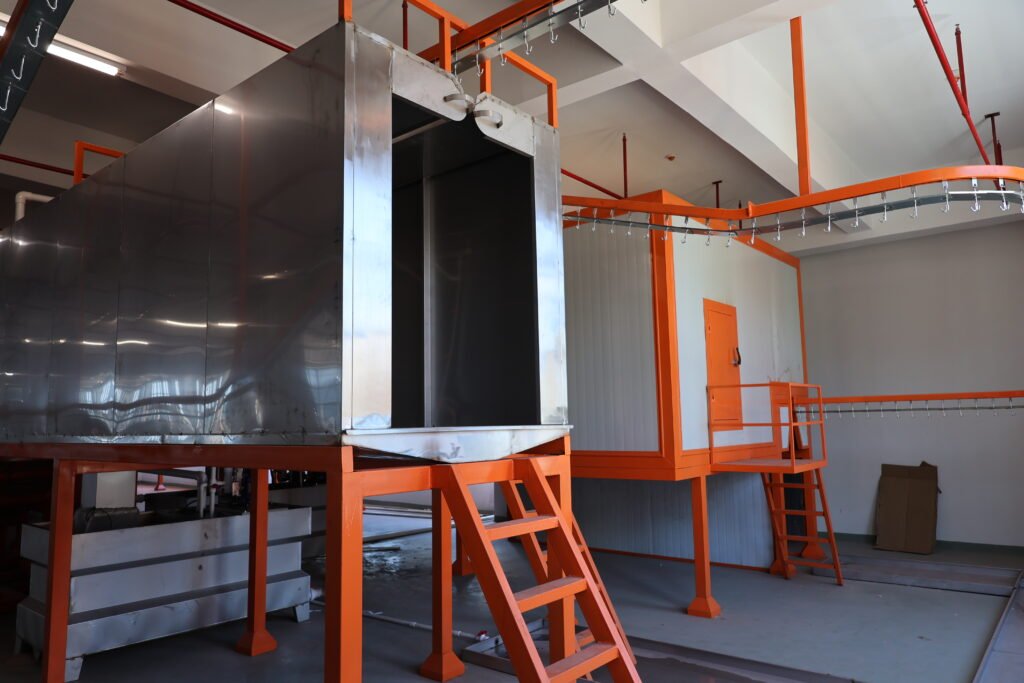
Powder coating is a dry finishing process where finely ground pigments and resins are electrostatically applied to a workpiece and then hardened through heating. Unlike traditional liquid paint, it contains no solvents and offers superior durability, uniform coverage, and environmental benefits. The powder is applied through electrostatic attraction, meaning it clings to your workpiece with precision, then melts and cross-links in a four de cuisson to form a tough, lasting finish.
This is not a new technology, but it remains the most efficient surface treatment for metal parts in manufacturing today. From cabinet makers to furniture producers to aluminum processors, manufacturers worldwide rely on powder coating to deliver consistent quality at scale.
Definition and Core Characteristics
Powder coating is fundamentally different from spray paint. It's a solid, dry material—not a liquid suspended in solvent. Think of it as millions of tiny colored particles that carry an electrical charge. When you apply them to a grounded metal surface, electrostatic force pulls them onto the workpiece uniformly. Then heat transforms those particles into a solid, protective layer.
The core characteristics that define powder coating are:
- Zéro émission de COV: No volatile organic compounds escape into the air
- High transfer efficiency: 90%+ of applied powder adheres to the part; waste is minimal
- Revêtement épais et uniforme: Single-pass application delivers consistent film thickness across complex shapes
- Chemical cross-linking: Heat causes the resin and curing agent to bond at a molecular level, creating hardness and chemical resistance that paint cannot achieve
- No solvents needed: The process is dry from start to finish
How Powder Coating Differs from Traditional Paint
This distinction matters more than you might think. Paint relies on solvents to keep pigment suspended in liquid form. When you spray paint, those solvents evaporate—and they take your air quality with them. You lose material to overspray, you deal with volatile fumes, and disposal of waste paint is a regulatory headache.
Powder coating works the opposite way. There is no evaporation phase, no solvent loss, no toxic off-gassing. The powder particles are already solid. They sit on the workpiece until heat activates the resin binder, which then flows and cross-links into a continuous film. What doesn't stick to the workpiece is recovered by cyclone separators and recirculated. Utilization rates hit 95%+ compared to 60–70% for liquid paint.
The finish quality also differs. Paint sits on the surface; powder coating becomes part of the surface. The cross-linking creates a harder, more scratch-resistant, more corrosion-resistant coating. For metal parts that will endure outdoor exposure, industrial environments, or heavy use, powder coating is the proven standard.
How Does Powder Coating Work? The Complete Process
Understanding the process helps explain why powder coating delivers such reliable results. It's not magic—it's controlled chemistry and physics working in sequence.
Surface Preparation and Pre-treatment
Before any powder touches your workpiece, the surface must be absolutely clean. Oil, rust, oxide scale, and dust are enemies of adhesion. This is where many coating jobs fail, and it's why we emphasize that pre-treatment is the foundation.
Standard pre-treatment typically includes:
- Dégraissage: Alkaline wash removes oils, machining fluids, and hand prints
- Rinçage: Water wash removes degreaser residue
- Décapage acide ou abrasion mécanique: Removes rust and oxide layer (for steel parts)
- Phosphatage ou traitement de conversion: Chemically bonds a microscopic layer to the steel surface that aids adhesion and corrosion resistance
- Final rinse and dry: Pure water rinse, then hot-air drying to remove all moisture
The workpiece must be completely dry before it reaches the spray booth. Any residual water will create pinholes and adhesion failures later.
From our experience working with cabinet makers and metal fabricators, this is where discipline matters most. A rushed or incomplete pre-treatment will undermine even the best powder and spray equipment downstream.
Electrostatic Application
Now the workpiece enters the spray booth where the magic happens. The powder is fed from a hopper into a spray gun equipped with an electrostatic charging system. The gun emits a high-voltage corona field (typically 60–90 kV) that imparts a negative charge to each powder particle as it exits the nozzle.
The workpiece itself is grounded, creating an electrical potential difference. Charged powder particles are attracted to the grounded part and adhere to its surface before any heat is applied. This is the key advantage: electrostatic force ensures uniform, complete coverage, even on complex shapes with recesses and edges.
The spray process involves critical parameters:
- cURL Too many subrequests by single Worker invocation. To configure this limit, refer to https://developers.cloudflare.com/workers/wrangler/configuration/#limitscURL Too many subrequests by single Worker invocation. To configure this limit, refer to https://developers.cloudflare.com/workers/wrangler/configuration/#limits
- cURL Too many subrequests by single Worker invocation. To configure this limit, refer to https://developers.cloudflare.com/workers/wrangler/configuration/#limitscURL Too many subrequests by single Worker invocation. To configure this limit, refer to https://developers.cloudflare.com/workers/wrangler/configuration/#limits
- cURL Too many subrequests by single Worker invocation. To configure this limit, refer to https://developers.cloudflare.com/workers/wrangler/configuration/#limitscURL Too many subrequests by single Worker invocation. To configure this limit, refer to https://developers.cloudflare.com/workers/wrangler/configuration/#limits
- cURL Too many subrequests by single Worker invocation. To configure this limit, refer to https://developers.cloudflare.com/workers/wrangler/configuration/#limitscURL Too many subrequests by single Worker invocation. To configure this limit, refer to https://developers.cloudflare.com/workers/wrangler/configuration/#limits
cURL Too many subrequests by single Worker invocation. To configure this limit, refer to https://developers.cloudflare.com/workers/wrangler/configuration/#limits.
cURL Too many subrequests by single Worker invocation. To configure this limit, refer to https://developers.cloudflare.com/workers/wrangler/configuration/#limits
cURL Too many subrequests by single Worker invocation. To configure this limit, refer to https://developers.cloudflare.com/workers/wrangler/configuration/#limits.
cURL Too many subrequests by single Worker invocation. To configure this limit, refer to https://developers.cloudflare.com/workers/wrangler/configuration/#limits
- cURL Too many subrequests by single Worker invocation. To configure this limit, refer to https://developers.cloudflare.com/workers/wrangler/configuration/#limitscURL Too many subrequests by single Worker invocation. To configure this limit, refer to https://developers.cloudflare.com/workers/wrangler/configuration/#limits
- cURL Too many subrequests by single Worker invocation. To configure this limit, refer to https://developers.cloudflare.com/workers/wrangler/configuration/#limitscURL Too many subrequests by single Worker invocation. To configure this limit, refer to https://developers.cloudflare.com/workers/wrangler/configuration/#limits
- cURL Too many subrequests by single Worker invocation. To configure this limit, refer to https://developers.cloudflare.com/workers/wrangler/configuration/#limitscURL Too many subrequests by single Worker invocation. To configure this limit, refer to https://developers.cloudflare.com/workers/wrangler/configuration/#limits
cURL Too many subrequests by single Worker invocation. To configure this limit, refer to https://developers.cloudflare.com/workers/wrangler/configuration/#limits.
cURL Too many subrequests by single Worker invocation. To configure this limit, refer to https://developers.cloudflare.com/workers/wrangler/configuration/#limits.
cURL Too many subrequests by single Worker invocation. To configure this limit, refer to https://developers.cloudflare.com/workers/wrangler/configuration/#limits
cURL Too many subrequests by single Worker invocation. To configure this limit, refer to https://developers.cloudflare.com/workers/wrangler/configuration/#limits
cURL Too many subrequests by single Worker invocation. To configure this limit, refer to https://developers.cloudflare.com/workers/wrangler/configuration/#limits
cURL Too many subrequests by single Worker invocation. To configure this limit, refer to https://developers.cloudflare.com/workers/wrangler/configuration/#limits.
Regulatory costs associated with liquid paint are real: ventilation system upgrades, air permit fees, waste disposal services, worker respiratory protection. Powder coating eliminates most of these. Your facility becomes cleaner, safer, and more compliant by design.
Cost Efficiency and Material Utilization
This is where the economics shift decisively in powder's favor. Liquid paint overspray loss runs 30–40%. Powder coating recovers 90%+. On a production line spraying 10,000 cabinet frames per month, that difference translates to thousands of dollars in material savings annually.
Additionally:
- Labor efficiency: Powder coating requires less operator training than spray painting
- Single-coat coverage: One pass achieves full coverage; paint often requires two coats
- No drying between coats: Powder moves straight to the oven; no waiting for intermediate drying
- Reduced rework: Better first-pass quality means fewer parts needing repair
For mid-to-high-volume manufacturers, the payback period on a ligne de peinture en poudre is typically 2–3 years.
Superior Coating Quality and Durability
Powder-coated finishes are harder and more durable than paint. The cross-linked resin structure creates:
- Higher hardness: Resistance to scratching and marring during handling and use
- Better chemical resistance: More stable in harsh industrial or outdoor environments
- Stronger adhesion: The electrostatic process and cross-linking chemistry create mechanical and chemical bonds that are stronger than paint film adhesion
- Une épaisseur uniforme: Electrostatic deposition naturally balances film thickness across the part; edges and inside corners receive the same coverage as flat surfaces
This is especially important for outdoor metal products (patio furniture, structural aluminum, outdoor equipment) and for parts that will see chemical exposure or heavy wear.
Safety and Worker Protection
A powder coating facility is inherently safer than a spray paint shop. No solvent fumes mean no respiratory hazards from volatile organics. No open paint containers mean reduced flammability risk. The process generates powder dust, which does require local exhaust ventilation, but modern spray booths with filtration systems effectively contain this hazard.
Worker safety improves measurably: fewer chemical burns, no solvent poisoning risk, better visibility and breathing in the work environment.
What Are the Main Applications of Powder Coating?
Powder coating is not a niche process—it's the dominant finishing method across multiple major industries.
Architectural and Building Components
Aluminum window frames, door frames, curtain wall systems, structural profiles, and building facade components are almost exclusively powder-coated in modern construction. The process handles the thermal cycling, UV exposure, and moisture that these elements endure.
Architectural bronze, anodized-look effects, and custom colors are all achievable with powder. The finish is consistent across thousands of linear meters of extrusion.
Automotive and Transportation Industry
Engine blocks, suspension components, heat shields, and structural brackets are powder-coated in automotive manufacturing. The finish provides both corrosion protection and heat resistance. Some automotive OEMs also use powder for interior trim and cabin components where impact resistance and cleanability matter.
Industrial Equipment and Machinery
Heavy machinery, metal storage racks, shelving systems, equipment cabinets, and tool chests are standard powder coating applications. The hardness and chemical resistance protect against abrasion, oils, coolants, and solvents encountered in factory environments.
Furniture and Home Appliances
Metal furniture frames, appliance housings, refrigerator cabinets, washing machine panels, and microwave exteriors are powder-coated. The finish provides durability, consistent color, and resistance to scratches and stains that consumers expect.
Specialized Applications (Plastic, Wood, Ceramics)
While powder coating is optimized for metal, specialized formulations exist for plastic substrates, wood composites, and even ceramics. These applications require lower cure temperatures and different binder chemistry, but the advantages remain: durability, zero VOC, and high transfer efficiency.
cURL Too many subrequests by single Worker invocation. To configure this limit, refer to https://developers.cloudflare.com/workers/wrangler/configuration/#limits
cURL Too many subrequests by single Worker invocation. To configure this limit, refer to https://developers.cloudflare.com/workers/wrangler/configuration/#limits.
cURL Too many subrequests by single Worker invocation. To configure this limit, refer to https://developers.cloudflare.com/workers/wrangler/configuration/#limits
cURL Too many subrequests by single Worker invocation. To configure this limit, refer to https://developers.cloudflare.com/workers/wrangler/configuration/#limits.
cURL Too many subrequests by single Worker invocation. To configure this limit, refer to https://developers.cloudflare.com/workers/wrangler/configuration/#limits.
cURL Too many subrequests by single Worker invocation. To configure this limit, refer to https://developers.cloudflare.com/workers/wrangler/configuration/#limits
cURL Too many subrequests by single Worker invocation. To configure this limit, refer to https://developers.cloudflare.com/workers/wrangler/configuration/#limits.
cURL Too many subrequests by single Worker invocation. To configure this limit, refer to https://developers.cloudflare.com/workers/wrangler/configuration/#limits.
cURL Too many subrequests by single Worker invocation. To configure this limit, refer to https://developers.cloudflare.com/workers/wrangler/configuration/#limits.
cURL Too many subrequests by single Worker invocation. To configure this limit, refer to https://developers.cloudflare.com/workers/wrangler/configuration/#limits
cURL Too many subrequests by single Worker invocation. To configure this limit, refer to https://developers.cloudflare.com/workers/wrangler/configuration/#limits.
cURL Too many subrequests by single Worker invocation. To configure this limit, refer to https://developers.cloudflare.com/workers/wrangler/configuration/#limits.
cURL Too many subrequests by single Worker invocation. To configure this limit, refer to https://developers.cloudflare.com/workers/wrangler/configuration/#limits
cURL Too many subrequests by single Worker invocation. To configure this limit, refer to https://developers.cloudflare.com/workers/wrangler/configuration/#limits.
cURL Too many subrequests by single Worker invocation. To configure this limit, refer to https://developers.cloudflare.com/workers/wrangler/configuration/#limits.
cURL Too many subrequests by single Worker invocation. To configure this limit, refer to https://developers.cloudflare.com/workers/wrangler/configuration/#limits
cURL Too many subrequests by single Worker invocation. To configure this limit, refer to https://developers.cloudflare.com/workers/wrangler/configuration/#limits.
cURL Too many subrequests by single Worker invocation. To configure this limit, refer to https://developers.cloudflare.com/workers/wrangler/configuration/#limits
cURL Too many subrequests by single Worker invocation. To configure this limit, refer to https://developers.cloudflare.com/workers/wrangler/configuration/#limits cURL Too many subrequests by single Worker invocation. To configure this limit, refer to https://developers.cloudflare.com/workers/wrangler/configuration/#limits.
Mauvaise adhérence cURL Too many subrequests by single Worker invocation. To configure this limit, refer to https://developers.cloudflare.com/workers/wrangler/configuration/#limits.
cURL Too many subrequests by single Worker invocation. To configure this limit, refer to https://developers.cloudflare.com/workers/wrangler/configuration/#limits suggests uneven electrostatic deposition. Causes include incorrect gun distance, inadequate grounding of the workpiece, or gun angle problems. Solution: standardize spray parameters, verify continuity in the grounding path, consider automatic spray systems for complex parts.
Surface Defects (Sagging, Cratering, Pinholing)
Sagging (paint running down vertical surfaces) indicates excessive film thickness or insufficient powder rheology. Reduce spray time or select a powder with better flow control.
Cratering (small craters in the coating surface) points to silicone or other surface contaminants on the workpiece. These repel powder and create defects. Solution: verify pre-treatment rinse water purity; inspect and clean the workpiece before spray.
Pinholing (tiny pores in the finished film) usually results from trapped air or moisture. Ensure complete drying after pre-treatment; verify that your oven profile includes a smooth ramp to avoid gas trapping as the powder melts.
Quality Control and Process Optimization
Consistent quality requires disciplined monitoring. Track these parameters:
- Température du four at the entry, middle, and exit points
- Workpiece surface temperature as it progresses through the oven
- Powder batch numbers and storage conditions
- Pre-treatment tank chemistry and concentration
- Spray gun settings (voltage, current, distance, pressure)
- cURL Too many subrequests by single Worker invocation. To configure this limit, refer to https://developers.cloudflare.com/workers/wrangler/configuration/#limits in the spray area and powder storage
Defects often trace back to a drift in one of these parameters. Regular auditing prevents problems before they affect your production.

Is Powder Coating the Right Choice for Your Application?
Not every application demands powder coating. Here's how to evaluate fit:
Evaluating Your Production Volume and Budget
Powder coating lines require capital investment: equipment, installation, utilities, operator training. This investment makes sense when:
- Annual volume exceeds 5,000–10,000 pieces (rule of thumb varies by part size and complexity)
- You have consistent demand for 12+ months to achieve ROI
- You can leverage the line across multiple products or color schedules to maximize utilization
For very low-volume custom work, traditional spray paint or liquid coating may be more economical. For high-volume standard products, powder coating delivers unmatched cost per piece.
Environmental and Regulatory Compliance Needs
If your jurisdiction has strict VOC limits or you operate in an environmentally sensitive area, powder coating becomes not just advantageous but necessary. Liquid paint in such regions requires expensive air quality controls; powder coating is inherently compliant.
If you export to North America, Europe, or other regulated markets, your customers may demand powder-coated finishes as a condition of purchase.
Quality and Performance Requirements
Powder coating is the best choice when your products must:
- Withstand years of outdoor exposure (UV, moisture, temperature cycling)
- Resist industrial chemicals or cleaning agents
- Maintain consistent color and gloss across thousands of parts
- Achieve superior hardness and scratch resistance
- Meet strict appearance standards (fashion, luxury goods)
- cURL Too many subrequests by single Worker invocation. To configure this limit, refer to https://developers.cloudflare.com/workers/wrangler/configuration/#limits
cURL Too many subrequests by single Worker invocation. To configure this limit, refer to https://developers.cloudflare.com/workers/wrangler/configuration/#limits.
Questions connexes supplémentaires
cURL Too many subrequests by single Worker invocation. To configure this limit, refer to https://developers.cloudflare.com/workers/wrangler/configuration/#limits
cURL Too many subrequests by single Worker invocation. To configure this limit, refer to https://developers.cloudflare.com/workers/wrangler/configuration/#limits.
cURL Too many subrequests by single Worker invocation. To configure this limit, refer to https://developers.cloudflare.com/workers/wrangler/configuration/#limits
cURL Too many subrequests by single Worker invocation. To configure this limit, refer to https://developers.cloudflare.com/workers/wrangler/configuration/#limits.
cURL Too many subrequests by single Worker invocation. To configure this limit, refer to https://developers.cloudflare.com/workers/wrangler/configuration/#limits
cURL Too many subrequests by single Worker invocation. To configure this limit, refer to https://developers.cloudflare.com/workers/wrangler/configuration/#limits.
cURL Too many subrequests by single Worker invocation. To configure this limit, refer to https://developers.cloudflare.com/workers/wrangler/configuration/#limits
Economically, it becomes efficient at 5,000+ annual parts. For smaller batches, liquid coating or outsourced powder coating services are more practical.
cURL Too many subrequests by single Worker invocation. To configure this limit, refer to https://developers.cloudflare.com/workers/wrangler/configuration/#limits
cURL Too many subrequests by single Worker invocation. To configure this limit, refer to https://developers.cloudflare.com/workers/wrangler/configuration/#limits.
Conclusion
cURL Too many subrequests by single Worker invocation. To configure this limit, refer to https://developers.cloudflare.com/workers/wrangler/configuration/#limits.
cURL Too many subrequests by single Worker invocation. To configure this limit, refer to https://developers.cloudflare.com/workers/wrangler/configuration/#limits. cURL Too many subrequests by single Worker invocation. To configure this limit, refer to https://developers.cloudflare.com/workers/wrangler/configuration/#limits.
 French
  English
  German
  Vietnamese