
How to Evaluate the Core Value of Hanna Technology in Powder Coating Systems
When you're investing in electrostatic d’équipement de peinture en poudre, understanding the core value of any technology—including what's often called "Hanna Technology"—isn't just about specs on a datasheet. It's about knowing whether the system will actually deliver what matters most to your factory: consistent coating quality, long-term reliability, and a return on investment that justifies the capital expense.
From our experience working with metal manufacturers across cabinet production, aluminum profiles, outdoor furniture, and industrial components, we've learned that core value in powder coating technology reveals itself in three layers: what the technology promises, what it actually performs in real conditions, and whether it supports your entire production system—not just individual coating parameters.
What Is Hanna Technology and Why Does It Matter in Powder Coating
Hanna Technology, in the context of electrostatic powder coating systems, typically refers to advanced powder application and recovery systems that emphasize precision, efficiency, and environmental responsibility. Rather than a single brand or feature, it's a philosophy that integrates electrostatic application, powder utilization, and curing control into a coordinated whole.
The core idea is straightforward: modern powder coating isn't just about spraying powder onto a workpiece and heating it. It's about controlling every variable—from how powder is charged and applied, to how much powder is actually used, to how uniformly heat is distributed during curing. Systems built on this principle help manufacturers achieve:
- Higher first-pass quality — fewer rejects due to surface defects
- Lower powder waste — better recovery and reuse of unused powder
- Faster production cycles — optimized thermal profiles and coating time
- Longer coating lifespan — superior adhesion and corrosion resistance
For cabinet makers, this might mean the difference between a 5-year and a 10-year coating warranty. For outdoor furniture, it could mean maintaining appearance and protection through seasons of UV exposure and weather. For aluminum profile manufacturers, it often translates to tighter thickness control and batch-to-batch consistency.
The Core Value Proposition: Key Advantages Over Traditional Methods
The genuine value of advanced powder coating technology sits at the intersection of three critical outcomes: better coating performance, lower operational cost, and more predictable long-term behavior.
Pre-treatment Quality and Long-term Coating Reliability
Here's what we've seen in hundreds of production runs: the single biggest predictor of coating failure—whether it's adhesion loss, blistering, or corrosion creep—isn't the powder brand or the spray gun model. It's the quality of the surface before powder ever touches it.
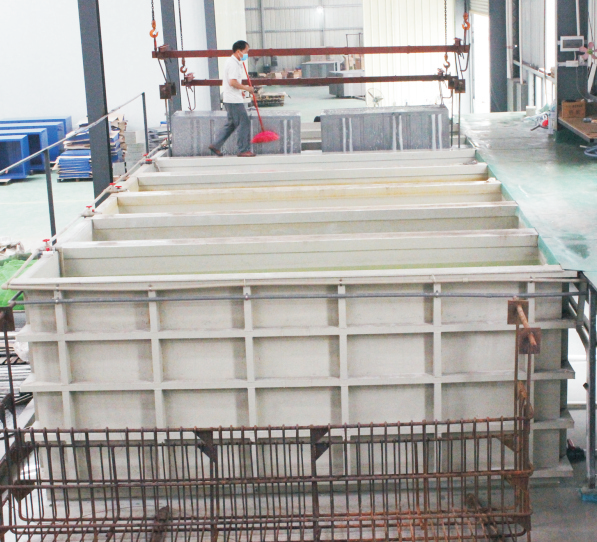
Pre-treatment is the foundation. If your workpiece surface isn't clean, properly degreased, de-rusted, and chemically prepared, no powder coating technology can save you. We typically spend more time discussing phosphate film thickness, wash water temperature, and drying procedures than we spend on spray gun parameters. That's intentional.
Advanced Hanna-type systems integrate robust pre-treatment chemistry with verification steps that traditional lines often skip. You're not just running parts through tanks; you're building a chemically stable surface that powder can bond to. This shows up in real production as:
- Adhesion test results staying consistent across production batches
- Salt-fog test performance hitting or exceeding ASTM B117 standards
- Coating adhesion remaining stable even when humidity or temperature in the factory fluctuates
From a practical standpoint, when we design a line for a cabinetry customer targeting 500-hour salt spray for outdoor applications, pre-treatment quality determines whether they hit that goal or fall short. Skip this, and you're building costly failures into your coating system.
Electrostatic Application Efficiency and Powder Utilization
The second pillar is how efficiently powder gets from the spray gun to the workpiece. Traditional understanding says "higher voltage = more powder transfer." That's partly true, but it's also the enemy of precision and waste reduction.
What we actually care about is the transfer efficiency curve—how much powder lands on the part versus how much floats away as waste. Modern systems achieve this through:
Better grounding design. When a workpiece doesn't have reliable electrical contact with ground, electrostatic attraction weakens, and you lose efficiency immediately. We've seen factories assume "it's a grounding issue" after the fact; the real solution is designing grounding points into your fixturing from the start, and then verifying the resistance at commissioning.
Optimized spray gun positioning. Gun distance, angle, and sequencing matter more than most operators realize. Too close and you get orange peel and powder overspray. Too far and powder doesn't reach recessed areas. Modern systems automate this through robot programming or reciprocating-gun sequences that are calibrated to specific workpiece geometries.
cURL Too many subrequests by single Worker invocation. To configure this limit, refer to https://developers.cloudflare.com/workers/wrangler/configuration/#limits. cURL Too many subrequests by single Worker invocation. To configure this limit, refer to https://developers.cloudflare.com/workers/wrangler/configuration/#limits.
cURL Too many subrequests by single Worker invocation. To configure this limit, refer to https://developers.cloudflare.com/workers/wrangler/configuration/#limits
cURL Too many subrequests by single Worker invocation. To configure this limit, refer to https://developers.cloudflare.com/workers/wrangler/configuration/#limits.
cURL Too many subrequests by single Worker invocation. To configure this limit, refer to https://developers.cloudflare.com/workers/wrangler/configuration/#limits
cURL Too many subrequests by single Worker invocation. To configure this limit, refer to https://developers.cloudflare.com/workers/wrangler/configuration/#limits.
cURL Too many subrequests by single Worker invocation. To configure this limit, refer to https://developers.cloudflare.com/workers/wrangler/configuration/#limits
- cURL Too many subrequests by single Worker invocation. To configure this limit, refer to https://developers.cloudflare.com/workers/wrangler/configuration/#limits cURL Too many subrequests by single Worker invocation. To configure this limit, refer to https://developers.cloudflare.com/workers/wrangler/configuration/#limits
- cURL Too many subrequests by single Worker invocation. To configure this limit, refer to https://developers.cloudflare.com/workers/wrangler/configuration/#limits cURL Too many subrequests by single Worker invocation. To configure this limit, refer to https://developers.cloudflare.com/workers/wrangler/configuration/#limits
- cURL Too many subrequests by single Worker invocation. To configure this limit, refer to https://developers.cloudflare.com/workers/wrangler/configuration/#limits cURL Too many subrequests by single Worker invocation. To configure this limit, refer to https://developers.cloudflare.com/workers/wrangler/configuration/#limits
cURL Too many subrequests by single Worker invocation. To configure this limit, refer to https://developers.cloudflare.com/workers/wrangler/configuration/#limits
- cURL Too many subrequests by single Worker invocation. To configure this limit, refer to https://developers.cloudflare.com/workers/wrangler/configuration/#limits cURL Too many subrequests by single Worker invocation. To configure this limit, refer to https://developers.cloudflare.com/workers/wrangler/configuration/#limits
- Vitesse du convoyeur cURL Too many subrequests by single Worker invocation. To configure this limit, refer to https://developers.cloudflare.com/workers/wrangler/configuration/#limits
- Épaisseur du revêtement cURL Too many subrequests by single Worker invocation. To configure this limit, refer to https://developers.cloudflare.com/workers/wrangler/configuration/#limits
cURL Too many subrequests by single Worker invocation. To configure this limit, refer to https://developers.cloudflare.com/workers/wrangler/configuration/#limits
cURL Too many subrequests by single Worker invocation. To configure this limit, refer to https://developers.cloudflare.com/workers/wrangler/configuration/#limits.
cURL Too many subrequests by single Worker invocation. To configure this limit, refer to https://developers.cloudflare.com/workers/wrangler/configuration/#limits
- cURL Too many subrequests by single Worker invocation. To configure this limit, refer to https://developers.cloudflare.com/workers/wrangler/configuration/#limits Heat the workpiece at a measured rate (typically 10–15°C per minute) to get powder particles moving and flowing
- Soak phase: Hold temperature long enough for resin crosslinking to complete (typically 10–20 minutes, depending on powder)
- Cool phase: Control how quickly the part cools to prevent thermal stress and ensure final hardness
Different materials need different curves. A high-quality system gives you the ability to:
- Load powder-specific cure data into the oven controller
- Measure workpiece actual temperature (not just oven air temperature) via thermocouples or IR sensors
- Log cure data to track consistency across batches
We've seen factories improve coating hardness and impact resistance by 15–20% just by switching from a fixed 200°C / 20-minute curve to a material-matched curve that ramps and holds more carefully. That translates directly to fewer field failures and longer coating life.
How Powder Recovery Rate and Color-Change Efficiency Affect ROI
This is where economics meet engineering, and it's also where we often see the biggest misunderstandings about "value."
Why 85-95% Recovery Is Often More Cost-Effective Than Pursuing Maximum Recovery
Everyone wants high recovery rates—less powder wasted, lower material cost, better environmental compliance. But there's a trap: the cost to improve recovery from 90% to 98% often exceeds the material savings, especially if you're running multiple colors.
Here's the reality from real plants:
| Taux de récupération | System Complexity | Maintenance Burden | Color-Change Downtime | Annual Powder Cost (Typical) | Coût annuel de maintenance |
|---|---|---|---|---|---|
| 80–85% | Basic cyclone | Faible | 30–45 min | ~$15,000 | ~$2,000 |
| 85–92% | Cyclone + secondary filter | Moyen | 20–30 min | ~$12,000 | ~$4,500 |
| 93–98% | Multi-stage + advanced filtration | Élevé | 45–90 min | ~$10,000 | ~$8,000 |
Notice what happens: improving recovery from 92% to 98% adds $3,500 in annual maintenance but only saves maybe $2,000 in powder. You break even in year two, but you're now managing a more complex system with more points of failure.
Notre recommandation : For most cabinet and furniture manufacturers, 85–95% recovery with a single-stage cyclone and quality secondary filtration represents the optimal balance. You capture most waste, color changes stay fast, and maintenance stays predictable.
Balancing Recovery System Complexity Against Maintenance Burden
A secondary filtration cabinet with pulse-cleaning beats a simple baghouse because:
- Cleaning cycles are automated — the system blows back the filter at set intervals without operator intervention
- Color changes are cleaner — less residual powder from previous color contaminates the next batch
- Downtime is predictable — you know when to schedule filter changes based on differential pressure, not surprises
But this added complexity means:
- More electrical controls to troubleshoot
- More compressed air demand
- cURL Too many subrequests by single Worker invocation. To configure this limit, refer to https://developers.cloudflare.com/workers/wrangler/configuration/#limits
- cURL Too many subrequests by single Worker invocation. To configure this limit, refer to https://developers.cloudflare.com/workers/wrangler/configuration/#limits
cURL Too many subrequests by single Worker invocation. To configure this limit, refer to https://developers.cloudflare.com/workers/wrangler/configuration/#limits cURL Too many subrequests by single Worker invocation. To configure this limit, refer to https://developers.cloudflare.com/workers/wrangler/configuration/#limits.
cURL Too many subrequests by single Worker invocation. To configure this limit, refer to https://developers.cloudflare.com/workers/wrangler/configuration/#limits
cURL Too many subrequests by single Worker invocation. To configure this limit, refer to https://developers.cloudflare.com/workers/wrangler/configuration/#limits.
cURL Too many subrequests by single Worker invocation. To configure this limit, refer to https://developers.cloudflare.com/workers/wrangler/configuration/#limits, cURL Too many subrequests by single Worker invocation. To configure this limit, refer to https://developers.cloudflare.com/workers/wrangler/configuration/#limits
- cURL Too many subrequests by single Worker invocation. To configure this limit, refer to https://developers.cloudflare.com/workers/wrangler/configuration/#limits
- cURL Too many subrequests by single Worker invocation. To configure this limit, refer to https://developers.cloudflare.com/workers/wrangler/configuration/#limits
- cURL Too many subrequests by single Worker invocation. To configure this limit, refer to https://developers.cloudflare.com/workers/wrangler/configuration/#limits
cURL Too many subrequests by single Worker invocation. To configure this limit, refer to https://developers.cloudflare.com/workers/wrangler/configuration/#limits.
cURL Too many subrequests by single Worker invocation. To configure this limit, refer to https://developers.cloudflare.com/workers/wrangler/configuration/#limits, cURL Too many subrequests by single Worker invocation. To configure this limit, refer to https://developers.cloudflare.com/workers/wrangler/configuration/#limits
- cURL Too many subrequests by single Worker invocation. To configure this limit, refer to https://developers.cloudflare.com/workers/wrangler/configuration/#limits
- cURL Too many subrequests by single Worker invocation. To configure this limit, refer to https://developers.cloudflare.com/workers/wrangler/configuration/#limits
- cURL Too many subrequests by single Worker invocation. To configure this limit, refer to https://developers.cloudflare.com/workers/wrangler/configuration/#limits
cURL Too many subrequests by single Worker invocation. To configure this limit, refer to https://developers.cloudflare.com/workers/wrangler/configuration/#limits.
cURL Too many subrequests by single Worker invocation. To configure this limit, refer to https://developers.cloudflare.com/workers/wrangler/configuration/#limits, cURL Too many subrequests by single Worker invocation. To configure this limit, refer to https://developers.cloudflare.com/workers/wrangler/configuration/#limits
- cURL Too many subrequests by single Worker invocation. To configure this limit, refer to https://developers.cloudflare.com/workers/wrangler/configuration/#limits
- cURL Too many subrequests by single Worker invocation. To configure this limit, refer to https://developers.cloudflare.com/workers/wrangler/configuration/#limits
- High-volume conveyors (often moving 40–60 meters per minute)
- Stable electrostatic application (even at high speed)
This requires different system architecture: wider spray booths, faster oven throughput, and automatic thickness monitoring with feedback loops.
Localization Considerations for International Deployment
One critical dimension of core value that's often overlooked in machinery evaluation: can the system actually run in votre country? We've seen beautiful equipment arrive at a factory in Algeria or India and then require expensive modifications because electrical standards, gas supply, water quality, or environmental regulations weren't anticipated.
Electrical standards matter. Most factories expect 380V three-phase power at 50 Hz. If you're in a region running 440V or 60 Hz, simple parameter changes won't fix it—you need equipment designed for it. We always specify electrical configuration at the contract stage.
Environmental requirements vary. Some countries mandate enclosed powder rooms with specific exhaust treatment. Others allow open spray booths. Some require sub-meter particulate capture; others are less stringent. We build this into the design from day one.
Gas and water quality. If you're using gas-fired curing ovens, you need to know local natural gas supply characteristics. If pre-treatment uses water, you need to know if municipal water requires treatment. We typically include water softening and compressed-air drying in our specs for regions where tap water is hard or air is humid.
Local service availability. A world-class system is only valuable if someone local can service it. We factor this into our commissioning approach—we don't just leave equipment; we train your team, document everything, and establish relationships with regional spare-parts distributors.
How to Assess Whether Hanna Technology Delivers Value for Your Operation
Rather than accepting vendor claims, here's a framework we use with customers to objectively evaluate whether advanced powder coating technology makes sense for their factory.
Step 1: Establish your actual coating requirements.
Document what your product specification actually demands:
- Coating thickness (typically 60–100 µm for industrial applications)
- Adhesion standard (ASTM B3359 or ISO 2409)
- Corrosion resistance (salt spray hours, if applicable)
- Appearance (gloss, texture, color uniformity)
- Environmental conditions (indoor, outdoor, chemical exposure)
This sounds basic, but many manufacturers choose equipment based on what competitors have, not what their actual product needs. If your cabinet only needs 24-hour salt spray and your customer accepts visible brush marks, a $500K three-zone curing oven is overkill.
Step 2: Map your production reality.
Know your actual constraints:
- Monthly volume (parts per month, kg per month)
- Color mix (single color, 3–5 standard colors, or high-mix)
- Workpiece size and geometry (complex internal geometry vs. flat sheets)
- Available floor space (linear footage of line)
- Current labor cost and skill level
This shapes which technologies are actually valuable. A high-mix shop doing 20 colors per month gets huge value from fast color-change capability. A single-color, high-volume shop doesn't.
Step 3: Run a pilot or reference visit.
Theory is useful, but seeing a system run with parts similar to yours is irreplaceable. Before signing a contract, we always invite customers to:
- Watch the line run with their sample parts (or similar geometry)
- See coating uniformity with actual product
- Observe color-change procedures and downtime
- Talk to the operating factory's maintenance and quality teams
cURL Too many subrequests by single Worker invocation. To configure this limit, refer to https://developers.cloudflare.com/workers/wrangler/configuration/#limits.
cURL Too many subrequests by single Worker invocation. To configure this limit, refer to https://developers.cloudflare.com/workers/wrangler/configuration/#limits.
cURL Too many subrequests by single Worker invocation. To configure this limit, refer to https://developers.cloudflare.com/workers/wrangler/configuration/#limits
- cURL Too many subrequests by single Worker invocation. To configure this limit, refer to https://developers.cloudflare.com/workers/wrangler/configuration/#limits cURL Too many subrequests by single Worker invocation. To configure this limit, refer to https://developers.cloudflare.com/workers/wrangler/configuration/#limits
- Coûts de maintenance : cURL Too many subrequests by single Worker invocation. To configure this limit, refer to https://developers.cloudflare.com/workers/wrangler/configuration/#limits
- cURL Too many subrequests by single Worker invocation. To configure this limit, refer to https://developers.cloudflare.com/workers/wrangler/configuration/#limits cURL Too many subrequests by single Worker invocation. To configure this limit, refer to https://developers.cloudflare.com/workers/wrangler/configuration/#limits
- cURL Too many subrequests by single Worker invocation. To configure this limit, refer to https://developers.cloudflare.com/workers/wrangler/configuration/#limits cURL Too many subrequests by single Worker invocation. To configure this limit, refer to https://developers.cloudflare.com/workers/wrangler/configuration/#limits
cURL Too many subrequests by single Worker invocation. To configure this limit, refer to https://developers.cloudflare.com/workers/wrangler/configuration/#limits.
cURL Too many subrequests by single Worker invocation. To configure this limit, refer to https://developers.cloudflare.com/workers/wrangler/configuration/#limits.
cURL Too many subrequests by single Worker invocation. To configure this limit, refer to https://developers.cloudflare.com/workers/wrangler/configuration/#limits
- cURL Too many subrequests by single Worker invocation. To configure this limit, refer to https://developers.cloudflare.com/workers/wrangler/configuration/#limits cURL Too many subrequests by single Worker invocation. To configure this limit, refer to https://developers.cloudflare.com/workers/wrangler/configuration/#limits
- cURL Too many subrequests by single Worker invocation. To configure this limit, refer to https://developers.cloudflare.com/workers/wrangler/configuration/#limits cURL Too many subrequests by single Worker invocation. To configure this limit, refer to https://developers.cloudflare.com/workers/wrangler/configuration/#limits
- cURL Too many subrequests by single Worker invocation. To configure this limit, refer to https://developers.cloudflare.com/workers/wrangler/configuration/#limits cURL Too many subrequests by single Worker invocation. To configure this limit, refer to https://developers.cloudflare.com/workers/wrangler/configuration/#limits
- cURL Too many subrequests by single Worker invocation. To configure this limit, refer to https://developers.cloudflare.com/workers/wrangler/configuration/#limits cURL Too many subrequests by single Worker invocation. To configure this limit, refer to https://developers.cloudflare.com/workers/wrangler/configuration/#limits
cURL Too many subrequests by single Worker invocation. To configure this limit, refer to https://developers.cloudflare.com/workers/wrangler/configuration/#limits.
Questions connexes supplémentaires
Q: Can I retrofit advanced powder coating technology to my existing line?
Partial retrofits are possible—you can upgrade the spray booth, add a secondary recovery stage, or improve curing control without replacing the entire line. But integrated systems perform better because all components are designed to work together. If your conveyor is inconsistent or your pre-treatment is weak, a world-class spray system won't fully compensate.
Q: How do I know if my pre-treatment is good enough?
Have a lab run adhesion and salt-spray tests on parts from your current line. If adhesion is strong (ASTM B3359 ≥ 4B) and salt-spray performance exceeds your specification, your pre-treatment is probably fine. If not, pre-treatment improvements typically deliver more ROI than spray-booth upgrades.
Q: What's the realistic lifespan of a powder coating line?
A well-maintained line runs reliably for 15–20 years. Components like spray guns, filters, and heating elements may need replacement every 3–7 years depending on utilization. Plan for this in your budget.
Q: How important is powder selection vs. equipment selection?
Both matter, but they're not equally impactful. A premium powder on mediocre equipment gives you maybe 60–70% of the performance of mediocre powder on excellent equipment. System quality matters more. That said, matching powder chemistry to your curing profile (ramp rate, peak temperature, soak time) is non-negotiable.
Conclusion
The core value of advanced powder coating technology—what's sometimes called Hanna Technology—isn't mystical. It's the measurable difference between a coating system that consistently delivers your specification and one that struggles to meet it reliably.
That value shows up as:
- Better first-pass quality (fewer rejects, faster throughput)
- Longer coating lifespan (fewer field failures, stronger warranties)
- Lower total cost of ownership (even if capital cost is higher)
- Easier scaling (when you need to add volume, a well-designed system scales more gracefully)
To evaluate whether it's worth the investment for your operation, start with your actual requirements—not aspirations. Understand your production reality and constraints. Visit a reference line running similar products. Model the true cost of ownership. And choose a supplier committed to commissioning and after-sales support.
The manufacturers who get the most value from advanced coating systems are those who treat the investment as a partnership with their supplier, not a transaction. They invest time in understanding their own pre-treatment chemistry, curing parameters, and grounding design. They prioritize consistency over chasing the absolute lowest powder cost. And they recognize that a coating system that runs reliably for 15 years, with minimal surprises and strong product outcomes, is worth substantially more than the cheapest option available.
If you're evaluating powder coating technology for cabinet, furniture, aluminum profile, or industrial component manufacturing, we're here to discuss your actual production scenario. We can help you understand whether advanced systems make economic sense for your operation, and if they do, we can work through commissioning and ongoing optimization to ensure you're getting full value.
Contactez-nous à WhatsApp: +8618925987762 or email: ketucoatingline@gmail.com to discuss your coating requirements and explore how an optimized system might fit into your production roadmap.
 French
  English
  German
  Vietnamese