
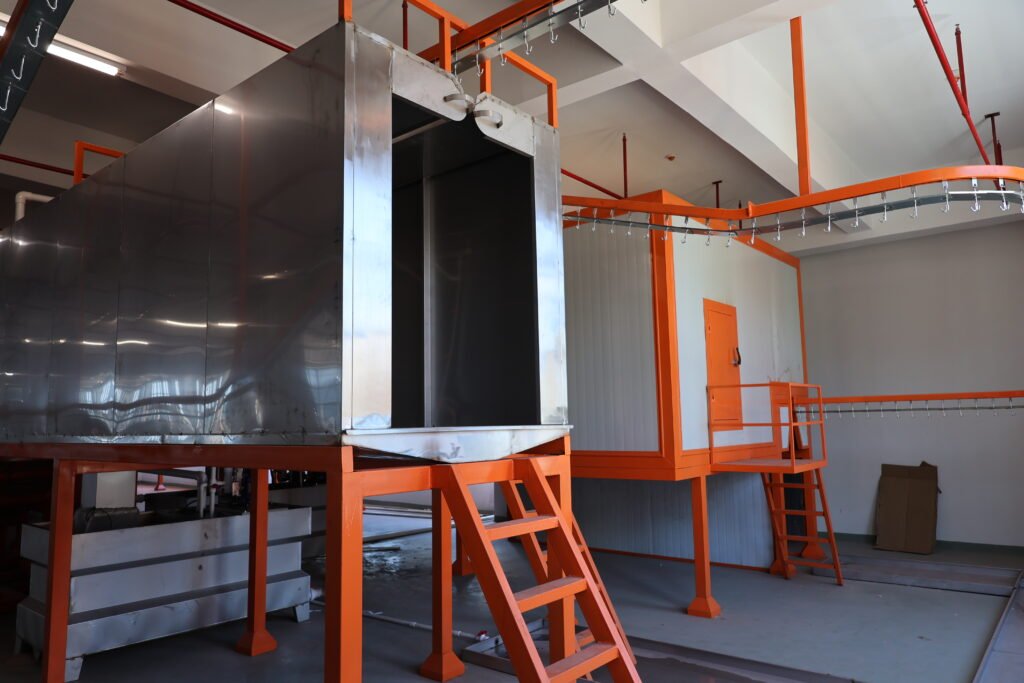
How to Choose the Right Manufacturing Partner: Key Evaluation Criteria for Equipment Selection
When you're tasked with selecting a static ligne de peinture en poudre When you're tasked with selecting a static powder coating line supplier for your manufacturing operation, the stakes are surprisingly high. The wrong partner choice doesn't just mean overpaying for equipment—it can mean investing in a system that doesn't match your production requirements, struggles to deliver consistent quality, or leaves you stranded when problems arise. From our experience working with manufacturers across multiple continents, we've learned that the most successful partnerships aren't built on competitive bidding alone. They're built on clear technical understanding, realistic expectations, and a supplier who genuinely understands your production challenges.
The fundamental answer is this: Choose a manufacturing equipment partner based on three pillars—proven technical capability specific to your industry, transparent customization ability rather than standard solutions, and comprehensive support from installation through long-term operation. The ideal partner should offer factory verification opportunities, demonstrate real customer case studies in similar applications, clearly explain how they'll adapt their system to your product specifications, and commit to training, commissioning, and after-sales service with local presence or reliable remote support.
The decision you make today will shape your coating quality, production efficiency, energy costs, and manufacturing reputation for the next 5–10 years. Here's how to evaluate potential partners systematically.
Why Choosing the Right Manufacturing Partner Matters More Than You Think
The surface coating is often the last—and most visible—stage of manufacturing. A poor decision at this point affects everything downstream: customer satisfaction, product durability, return rates, and your brand reputation.
Most manufacturers underestimate how much their coating system choice influences their bottom line. Beyond the initial equipment cost, you're committing to energy consumption patterns, maintenance demands, operator training requirements, spare parts availability, and technical support response times. A system that works well for your competitor's production volume might create bottlenecks or quality inconsistencies at your specific output level. A design that looks cost-effective in the proposal might consume far more electricity than promised, or require constant adjustments to maintain acceptable results.
The complexity deepens when you consider localization factors. If you're sourcing equipment from abroad, you need a partner who understands your country's electrical standards, environmental regulations, gas supply reliability, and labor skill levels. We've seen projects delayed or compromised because the supplier assumed specifications that didn't match local reality.
From our direct experience with manufacturers in cabinet production, outdoor furniture, and aluminum profile processing, the most successful implementations share one trait: they involved partners who took time to understand the customer's actual production constraints, not just their stated equipment type.
The Most Common Mistakes Manufacturers Make When Selecting Equipment Suppliers
We've observed certain patterns repeat across dozens of procurement decisions, and recognizing these mistakes early can save you months of frustration and considerable expense.
Mistake 1: Prioritizing unit price over system integration.
The cheapest spray room or curing oven is rarely the best choice because coating quality depends on how all components work together. We've encountered situations where a client bought the lowest-cost powder room, only to discover that the pre-treatment system and curing oven didn't match its output rate, creating bottlenecks and inconsistent coating thickness. The "savings" disappeared within the first year of operation.
Mistake 2: Accepting standard configurations without questioning fit.
Many suppliers push standard models as one-size-fits-all solutions. Your workpiece dimensions, product shape, desired automation level, and throughput targets are unique. A standard 5-meter line might be too long for your factory space, or too slow for your production targets. We always advise clients to scrutinize whether the proposed configuration genuinely fits their constraints or whether the supplier is simply offering what's easiest to build.
Mistake 3: Underestimating the importance of pre-treatment.
This is perhaps the most critical error. At least 30% of coating quality problems we see in the field trace back to inadequate pre-treatment, not to the spray system or oven. Clients often focus on spray gun technology and fixate on oven temperature, overlooking degreasing effectiveness, phosphate film consistency, and drying thoroughness. Pre-treatment is the foundation; everything else depends on it.
Mistake 4: Not verifying real-world performance.
Brochures and performance claims are easy to make. Actual performance under your specific product conditions is what matters. Clients who skip factory visits or references from similar users often discover compatibility problems only after installation begins.
Mistake 5: Ignoring the supplier's local support capacity.
Equipment delivered is only the beginning. Installation, commissioning, operator training, troubleshooting, spare parts logistics, and technical consultation during production runs are ongoing needs. A supplier based far away with no local presence or reliable remote support system creates serious operational risk.
Core Technical Criteria You Must Evaluate Before Making a Decision
Equipment selection requires you to assess performance across several overlapping technical domains. This section breaks down the most consequential evaluation points.
Pre-treatment Process Compatibility: The Foundation of Quality
Before a single powder particle contacts your workpiece, the surface must be thoroughly cleaned, free of oil and rust, and chemically prepared for coating adhesion. The pre-treatment system is often where quality is truly won or lost—yet it's frequently under-specified.
Ask your potential supplier to detail exactly what happens in their pre-treatment system. Does it include degreasing? Rust removal? Phosphate or conversion coating? Rinsing stages? Drying? Each step matters. We typically recommend that cabinet and metal parts manufacturers insist on at least alkaline degreasing, acid/mechanical rust removal, conversion coating (phosphate for steel, zinc or aluminum-compatible alternatives for non-ferrous metals), fresh water rinse, and hot-air drying.
Pay specific attention to the chemistry cycle time and drying thoroughness. If your supplier proposes a pre-treatment line that doesn't include dedicated drying, or one that moves parts through too quickly for chemical reaction to complete, you'll see adhesion and corrosion resistance problems downstream. Surface moisture and residual salts are invisible but destructive.
For cabinet manufacturers and outdoor furniture makers, the pre-treatment is your primary defense against rust bloom and coating failure. Don't let a supplier convince you to skip steps in the name of speed.
Critical Design Details That Impact 90% of Results (Grounding, Air Quality, Temperature Control)
Three seemingly "technical" design features influence coating outcome far more than most manufacturers realize.
Grounding Design
Every workpiece must be reliably grounded. Without proper electrical connection between the workpiece and the spray system reference point, the electrostatic field weakens, powder adhesion suffers, and rebound waste increases. Inspect how your potential supplier proposes to achieve continuous grounding. Do they use spring-loaded contacts, brush designs, or other mechanisms? For hanging conveyor systems, is there a dedicated grounding rail? For complex or deep-cavity parts, is there secondary grounding provision? We've seen suppliers overlook grounding design for difficult geometries, leading to chronic undercoating in internal surfaces.
Qualité de l'air comprimé
The quality of your air supply is foundational—many operators don't realize this. Air contaminated with water, oil, or particulates causes powder to clump, spray guns to malfunction, and surface defects (pinholing, curing irregularities, texture problems). Your supplier should specify minimum air quality requirements: pressure stability, maximum moisture content, and filtration grade. Ask whether they expect the customer to provide a full compressed air treatment system (dryer, coalescing filters, aftercoolers) or whether they include components. We recommend investing in proper air treatment on the customer side; don't leave this to chance.
Temperature Control Precision
Fixed oven temperature is not the same as consistent part temperature. The actual interior temperature of your workpiece, the drying effectiveness after pre-treatment, and the curing chemistry all depend on time-temperature profiles. We've observed suppliers provide curing ovens with basic on-off temperature control, which often results in temperature swings of ±10–20°C. For high-quality coating chemistry, tighter control (±5°C) is preferable. Also verify whether the supplier measures temperature at the part surface or only in the oven air chamber—the distinction is significant.
Customization Capability vs. Standard Solutions: How to Identify True Expertise
A supplier offering true customization begins with detailed questions about your workpiece, not with a quick proposal.
cURL Too many subrequests by single Worker invocation. To configure this limit, refer to https://developers.cloudflare.com/workers/wrangler/configuration/#limits
- cURL Too many subrequests by single Worker invocation. To configure this limit, refer to https://developers.cloudflare.com/workers/wrangler/configuration/#limits
- cURL Too many subrequests by single Worker invocation. To configure this limit, refer to https://developers.cloudflare.com/workers/wrangler/configuration/#limits
- cURL Too many subrequests by single Worker invocation. To configure this limit, refer to https://developers.cloudflare.com/workers/wrangler/configuration/#limits
- cURL Too many subrequests by single Worker invocation. To configure this limit, refer to https://developers.cloudflare.com/workers/wrangler/configuration/#limits
- cURL Too many subrequests by single Worker invocation. To configure this limit, refer to https://developers.cloudflare.com/workers/wrangler/configuration/#limits
- Specifying powder recovery and recycling configuration based on your color-change frequency and waste tolerance
- cURL Too many subrequests by single Worker invocation. To configure this limit, refer to https://developers.cloudflare.com/workers/wrangler/configuration/#limits
cURL Too many subrequests by single Worker invocation. To configure this limit, refer to https://developers.cloudflare.com/workers/wrangler/configuration/#limits.
cURL Too many subrequests by single Worker invocation. To configure this limit, refer to https://developers.cloudflare.com/workers/wrangler/configuration/#limits.
cURL Too many subrequests by single Worker invocation. To configure this limit, refer to https://developers.cloudflare.com/workers/wrangler/configuration/#limits
cURL Too many subrequests by single Worker invocation. To configure this limit, refer to https://developers.cloudflare.com/workers/wrangler/configuration/#limits.
cURL Too many subrequests by single Worker invocation. To configure this limit, refer to https://developers.cloudflare.com/workers/wrangler/configuration/#limits
cURL Too many subrequests by single Worker invocation. To configure this limit, refer to https://developers.cloudflare.com/workers/wrangler/configuration/#limits
- cURL Too many subrequests by single Worker invocation. To configure this limit, refer to https://developers.cloudflare.com/workers/wrangler/configuration/#limits
- cURL Too many subrequests by single Worker invocation. To configure this limit, refer to https://developers.cloudflare.com/workers/wrangler/configuration/#limits
- cURL Too many subrequests by single Worker invocation. To configure this limit, refer to https://developers.cloudflare.com/workers/wrangler/configuration/#limits
- cURL Too many subrequests by single Worker invocation. To configure this limit, refer to https://developers.cloudflare.com/workers/wrangler/configuration/#limits
- cURL Too many subrequests by single Worker invocation. To configure this limit, refer to https://developers.cloudflare.com/workers/wrangler/configuration/#limits
- cURL Too many subrequests by single Worker invocation. To configure this limit, refer to https://developers.cloudflare.com/workers/wrangler/configuration/#limits
cURL Too many subrequests by single Worker invocation. To configure this limit, refer to https://developers.cloudflare.com/workers/wrangler/configuration/#limits.
cURL Too many subrequests by single Worker invocation. To configure this limit, refer to https://developers.cloudflare.com/workers/wrangler/configuration/#limits
Ask for references from manufacturers in your industry and in comparable markets (especially relevant if you're sourcing from abroad to a different region). Request permission to visit an actual customer site in production, if possible, to see the line handling real workpieces under normal operating conditions. Ask customer references:
- Did the system deliver the quoted performance?
- Were there unexpected costs (energy, maintenance, spare parts)?
- How responsive is the supplier's technical support?
- If issues arose, how quickly were they resolved?
- Would they recommend this supplier for similar future projects?
References who will speak frankly—not just provide polished testimonials—reveal far more than marketing materials.
What to Look for in Installation, Training, and Post-Sale Support Services
Equipment rarely performs optimally immediately after installation. The transition to production-ready operation depends heavily on commissioning quality and operator competence.
Installation et mise en service
Verify what the supplier includes and what falls to you. Typical clarification points:
- Does the supplier send technicians to your site for installation, or is it your responsibility?
- Who provides the foundation design and site preparation documentation?
- Who handles electrical and utility connections?
- What constitutes "commissioning"? (testing equipment in isolation vs. running sample parts and adjusting parameters)
- How long is the standard commissioning window, and what happens if it extends?
We recommend insisting that the supplier's technicians remain on-site until the line produces acceptable-quality parts consistently—not just until it "runs."
Formation des opérateurs
Your operators will determine daily performance. Suppliers should provide comprehensive training covering:
- Equipment operation and safety protocols
- Adjustment procedures for spray voltage, distance, and powder flow
- Pre-treatment chemistry management and concentration checks
- Oven temperature monitoring and adjustment
- Troubleshooting common defects (underspray, orange peel, adhesion issues)
- Maintenance routines and parts replacement
Training should be hands-on and documented. Ideally, the supplier trains your training staff so knowledge persists beyond the initial visit.
Support après-vente
Clarify the support model:
- How do you report problems (phone, email, portal)?
- What is the typical response time for urgent technical issues?
- Are spare parts stocked locally or must they be shipped?
- Is remote troubleshooting available (video consultation, parameter adjustment guidance)?
- What is the cost structure for extended support (annual contracts, hourly rates, etc.)?
For equipment purchased from overseas suppliers, the availability of local technical representation or a trained distributor partner is especially important. We've seen projects falter when a critical malfunction required a 6-week wait for a technician to arrive from abroad.
Understanding Pricing Differences and Evaluating True Cost of Ownership
Equipment cost is a function of many variables, and a lower quote doesn't always mean better value.
Why Quotes Vary
Different suppliers charge differently depending on:
- Automation level (manual spray vs. reciprocating guns vs. fully robotic operation)
- Control system sophistication (basic on-off vs. programmable logic with data logging)
- Pre-treatment system configuration (basic vs. comprehensive chemical stages)
- cURL Too many subrequests by single Worker invocation. To configure this limit, refer to https://developers.cloudflare.com/workers/wrangler/configuration/#limits
- cURL Too many subrequests by single Worker invocation. To configure this limit, refer to https://developers.cloudflare.com/workers/wrangler/configuration/#limits
- cURL Too many subrequests by single Worker invocation. To configure this limit, refer to https://developers.cloudflare.com/workers/wrangler/configuration/#limits
- cURL Too many subrequests by single Worker invocation. To configure this limit, refer to https://developers.cloudflare.com/workers/wrangler/configuration/#limits
- cURL Too many subrequests by single Worker invocation. To configure this limit, refer to https://developers.cloudflare.com/workers/wrangler/configuration/#limits
cURL Too many subrequests by single Worker invocation. To configure this limit, refer to https://developers.cloudflare.com/workers/wrangler/configuration/#limits.
cURL Too many subrequests by single Worker invocation. To configure this limit, refer to https://developers.cloudflare.com/workers/wrangler/configuration/#limits
cURL Too many subrequests by single Worker invocation. To configure this limit, refer to https://developers.cloudflare.com/workers/wrangler/configuration/#limits
| Catégorie de coût | cURL Too many subrequests by single Worker invocation. To configure this limit, refer to https://developers.cloudflare.com/workers/wrangler/configuration/#limits |
|---|---|
| Achat de l'équipement | cURL Too many subrequests by single Worker invocation. To configure this limit, refer to https://developers.cloudflare.com/workers/wrangler/configuration/#limits |
| Consommation d'énergie | cURL Too many subrequests by single Worker invocation. To configure this limit, refer to https://developers.cloudflare.com/workers/wrangler/configuration/#limits |
| Air comprimé | cURL Too many subrequests by single Worker invocation. To configure this limit, refer to https://developers.cloudflare.com/workers/wrangler/configuration/#limits |
| cURL Too many subrequests by single Worker invocation. To configure this limit, refer to https://developers.cloudflare.com/workers/wrangler/configuration/#limits | cURL Too many subrequests by single Worker invocation. To configure this limit, refer to https://developers.cloudflare.com/workers/wrangler/configuration/#limits |
| Entretien | cURL Too many subrequests by single Worker invocation. To configure this limit, refer to https://developers.cloudflare.com/workers/wrangler/configuration/#limits |
| Main-d'œuvre | cURL Too many subrequests by single Worker invocation. To configure this limit, refer to https://developers.cloudflare.com/workers/wrangler/configuration/#limits |
| cURL Too many subrequests by single Worker invocation. To configure this limit, refer to https://developers.cloudflare.com/workers/wrangler/configuration/#limits | cURL Too many subrequests by single Worker invocation. To configure this limit, refer to https://developers.cloudflare.com/workers/wrangler/configuration/#limits |
| cURL Too many subrequests by single Worker invocation. To configure this limit, refer to https://developers.cloudflare.com/workers/wrangler/configuration/#limits | cURL Too many subrequests by single Worker invocation. To configure this limit, refer to https://developers.cloudflare.com/workers/wrangler/configuration/#limits |
cURL Too many subrequests by single Worker invocation. To configure this limit, refer to https://developers.cloudflare.com/workers/wrangler/configuration/#limits.
cURL Too many subrequests by single Worker invocation. To configure this limit, refer to https://developers.cloudflare.com/workers/wrangler/configuration/#limits
If you're sourcing equipment internationally—whether from Asia to Europe, or between continents—misalignment between the equipment design and your local standards creates real implementation risk.
Electrical Compatibility
Ask whether the supplier has experience with your country's voltage, frequency, and safety standards. Equipment designed for 380V/50Hz cannot simply be rewired for 220V/60Hz operation. Verify:
- Standard voltage and frequency in their proposal
- Whether the electrical design requires local modification
- Cost and timeline for any required adaptations
- Whether local electrical certification is included or is your responsibility
We've seen installations delayed months because the curing oven's heating system and controls weren't compatible with local power infrastructure.
Environmental and Safety Regulations
Different regions have different emission limits, noise restrictions, and safety requirements. Confirm the supplier understands:
- Your country's dust emission and air quality standards
- Whether the pre-treatment system's wastewater discharge requires treatment
- Noise level limits (some jurisdictions require sub-80 dB operation)
- Safety guards and interlocks required by your local labor standards
- Whether the supplier will modify the design to meet local compliance, and at what cost
We recommend requesting written confirmation that the proposed system, as configured, meets all applicable local regulations. Don't assume a supplier's "standard" design is compliant everywhere.
Documentation and Spare Parts
For international equipment sourcing:
- Request documentation in your language or English (not just the supplier's native language)
- Ask about spare parts availability. Can critical components be sourced locally, or must they be ordered from abroad?
- Confirm warranty terms and whether service is honored internationally
Making Your Final Selection: What We Recommend
From our direct experience working with manufacturers across multiple continents, the best outcomes emerge when you approach supplier selection as a research process, not a bidding competition.
Rank potential suppliers using a weighted evaluation:
| Evaluation Factor | Poids |
|---|---|
| Technical fit to your specific product and production rate | 35% |
| Customization capability (not standard templates) | 20% |
| Demonstrated customer references in similar applications | 20% |
| Installation, training, and support capacity | 15% |
| Cost (total ownership, not just purchase price) | 10% |
We advise against selecting based on lowest price or fastest delivery promise. Instead, prioritize the supplier who demonstrates the deepest understanding of your production challenge, offers the most realistic customization, provides verifiable customer success stories, and commits credibly to support.
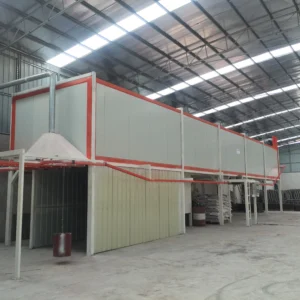
Also insist on a structured evaluation phase before committing to final specifications. Many disputes arise because the supplier and buyer had different assumptions. A clear pre-award technical review—reviewing drawings, confirming timelines, and agreeing on success criteria for commissioning—prevents costly misalignment later.
Conclusion
Selecting a manufacturing equipment partner is one of your most consequential business decisions. It's not a transaction; it's the start of a multi-year relationship that will shape your production capability, cost structure, and competitive position.
The right partner isn't the cheapest or the fastest. It's the one who takes time to understand your specific situation, demonstrates proven capability in your industry, offers honest customization based on your actual needs, welcomes verification visits, and commits to comprehensive support through launch and beyond.
We recognize that procurement pressure often pushes toward quick decisions and low bids. But the manufacturers we've worked with most successfully are those willing to invest upfront time in evaluation—factory visits, reference calls, detailed specification reviews—because that discipline prevents far costlier problems later.
If you're currently evaluating powder coating line suppliers and would like to discuss how your specific production requirements align with equipment design approaches, we're available to share our experience. We operate our own manufacturing facility and welcome customer visits to see our coating lines in operation and discuss your application in detail.
Contactez-nous :
WhatsApp : +8618064668879
Email: ketucoatingline@gmail.com
We're happy to explore whether a customized solution makes sense for your manufacturing objectives.
 French
  English
  German
  Vietnamese