
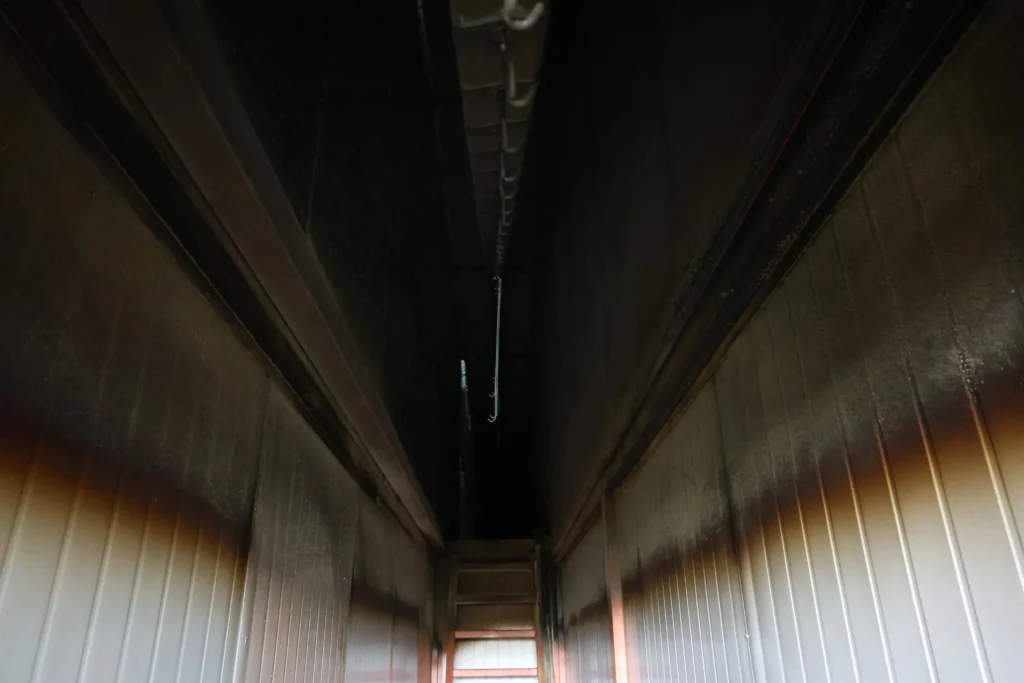
What Problems Will Occur If Your Coating Equipment Is Not Complete or Well-Maintained?
In my years working with thermolaquage électrostatique[^1] production lines, I've observed a clear pattern: most coating quality failures don't stem from bad powder or improper parameters alone. They come from incomplete or poorly maintained equipment systems. When factories reach out with persistent surface defects, adhesion failures, or capacity problems, the root cause typically traces back to equipment that wasn't designed comprehensively from the start or has deteriorated through neglect. This article draws from real on-site experience to show you exactly what happens when coating equipment falls short of professional standards—and why investing in a complete, well-maintained system is the only path to consistent results.
Why Equipment Imperfection Matters in Coating Operations
Incomplete or poorly maintained coating equipment doesn't just produce occasional defects. It creates a cascade of operational failures that compound over time. When I say "incomplete," I mean equipment that skips essential stages, uses undersized components, or lacks proper integration between systems. When I say "poorly maintained," I mean systems that drift out of specification due to wear, contamination, or operator neglect.
The real cost isn't just visible defects on finished products. It includes customer complaints, production bottlenecks, rework expenses, unexpected downtime, and the slow erosion of your line's output capacity. What starts as a "minor" issue—slightly inadequate pre-treatment, a spray gun that's drifting out of position, an oven that runs 5°C cool—becomes a chronic quality and efficiency drain that your team lives with every single day.
![d’équipement de peinture en poudre maintenance inspection]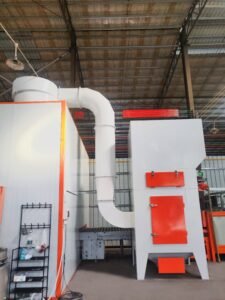
Quality Defects Caused by Poor Coating Equipment
The surface defects I see most often are directly traceable to equipment gaps or degradation. Let me break down the most common ones.
Surface Finish Issues: Orange Peel, Pinholes, Shrinkage Marks
Orange peel—that bumpy, uneven texture—typically signals one of three things: uneven film thickness (the spray gun distance or pattern is inconsistent), poor powder flow performance, or inadequate oven temperature uniformity. If your line's spray gun positioning isn't rigid, or if the conveyor speed fluctuates, you'll get thick and thin zones on every part.
Pinholes and micro-bubbles are often a pre-treatment symptom disguised as a spray problem. If your pre-treatment system doesn't rinse thoroughly, or if the dry station can't fully remove residual water, trapped air pockets will form when the powder heats in the oven. I've seen factories waste weeks adjusting spray parameters when the real culprit was a clogged rinse nozzle or an undersized dryer that couldn't keep pace with the line speed.
Shrinkage marks—those small cratered areas—usually mean the workpiece surface had oil, dust, or moisture at spray time. This comes back to inadequate pre-treatment system[^2] design or insufficient maintenance of filtration in both the pre-treatment stage and the spray booth itself.
Color Consistency and Adhesion Problems
Poor adhesion is the classic sign of a broken pre-treatment chain. I can't overstate this: over 70% of adhesion failures in projects I've reviewed trace back to pre-treatment system deficiencies, not spray gun problems. If your phosphate or conversion coating isn't forming properly, or if your parts are contaminated between treatment and spray, the powder—no matter how well applied—will fail to bond.
Color inconsistency across a batch usually means:
- Inconsistent oven temperature (temperature profile isn't uniform across the chamber)
- Powder supply variation (inconsistent air pressure, humidity, or particle flow to the gun)
- Workpiece positioning variation (parts entering the spray zone at different angles or distances from guns)
An incomplete line often skips secondary recovery or uses a single-stage separator, leading to powder quality degradation. Mixed old and new powder, or powder contaminated with off-spec recycled material, will show color drift part-to-part.
Film Thickness Variation and Coverage Issues
If your spray gun layout isn't calculated for your workpiece geometry, or if your input air pressure drifts, film thickness will vary dramatically. Inside corners and recessed areas are hardest to coat—this is the "Faraday cage effect." A line without proper gun positioning, redundant spray coverage, or the flexibility to adjust gun angle for complex parts will show thin zones consistently.
I've also seen factories struggle with lines where the input conveyor speed isn't stable. Even a ±10% drift in line speed means coverage time changes, so thinner parts travel slower than thicker parts through the same spray zone, receiving different powder loads.
![industrial spray booth système de revêtement en poudre]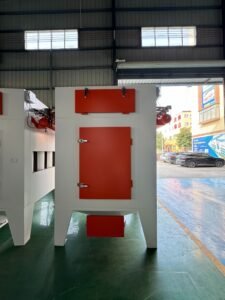
Production Efficiency and Capacity Loss from Equipment Inadequacy
Here's what inadequate equipment costs you in throughput:
Downtime for changeover: A line with manual color change or manual parameter adjustment can lose 30–60 minutes per color shift. If you're running 3–5 colors a week, that's 2.5–5 hours of lost production weekly, or 130–260 hours annually.
Reject and rework cycles: If your equipment produces 8–12% scrap due to defects, you're running every ninth workpiece twice. That's equivalent to 12% lost throughput right there, plus labor and material cost.
Bottleneck stages: If your oven can't keep pace with spray output, parts pile up in queue, tying up floor space and hook capacity. If your pre-treatment stage is undersized, it becomes the slowest link and throttles the entire line. I've seen lines designed for 100 parts/hour that actually run at 60–70 because one component was undersized.
Unplanned stoppages: Equipment without proper maintenance breaks down unexpectedly. Spray gun nozzles clog, oven fans fail, conveyor chains slip, or electrical faults trigger shutdowns. An incomplete line—especially one with cheap, off-brand components—will experience 5–10% more downtime than a properly engineered integrated system.
cURL Too many subrequests by single Worker invocation. To configure this limit, refer to https://developers.cloudflare.com/workers/wrangler/configuration/#limits
cURL Too many subrequests by single Worker invocation. To configure this limit, refer to https://developers.cloudflare.com/workers/wrangler/configuration/#limits
cURL Too many subrequests by single Worker invocation. To configure this limit, refer to https://developers.cloudflare.com/workers/wrangler/configuration/#limits cURL Too many subrequests by single Worker invocation. To configure this limit, refer to https://developers.cloudflare.com/workers/wrangler/configuration/#limitscURL Too many subrequests by single Worker invocation. To configure this limit, refer to https://developers.cloudflare.com/workers/wrangler/configuration/#limits.
cURL Too many subrequests by single Worker invocation. To configure this limit, refer to https://developers.cloudflare.com/workers/wrangler/configuration/#limits.
cURL Too many subrequests by single Worker invocation. To configure this limit, refer to https://developers.cloudflare.com/workers/wrangler/configuration/#limits
cURL Too many subrequests by single Worker invocation. To configure this limit, refer to https://developers.cloudflare.com/workers/wrangler/configuration/#limits.
cURL Too many subrequests by single Worker invocation. To configure this limit, refer to https://developers.cloudflare.com/workers/wrangler/configuration/#limits.
cURL Too many subrequests by single Worker invocation. To configure this limit, refer to https://developers.cloudflare.com/workers/wrangler/configuration/#limits
cURL Too many subrequests by single Worker invocation. To configure this limit, refer to https://developers.cloudflare.com/workers/wrangler/configuration/#limits.
cURL Too many subrequests by single Worker invocation. To configure this limit, refer to https://developers.cloudflare.com/workers/wrangler/configuration/#limits.
Air comprimécURL Too many subrequests by single Worker invocation. To configure this limit, refer to https://developers.cloudflare.com/workers/wrangler/configuration/#limits.
| Catégorie de coût | cURL Too many subrequests by single Worker invocation. To configure this limit, refer to https://developers.cloudflare.com/workers/wrangler/configuration/#limits | cURL Too many subrequests by single Worker invocation. To configure this limit, refer to https://developers.cloudflare.com/workers/wrangler/configuration/#limits | cURL Too many subrequests by single Worker invocation. To configure this limit, refer to https://developers.cloudflare.com/workers/wrangler/configuration/#limits |
|---|---|---|---|
| cURL Too many subrequests by single Worker invocation. To configure this limit, refer to https://developers.cloudflare.com/workers/wrangler/configuration/#limits | cURL Too many subrequests by single Worker invocation. To configure this limit, refer to https://developers.cloudflare.com/workers/wrangler/configuration/#limits | cURL Too many subrequests by single Worker invocation. To configure this limit, refer to https://developers.cloudflare.com/workers/wrangler/configuration/#limits | $1,200 |
| cURL Too many subrequests by single Worker invocation. To configure this limit, refer to https://developers.cloudflare.com/workers/wrangler/configuration/#limits | cURL Too many subrequests by single Worker invocation. To configure this limit, refer to https://developers.cloudflare.com/workers/wrangler/configuration/#limits | cURL Too many subrequests by single Worker invocation. To configure this limit, refer to https://developers.cloudflare.com/workers/wrangler/configuration/#limits | $4,500 |
| Energy inefficiency | +30% baseline (~$6,000) | Ligne de base | $6,000 |
| Rework/scrap labor | ~40 hrs/month (~$4,800/yr) | ~5 hrs/month (~$600/yr) | $4,200 |
| Total Annual Hidden Cost | — | — | $16,000+ |
Critical System Failures That Cause the Most Damage
Pre-Treatment System Deficiencies
I'll say it plainly: a poor pre-treatment system is the #1 silent killer of coating quality. The irony is that it's often the cheapest component to skimp on during equipment design.
Common pre-treatment failures:
- Weak degreasing: Oil, fingerprints, or cutting fluid remains on the workpiece. Powder won't adhere to greasy surfaces, period.
- Inadequate rust removal: For steel parts, acid pickling or alkaline rust removal must be thorough. Residual rust will cause adhesion failure and corrosion bleed-through.
- Poor phosphate film formation: The conversion coating (phosphate for steel, zirconia or titanium for aluminum) must be consistent and uniform. Weak film thickness or patchy coverage is a direct result of incorrect chemistry, temperature, or immersion time—all determined by pre-treatment equipment design.
- cURL Too many subrequests by single Worker invocation. To configure this limit, refer to https://developers.cloudflare.com/workers/wrangler/configuration/#limits: Water remaining on the part surface will cause pinholes, gas bubbles, and poor powder adhesion as it evaporates during heating.
If your pre-treatment line is manual (dunk tanks) or uses cheap, single-stage rinsing, adhesion defects will be chronic. You can have the best spray gun in the world—it won't fix a bad pre-treatment foundation.
Spray Gun Layout and Parameter Instability
Spray gun position, voltage, air pressure, and powder flow must be precisely controlled to maintain consistent film thickness and coverage. Here's what breaks down:
- Gun distance drift: If your spray gun mounting isn't rigid, or if conveyors aren't perfectly aligned, the target distance varies. Too close = buildup and edge overspray; too far = poor transfer efficiency and thin coverage.
- Unstable electrostatic voltage: A spray gun operating at 65 kV instead of 75 kV will have 15–20% lower transfer efficiency. A power supply that drifts with temperature or load variation causes part-to-part inconsistency.
- Air supply fluctuation: Powder air pressure or atomization air flow that varies with ambient temperature or compressor duty cycle will change powder particle size and gun behavior. Operators often can't see this drift until defects appear.
I recommend equipment with cURL Too many subrequests by single Worker invocation. To configure this limit, refer to https://developers.cloudflare.com/workers/wrangler/configuration/#limits[^5] on gun parameters—voltage, current, powder flow—so drift is detected and corrected automatically. Budget lines without this monitoring will gradually degrade without anyone noticing until scrap rates spike.
Curing Oven Temperature Uniformity Issues
The oven is where the powder transforms into the final coating. Temperature uniformity is non-negotiable. I've measured ovens where the front zone runs 190°C while the rear runs 175°C. Parts in the cool zone undercure—low hardness, poor chemical resistance, weak adhesion.
Common oven design failures:
- Poor hot-air circulation: If fan distribution isn't balanced, or if the oven chamber has dead zones, temperature will be uneven.
- Inadequate insulation: Ovens with thin or degraded insulation lose heat unevenly, causing edge zones to run cooler.
- Temperature sensor placementcURL Too many subrequests by single Worker invocation. To configure this limit, refer to https://developers.cloudflare.com/workers/wrangler/configuration/#limits.
- cURL Too many subrequests by single Worker invocation. To configure this limit, refer to https://developers.cloudflare.com/workers/wrangler/configuration/#limitscURL Too many subrequests by single Worker invocation. To configure this limit, refer to https://developers.cloudflare.com/workers/wrangler/configuration/#limits.
cURL Too many subrequests by single Worker invocation. To configure this limit, refer to https://developers.cloudflare.com/workers/wrangler/configuration/#limits cURL Too many subrequests by single Worker invocation. To configure this limit, refer to https://developers.cloudflare.com/workers/wrangler/configuration/#limitscURL Too many subrequests by single Worker invocation. To configure this limit, refer to https://developers.cloudflare.com/workers/wrangler/configuration/#limits.
cURL Too many subrequests by single Worker invocation. To configure this limit, refer to https://developers.cloudflare.com/workers/wrangler/configuration/#limits
cURL Too many subrequests by single Worker invocation. To configure this limit, refer to https://developers.cloudflare.com/workers/wrangler/configuration/#limits
- cURL Too many subrequests by single Worker invocation. To configure this limit, refer to https://developers.cloudflare.com/workers/wrangler/configuration/#limitscURL Too many subrequests by single Worker invocation. To configure this limit, refer to https://developers.cloudflare.com/workers/wrangler/configuration/#limits.
- cURL Too many subrequests by single Worker invocation. To configure this limit, refer to https://developers.cloudflare.com/workers/wrangler/configuration/#limitscURL Too many subrequests by single Worker invocation. To configure this limit, refer to https://developers.cloudflare.com/workers/wrangler/configuration/#limits.
- cURL Too many subrequests by single Worker invocation. To configure this limit, refer to https://developers.cloudflare.com/workers/wrangler/configuration/#limitscURL Too many subrequests by single Worker invocation. To configure this limit, refer to https://developers.cloudflare.com/workers/wrangler/configuration/#limits.
cURL Too many subrequests by single Worker invocation. To configure this limit, refer to https://developers.cloudflare.com/workers/wrangler/configuration/#limits cURL Too many subrequests by single Worker invocation. To configure this limit, refer to https://developers.cloudflare.com/workers/wrangler/configuration/#limitscURL Too many subrequests by single Worker invocation. To configure this limit, refer to https://developers.cloudflare.com/workers/wrangler/configuration/#limits.
cURL Too many subrequests by single Worker invocation. To configure this limit, refer to https://developers.cloudflare.com/workers/wrangler/configuration/#limits
cURL Too many subrequests by single Worker invocation. To configure this limit, refer to https://developers.cloudflare.com/workers/wrangler/configuration/#limits
cURL Too many subrequests by single Worker invocation. To configure this limit, refer to https://developers.cloudflare.com/workers/wrangler/configuration/#limits
cURL Too many subrequests by single Worker invocation. To configure this limit, refer to https://developers.cloudflare.com/workers/wrangler/configuration/#limits.
cURL Too many subrequests by single Worker invocation. To configure this limit, refer to https://developers.cloudflare.com/workers/wrangler/configuration/#limits
Poor equipment grounding increases the risk of static discharge injuries to operators and can cause powder explosions in high-concentration zones. A line without proper bonding between conveyors, spray booth surfaces, and workpiece holders is a liability.
Energy and Thermal Safety
An oven operating above design temperature (because temperature control is drifting) risks thermal runaway, fire, and component failure. An oven with poor insulation or ventilation creates burn hazard zones and makes the facility uncomfortable for workers.
How to Identify and Prevent Equipment-Related Problems
Key Inspection Points Before Equipment Purchase
Before you commit to a coating line, verify these essentials:
1. Pre-treatment system completeness
- Does it include degreasing, rinsing, conversion coating (phosphate/zirconia), post-rinse, and heated dry?
- Are nozzles sized for your workpiece type? Are flow rates adjustable?
- Is the chemistry balanced (pH, concentration, temperature) with automatic controls?
2. Spray gun and electrostatic system
- Are guns mounted rigidly with verifiable distance to workpiece?
- Does the power supply include voltage and current feedback?
- Are there multiple guns positioned for complex workpiece geometry, or just a single gun covering everything?
- Can powder flow and air pressure be adjusted independently?
3. Curing oven
- What is the design temperature uniformity tolerance (±5°C or ±10°C)?
- Is temperature monitoring distributed (multiple thermocouples) or single-point?
- Is hot-air circulation active (fan-assisted) or passive?
- What is insulation R-value and condition?
4. Powder recovery efficiency
- Is there primary (cyclone) + secondary (filter cabinet) recovery, or just one stage?
- What is the specified recovery rate? (Aim for 95%+)
- Are filters automated backflush or manual?
5. Conveyor and input/output systems
- Is conveyor speed stable with electronic speed control, or does it vary?
- Is workpiece positioning consistent, or do parts arrive at spray zone at varying angles?
- Are hooks, hangers, and grounding contacts in good condition?
| Composant du système | Inadequate Equipment | Well-Designed Equipment |
|---|---|---|
| Pré-traitement | Single-stage or manual immersion | Multi-stage with chemistry control & profiling |
| Spray system | Single gun, basic electrostatics | Multi-gun array, closed-loop voltage/current control |
| Oven | Single-zone heating, ±10°C tolerance | Multi-zone circulation, ±5°C tolerance |
| Récupération | cURL Too many subrequests by single Worker invocation. To configure this limit, refer to https://developers.cloudflare.com/workers/wrangler/configuration/#limits | cURL Too many subrequests by single Worker invocation. To configure this limit, refer to https://developers.cloudflare.com/workers/wrangler/configuration/#limits |
| Convoyeur | cURL Too many subrequests by single Worker invocation. To configure this limit, refer to https://developers.cloudflare.com/workers/wrangler/configuration/#limits | cURL Too many subrequests by single Worker invocation. To configure this limit, refer to https://developers.cloudflare.com/workers/wrangler/configuration/#limits |
cURL Too many subrequests by single Worker invocation. To configure this limit, refer to https://developers.cloudflare.com/workers/wrangler/configuration/#limits
cURL Too many subrequests by single Worker invocation. To configure this limit, refer to https://developers.cloudflare.com/workers/wrangler/configuration/#limits.
ÉlectriquecURL Too many subrequests by single Worker invocation. To configure this limit, refer to https://developers.cloudflare.com/workers/wrangler/configuration/#limits.
Air comprimécURL Too many subrequests by single Worker invocation. To configure this limit, refer to https://developers.cloudflare.com/workers/wrangler/configuration/#limits.
cURL Too many subrequests by single Worker invocation. To configure this limit, refer to https://developers.cloudflare.com/workers/wrangler/configuration/#limitscURL Too many subrequests by single Worker invocation. To configure this limit, refer to https://developers.cloudflare.com/workers/wrangler/configuration/#limits.
cURL Too many subrequests by single Worker invocation. To configure this limit, refer to https://developers.cloudflare.com/workers/wrangler/configuration/#limits
cURL Too many subrequests by single Worker invocation. To configure this limit, refer to https://developers.cloudflare.com/workers/wrangler/configuration/#limits.
cURL Too many subrequests by single Worker invocation. To configure this limit, refer to https://developers.cloudflare.com/workers/wrangler/configuration/#limits cURL Too many subrequests by single Worker invocation. To configure this limit, refer to https://developers.cloudflare.com/workers/wrangler/configuration/#limits
- cURL Too many subrequests by single Worker invocation. To configure this limit, refer to https://developers.cloudflare.com/workers/wrangler/configuration/#limits
- cURL Too many subrequests by single Worker invocation. To configure this limit, refer to https://developers.cloudflare.com/workers/wrangler/configuration/#limits
- cURL Too many subrequests by single Worker invocation. To configure this limit, refer to https://developers.cloudflare.com/workers/wrangler/configuration/#limits
- cURL Too many subrequests by single Worker invocation. To configure this limit, refer to https://developers.cloudflare.com/workers/wrangler/configuration/#limits
cURL Too many subrequests by single Worker invocation. To configure this limit, refer to https://developers.cloudflare.com/workers/wrangler/configuration/#limits:
- cURL Too many subrequests by single Worker invocation. To configure this limit, refer to https://developers.cloudflare.com/workers/wrangler/configuration/#limits
- cURL Too many subrequests by single Worker invocation. To configure this limit, refer to https://developers.cloudflare.com/workers/wrangler/configuration/#limits
- cURL Too many subrequests by single Worker invocation. To configure this limit, refer to https://developers.cloudflare.com/workers/wrangler/configuration/#limits
- Inspect powder supply level and condition (no moisture, no clumping)
Monthly preventive checks:
- Full oven temperature profiling (multiple points, entry to exit)
- Spray gun voltage and current verification
- Pre-treatment tank chemistry testing (pH, concentration, temperature)
- Conveyor chain inspection for wear or misalignment
Quarterly or annual overhaul:
- Replace worn spray gun nozzles and electrodes
- Deep clean oven interior and exhaust ducting
- Replace air filters and dry cartridges on compressor
- Inspect electrical contacts and cooling fans for dust
A well-maintained line that started with good fundamentals will deliver stable results for 5–10+ years. A cheaply built line will require constant firefighting and fail progressively.
How to Choose Equipment: The Right Foundation
When you evaluate coating equipment, don't compare only on price. Compare on:
- Integrated design: Is this a true end-to-end line with matched components, or a collection of single machines bolted together?
- Pre-treatment credibility: Does the supplier understand votre product and material type? Do they have a proven pre-treatment recipe for your industry?
- Control and feedback: Can parameters be monitored and adjusted real-time, or is it manual and drift-prone?
- Recovery performance: What is the actual (tested) powder recovery rate? Ask for data.
- cURL Too many subrequests by single Worker invocation. To configure this limit, refer to https://developers.cloudflare.com/workers/wrangler/configuration/#limits: Can the line grow with your business, or is it fixed capacity?
- Support and training: Does the supplier provide installation, operator training, and ongoing technical support[^8]?
Investing 15–20% more upfront in a well-engineered, complete system will save you 30–50% in operational costs, waste, and downtime over 5 years.
Conclusion
Incomplete or poorly maintained coating equipment doesn't just produce occasional defects. It systematically undermines your product quality, production efficiency, regulatory compliance, and operational cost. The root cause in most cases is an incomplete pre-treatment system, unstable spray parameters, or degraded oven performance—issues that seem "minor" until you calculate the cumulative cost.
The solution isn't complexity; it's completeness. A properly designed static electrostatic powder coating line with rigorous pre-treatment, stable spray control, uniform curing, and effective powder recovery will deliver consistent results, minimize waste, and keep your throughput predictable.
If you're operating with chronic defects, rising material costs, or frequent downtime, the equipment itself is likely the culprit. Before you blame your operators or your powder supplier, have your line comprehensively evaluated by someone who understands the entire system—not just one component.
At Ketu, we design and build integrated coating lines where every stage is sized, matched, and optimized for your specific products and production goals. We've helped hundreds of manufacturers identify equipment gaps and implement solutions that reduced defects by 50–80%, cut material waste by 30–40%, and improved throughput by 20–35%. If you'd like to discuss your current line's performance or explore how a complete, well-maintained system could transform your coating operation, I'd be glad to help.
Contact us for a no-cost equipment assessment or to discuss your coating challenges.
WhatsApp: +8618925987762
Email: ketucoatingline@gmail.com
[^1]: Powder coating is a dry finishing process where electrostatically charged powder is sprayed onto a surface and then cured in an oven to form a durable coating.
[^2]: Pre-treatment systems involve cleaning, rust removal, and conversion coating application to prepare surfaces for powder coating adhesion and corrosion resistance.
[^3]: Electrostatic voltage in powder coating creates charged particles that are attracted to grounded workpieces, improving transfer efficiency and coverage uniformity.
[^4]: Compressed air is essential for atomizing powder and controlling spray gun operation; poor air quality causes powder delivery problems and equipment wear.
[^5]: Closed-loop feedback systems automatically monitor and adjust spray parameters (voltage, current, powder flow) to maintain consistent coating performance and detect drift.
[^6]: Temperature profiling involves placing thermocouples on actual workpieces at multiple oven locations to verify uniform heat distribution meets specification.
[^7]: Cyclone separators use centrifugal force to separate airborne powder from exhaust gas, recovering usable material and reducing environmental emissions.
[^8]: Ongoing technical support from equipment suppliers includes troubleshooting, maintenance guidance, spare parts availability, and process optimization assistance.
 French
  English
  German
  Vietnamese